
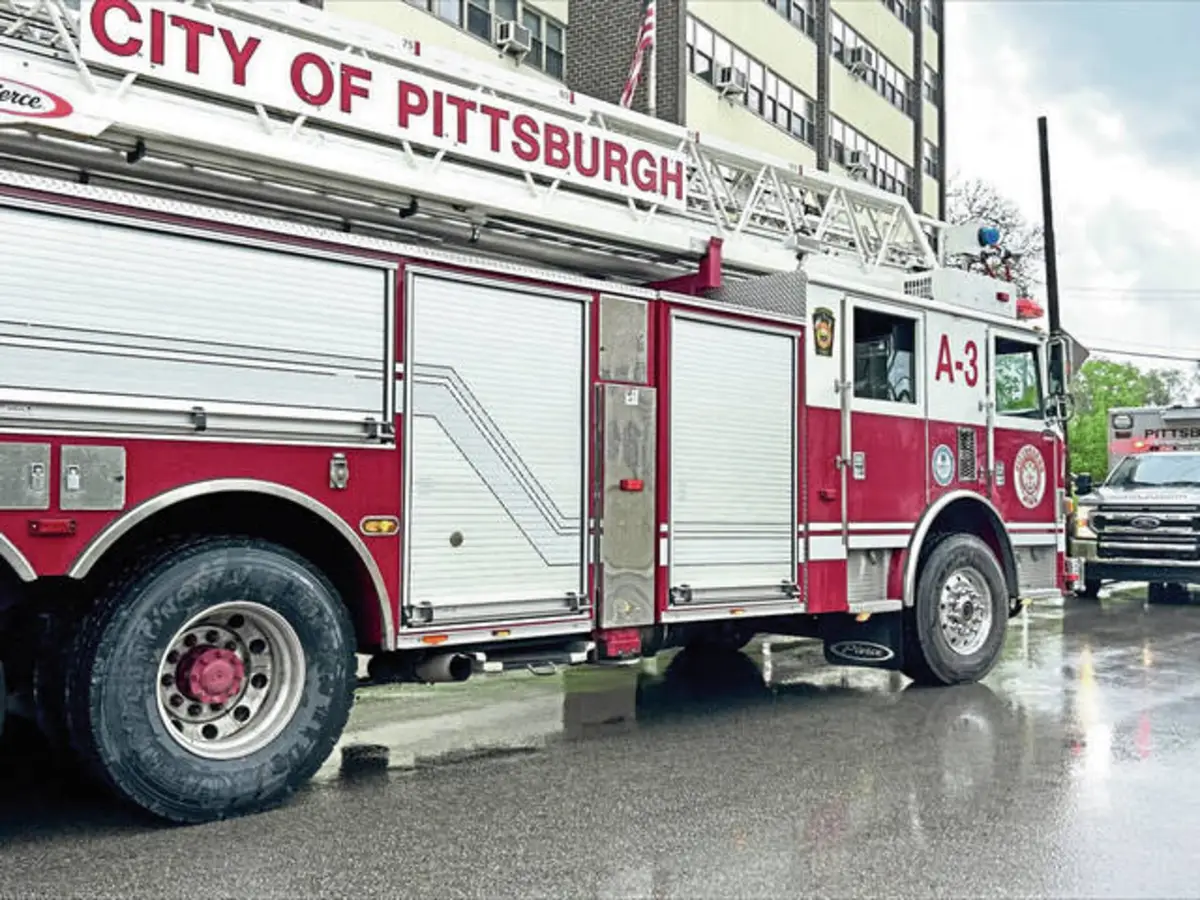
Pittsburgh firefighters union leader Ralph Sicuro celebrated the millions in funding for new fire trucks but said the city’s aging fleet still has a long road ahead.
Wait times for new fire trucks can stretch to about four years, an issue that prompted the city to file an antitrust lawsuit against fire truck manufacturers earlier this week.
Sicuro said he’s not confident the city’s existing fire trucks — the oldest of which is 32 years old — will last that long.
“It’s not a matter of if we’re going to have a problem,” Sicuro said. “It’s a matter of when.”
Pittsburgh this week filed a federal lawsuit alleging that more than two dozen fire truck manufacturers and related companies engaged in a conspiracy to monopolize the fire truck and parts market, driving up costs and wait times.
“Through their illegal schemes, defendants have reaped extraordinary profits on the backs of fire departments, taxpayers, cities and counties,” the 132-page lawsuit said. “The public has suffered harm alongside the city, as the higher prices and costs defendants have forced on fire departments have drained localities’ health and safety budgets.”
Sicuro said he supports the city’s lawsuit.
Prices have roughly doubled over the last decade and wait times for new vehicles jumped from about a year to about four years, he said.
“To me, it’s unacceptable,” Sicuro said. “It’s just unfair to taxpayers that they have to bear the burden of people trying to make these giant profits on fire trucks, something that’s necessary for us to do our jobs. And it’s unfair for firefighters to be stuck in unserviceable fire apparatus because municipalities can’t afford new ones.”
Councilwoman Barb Warwick, D-Greenfield, who sits on the Equipment Leasing Authority Board, said prices for fire trucks are “exorbitant.”
“Broadly speaking, whether it is fire equipment or any other type of specialized equipment that is used almost exclusively by government entities, taxpayers across the board are being fleeced, in my opinion,” she told TribLive.
The Equipment Leasing Authority and city officials are reviewing bids for new fire truck purchases that will be made using donations from nonprofits.
In the meantime, Pittsburgh’s fire trucks — like much of its broader vehicle fleet — are old and prone to breakdowns. The city has seen vehicle repair costs go over budget as aging vehicles need more and costlier maintenance.
Controller Rachael Heisler has warned of “widespread service disruptions” if the fleet isn’t modernized.
When a fire ripped through a vacant church in Pittsburgh’s Mount Washington neighborhood earlier this month, all three fire trucks that responded had their check engine lights on, Councilwoman Kim Salinetro, D-West End, said.
The city finally has money to purchase new fire trucks, as well as ambulances and other vehicles. Health care giants UPMC and Highmark have pledged a combined $55 million over the next five years to purchase new public safety vehicles.
Mayor Corey O’Connor when announcing the donations said officials would focus on purchasing fire equipment with Highmark’s contribution “because our first responders need to have reliable equipment and transportation to respond to emergencies.”
Sicuro said the news was a “big relief,” and the money would be a “tremendous help” to updating the fleet.
But Sicuro also is cautioning that, even with the money to buy trucks, the city will likely wait years to receive them because of the massive manufacturing backlogs.
“Regardless of what happens today or tomorrow, the fact that they will not be built and delivered for two to four years leaves us continually putting band-aids on our current fleet,” he told TribLive.
If the existing fire fleet doesn’t hold up that long, he said, the city might be forced to contemplate difficult choices, like whether to purchase used trucks to bridge the gap until new ones arrive.
“Financially, it might not be the best decision, but it may be the only decision they have if that’s where they end up,” Sicuro said.
Though Sicuro said he feels the city is right to take manufacturers to court, he does not expect the litigation will play out quickly enough to change the timelines for when new fire trucks could arrive.
“I don’t expect the courts to have a decision that would impact anything in our current situation,” he said. “We’re in this, and we’ve got to deal with it.”