
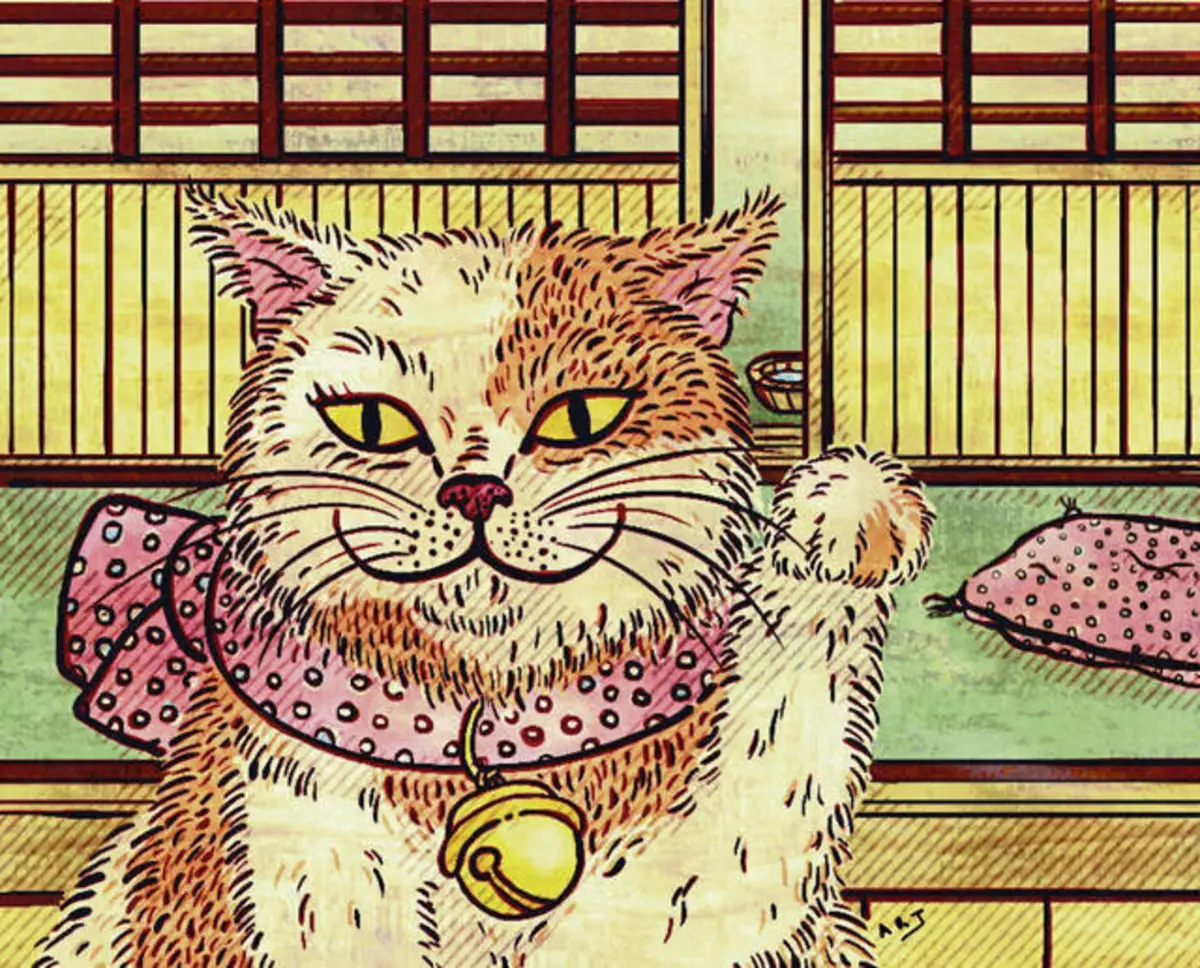
Antonietta Fazio-Johnson loved drawing and writing from a very young age.
“I wanted to be an artist since childhood, and I’ve been drawing and writing for as long as I can remember,” Fazio-Johnson said.
“My family encouraged creativity in different ways — my father through his curiosity about everyday things, my mother through her love of reading and my grandfather by sketching little squirrels and roosters in my children’s books when I was small. I also had a high school art teacher who introduced me to stained glass and batik (a wax-resist dyeing technique used to decorate cloth with dyed patterns), which influenced my early work. I was shaped in many small ways by the people around me growing up.”
For four decades, Fazio-Johnson, 42, of Pittsburgh’s Beechview neighborhood has continued to create.
Her work spans several approaches, including standalone illustrations, structured card and deck systems such as hanafuda, which is a traditional Japanese deck of 48 cards featuring floral and seasonal imagery associated with the months of the year, and narrative worldbuilding projects such as “Night Parade,” which will be featured at the Monroeville Public Library.
“Night Parade” explores yōkai from Japanese folklore in contemporary compositions influenced by ukiyo-e, a genre of Japanese art — primarily consisting of woodblock prints and paintings that flourished from the 17th to the 19th centuries.
The work moves between panoramic scenes, character-focused portraits and alternate versions of the same environments, Fazio-Johnson said. Each piece can stand alone while also belonging to a larger interconnected system. Rather than telling a single linear narrative, the series unfolds through glimpses — moments, shifts and visual motifs that suggest a world continuing beyond what is immediately seen, Fazio-Johnson said.
There will be approximately 35 framed pieces installed on June 25 in the Elaine Biondi Art Gallery at the library. The exhibition will run through the end of July. A public opening reception is set from 6 to 8 p.m. June 27.
Prints and framed works will be available for purchase.
The Elaine Biondi Art Gallery is pleased to host the exhibition, said Linda Reese, gallery manager.
“We are looking forward to her work with hand-drawn visual digital illustration, which we believe everyone will find to be interesting and enjoyable,” Reese said.
The library’s gallery is an accessible community space where people can encounter art unexpectedly, Fazio-Johnson said.
“I spent a lot of time in libraries as a child because I was a big reader, so I’ve always associated them with exploration, discovery, storytelling and imagination,” Fazio-Johnson said. “That feels very natural for a series that’s also built around curiosity and worldbuilding. The setting also fits the project because ‘Night Parade’ exists between visual art, storytelling, folklore and printed materials. The exhibition includes both images and written lore, and the game connected to the series is also word-based, so the library context feels especially fitting. I was really glad to reconnect with the gallery and see it still supporting local artists.”
Fazio-Johnson, who earned a bachelor’s degree in Studio Art from Allegheny College in Meadville said she became familiar with the Monroeville library about 20 years ago through her work teaching children’s art enrichment programs.
She exhibited work there when she was still working in batik. She used the art form in a more image-based and compositional way, focusing on figurative and floral compositions rather than traditional repeating textile motifs, she said.
Fazio-Johnson works digitally using a pen tablet, drawing and painting every element by hand. She does not use artificial intelligence generated imagery or stock assets, she said.
“I create all imagery and textures through layered digital painting in Affinity and Photoshop, using a combination of ink-style and watercolor-style brushes along with standard tools such as the pen tool, opacity adjustments and smudging to develop form, texture and tone,” she said.
“I also put a significant amount of thought into composition and visual structure, especially in the ‘Night Parade’ series. Even though the medium is digital, this process allows me to work in a way that feels closer to traditional drawing and painting, where each element is built through direct, manual control and deliberate mark-making.”
She and her husband, game designer Jason Johnson, founded IndianWolf Studios LLC, an independent creative studio for illustrated card decks, tabletop games and interconnected visual projects, including the ongoing “Night Parade” series.
Her focus is on illustration, visual development, writing and aspects of game design and playtesting. Her husband’s focus is on game design and system structure, she said.
“My husband and I were also experimenting with digital game ideas early on, mostly for learning and exploration, so in many ways the two practices were already overlapping,” she said. “We were drawn to different but complementary aspects of the work. I came from a fine art background focused on image-making and visual storytelling, while Jason came from programming and systems thinking, so game mechanics and structure were always part of the conversation. Over time, the line between illustration and game design naturally began to blur, and we started developing early board game concepts and worldbuilding ideas together, though they weren’t yet published.”
She said the studio is where they started developing hanafuda-inspired card decks as a focused area of exploration, which gradually expanded much further than they originally expected, she said.
“The work eventually grew into multiple crowdfunded hanafuda and fusion decks, deeper research into traditional games, and an extensive rulebook of hanafuda variations,” she said. “Our fusion decks adapted hanafuda systems into Western-style playing card formats to make them more approachable to new audiences. We continued developing independent tabletop games and larger worldbuilding projects. ‘Night Parade’ grew naturally out of that same process, combining folklore, symbolic imagery, illustration and game systems as part of a shared world rather than separate disciplines. In short, our projects grew out of a shared interest in illustration, games, storytelling and worldbuilding. We were drawn to the idea of creating projects where the artwork and gameplay feel connected to the same world. We’ve always loved playing and creating board games.”
Fazio-Johnson said she tends to think of her work as connected rather than separate pieces.
“Even when something stands on its own, it’s part of a larger visual world built through images, ideas and storytelling,” she said. “I’m interested in how works can relate to each other across a series and how meaning develops through those relationships. I want the exhibition to feel like entering a world already in motion, experienced through encounters and glimpses rather than a linear narrative. My hope is that viewers leave with a sense of curiosity or discovery, as if they briefly witnessed something that was already there before they arrived and will continue after they leave.”