
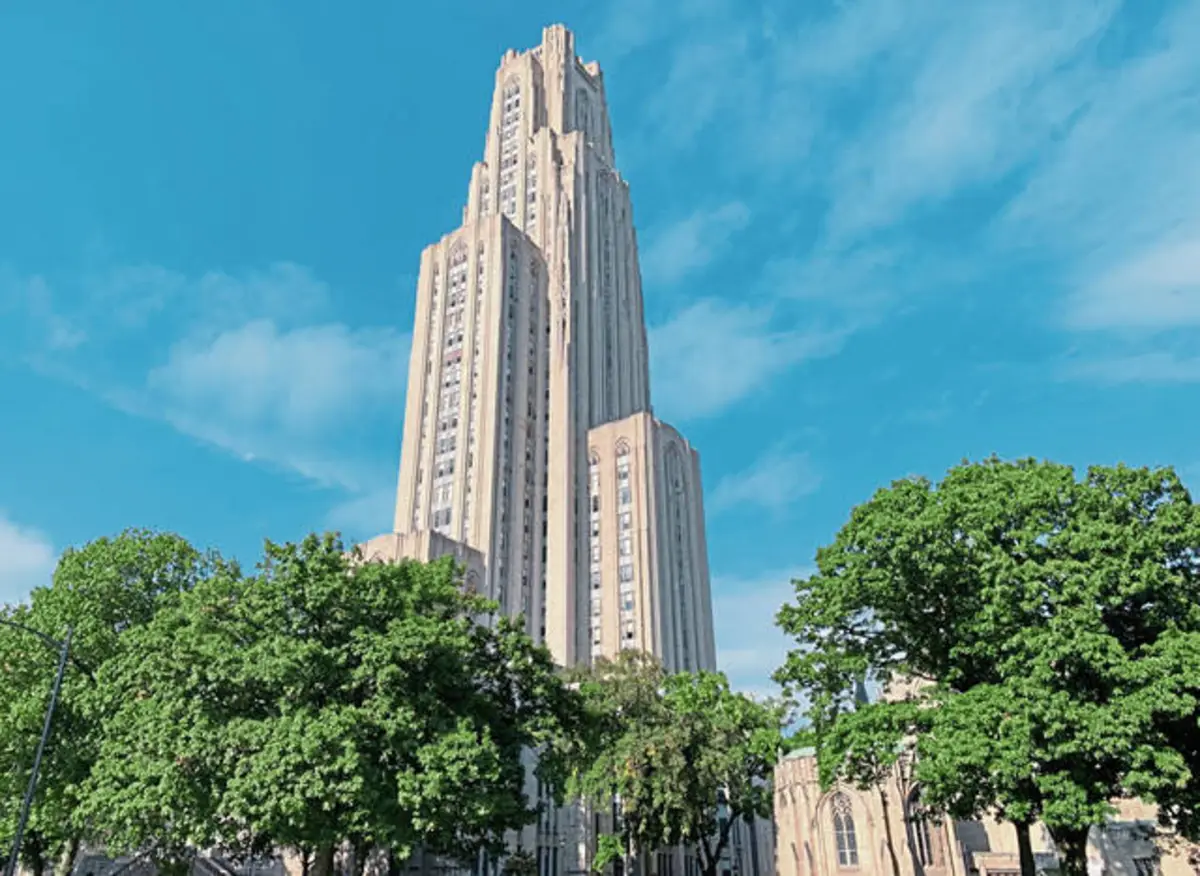
The University of Pittsburgh’s pledge of free tuition for low-income students could have a ripple effect across higher education in the region, according to one expert.
Competing colleges should be nervous, said Katie Smith, a professor in Temple’s College of Education and Human Development.
“Programs like this are a really strong marketing opportunity for institutions to cut through complexity and confusion around college costs and financial aid,” she said.
Pitt this week announced that, beginning this fall, it will cover tuition for students at its Greensburg, Bradford, Johnstown and Titusville campuses whose families make $75,000 or less annually. It is a last-dollar benefit paying for what grants and scholarships don’t cover and does not include textbooks, housing and meals or other fees.
Smith told TribLive she expects those campuses will see higher enrollment in the program’s first year.
It might attract transfer and nontraditional students, she said, and could sway a student deciding whether to attend college or not.
“It’s pretty likely Pitt will see growing enrollment at its campuses as a result of this move,” she said.
However, officials at universities that typically compete with Pitt for students didn’t sound concerned when contacted by TribLive on Friday.
“ ‘Free’ tuition is a wonderful offer, but if it’s for a college that students leave before completing their degree because of issues they may face separate from finances, that is a concern,” said Michelle Fryling, spokeswoman for Indiana University of Pennsylvania. “We believe that we need to look at many things, in addition to affordability, that students need to achieve their academic goals.”
At Greensburg, Bradford and Johnstown, in-state, full-year tuition ranges from $13,796 to $17,676. Titusville’s nursing program tuition is $16,992.
“We’re trying to make those campuses more resilient and serve the needs of those regions while also trying to have as broad of an impact across the commonwealth as we can,” Pitt Provost Joseph McCarthy told TribLive.
‘Affordability is about more than tuition alone’
In-state undergraduate tuition at the 10 universities in the State System of Higher Education — which locally include Slippery Rock, Indiana and Pennsylvania Western universities — is $7,994 annually.
“SRU has grown enrollment for three consecutive years, expanded high-demand academic programs and consistently earned recognition as one of the best values in Pennsylvania public higher education,” said Justin Zackal, Slippery Rock spokesman. “Our students graduate with meaningful credentials, manageable debt and achieve outcomes and success rates that outperform our peers. It’s a track record we’re proud to put in front of any prospective student or family, at any income level.”
IUP’s Fryling pointed to a university work group studying affordability on campus. Its findings have led to decreased tuition for in-state undergraduates and dual enrollment students, consolidated fees and a tiered residential housing scholarship.
IUP also has bolstered support for students’ well-being and academics, Fryling said. IUP saw record-breaking retention for first-time bachelor’s degree-seeking students and increases in undergraduate enrollment and students continuing for a third year of study.
Affordability “is about more than tuition alone,” said Wendy Mackall, PennWest spokeswoman.
“It is about helping students enroll, persist and graduate with strong career outcomes and manageable debt,” she said. “PennWest continues to support that goal through flexible learning options, transfer pathways, embedded certificates and workforce-aligned academic programs designed to help students complete their degrees efficiently and successfully.”
Elsewhere, the annual, in-state tuition at a Penn State commonwealth campus ranges between $13,586 to $15,666. Penn State’s media team didn’t return requests for comment.
Community College of Allegheny County students residing in Allegheny County can pay a flat rate per semester of $1,950. A CCAC spokeswoman didn’t respond to a request for comment.
At Westmoreland County Community College, the tuition rate for Westmoreland County students seeking 12 to 18 credits per semester is $2,145. In a statement, President Kristin L. Mallory said WCCC has had “very affordable tuition and has for decades.”
“A majority of our students have their tuition covered by financial aid, Pell and other grants so they graduate with little or no debt,” Mallory said. “They then go on to in-demand careers like nursing, welding, surgical technology and many more with their associate degree.
“We do believe that this certainly presents a new opportunity for our transfer students who wish to stay local for their bachelor’s degree.”
About Pitt’s decision
Pitt’s tuition pledge aims to stabilize those campuses and support a wider range of students, McCarthy said.
“Honestly, this is really more of a mission-driven decision than a financially driven decision,” he said.
Regional campus enrollment has decreased over the past several years.
He said Pitt landed on the $75,000 figure to support students who might have just missed being eligible for a Pell Grant.
Pitt officials did not have specific figures on how many current or incoming students would be eligible or what it would cost the university in financial aid.
Pell-eligible students at regional campuses range from 32% in Johnstown to 48% at Bradford.
The majority of students at regional campuses are in-state, McCarthy said.
“The regional campuses really drive workforce development in the western and central parts of the commonwealth, and we thought it was critical that we continue to focus on serving those needs,” he said.
McCarthy said the initiative builds on existing Pitt programs targeted for accessibility and affordability. Those include Pitt Pell Plus, where Pitt matches Pell grants, and another project that aims to improve student success and completion rates of rural students.
“This pledge is another example of Chancellor (Joan) Gabel’s leadership on affordability and access to a college education,” Senior Vice Chancellor for External Relations Kevin Washo said. “We know it will have a clear and positive impact on students across the commonwealth and the communities that our regional campuses serve.”
Return on investment?
Pitt is the first public university in the state to offer a free-tuition program, although it is part of a growing trend nationally.
Temple University, another state-related university, offers a Temple Promise program that covers tuition and fees for incoming, full-time freshmen from the City of Philadelphia with a family income of $65,000 or less.
Carnegie Mellon University in 2024 decided it would waive tuition for students from families that earn $75,000 or less. Additionally, students whose families earned $100,000 or less can attend CMU without using any federal student loans.
CMU spokeswoman Cassia Crogan said nearly 24% of fall 2025 first-year students were eligible for that program.
Smith, the Temple professor, said it’s expected that a new $30 million performance-based fund for state-related universities — Pitt, Penn State, Temple and Lincoln — will be available in next year’s state budget. The formula considers in-state undergraduates, Pell Grant recipients and community college transfers, as well as the university’s performance on graduation rates, high-demand degree production and affordability.
“I think (the tuition offer) is Pitt trying to position itself to be more competitive for those funds by the state,” Smith said.
The real question is whether predicted enrollment growth will sustain, she said.
“Key decisions are being made,” Smith said. “Whether it will pay off or not, I really don’t know.”