
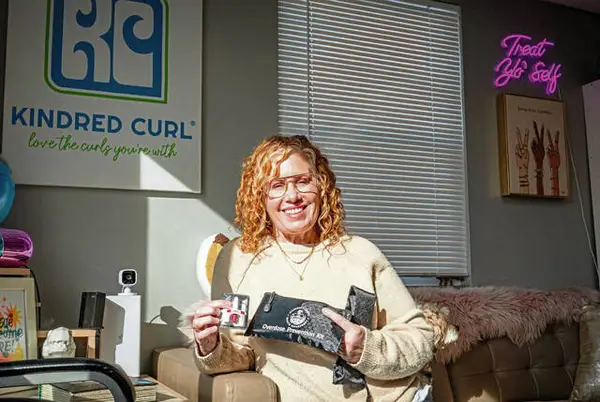
Kelly Anker wants to keep her neighbors healthy and informed.
The owner of Kindred Curl in Penn Hills recently held a naloxone training session at her store along Frankstown Road. It was her first step to help introduce wellness initiatives to the neighborhood.
Naloxone, perhaps best known by the brand name Narcan, is a fast-acting medication designed to rapidly reverse an opioid overdose, according to the National Institute on Drug Abuse. It works as an opioid antagonist, meaning it binds to opioid receptors in the brain, displacing opioids such as heroin, fentanyl and prescription painkillers to restore normal breathing.
“I want to help put a different face on people who drugs have affected,” she said. “Narcan should be like CPR. We should all know about this. The faces of people who need it are changing.”
The training was led and hosted in partnership with the Allegheny County Health Department.
In addition to the training, Anker has been stocking naloxone at her store for people who might need it and for customers who may want to keep it on-hand.
Anker said other businesses in the area are planning to stock it on-site as well.
“After having the actual education, I feel more confident being able use it and more aware of who may need it,” Anker said.
She said the training helps her feel more confident educating others about using it. She said the naloxone she keeps in her store is supplied through the county Health Department.
Following a surge of overdose deaths from 2020 to 2022, the Health Department distributed more than 66,000 free naloxone kits to individuals and organizations throughout the county. Overdose fatalities in the county have declined for the past three years, a trend health officials credited to the increased availability and use of naloxone.
County health officials in a news release said barriers still remain, despite the recent progress.
Some people may be discouraged from buying naloxone at pharmacies or retailers because of the stigma associated with opioid and fentanyl use. Others may be deterred by the price tag, which often is around $35 to $50 for a two-dose kit.
Awareness matters
Penn Hills police Chief Jason Bonace said while the department is not partnered with any of the businesses carrying naloxone, he supports their efforts in raising awareness about the opioid reversal drug.
“Addiction is something that can hit anyone and any family,” Bonace said. “Addiction doesn’t know class or status. It can hit anyone with any level of wealth or any social status.”
He said awareness is a good thing, noting the best thing people can do to help is educate themselves about addiction and naloxone.
“The more educated they are, the better it is for everyone,” Bonace said.
Diane Fitzhenry, Penn Hills EMS chief and acting municipal manager, said all 54 officers in the police department carry equipment bags to treat overdoses. Each bag contains gloves, a bag valve mask for CPR and four doses of premeasured doses of naloxone. The county supplies the police department with naloxone.
Officers are required to complete naloxone, Stop the Bleed and CPR training. They retrain biannually.
The police department has been carring naloxone for the past seven years.
Penn Hills EMS has been stocking naloxone in its ambulances since the service’s formation in 1974, Fitzhenry said. She said the state’s initial statewide standing order for naloxone went into effect in October 2015, signed by the physician general to allow pharmacists to dispense the medication without an individual prescription. This means anyone can have access to naloxone through their pharmacy.
Fitzhenry said officers are limited to using two doses of naloxone on a single patient. She said administering too much can put the person into withdrawl which can jeopardize the person’s health.
“You spray it up the nostril,” she said. “They can do a second dose after five minutes if the first dose doesn’t work.”
Fitzhenry warns people administering naloxone that the patient may become combative when they come to after being treated. She said patients often are confused and sometimes scared when they regain conciousness from an overdose.
“If you’re administering Narcan, keep an eye on where the person’s hands and legs are,” she said.
The patient should be taken directly to a hospital after being treated with naloxone.
“The effects of opiates can outlast the effects of Narcan, and the person can overdose again,” Fitzhenry said.