
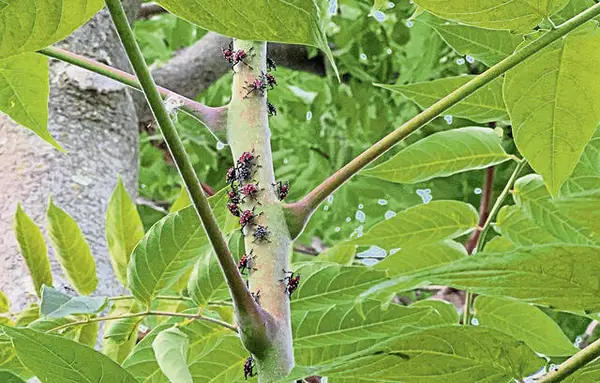
Most bugs can chill, but this week’s deep freeze might be lethal for the spotted lanternfly population, especially the unhatched ones, a Unity pest expert said.
The mottled, brilliant red and white plant hoppers are native to Asia. They invaded the Americas about a decade ago and spread like the coronavirus these past few years.
They don’t weather the cold well because they lack a hard shell for protection that helps other insects during the winter, said Zach Lipniskis, operations manager for D-Bug Pest Control Inc. in Unity.
The spotted lanternfly also will lay its eggs inside a sac that clings to a tree and resembles a bag of baked beans, Lipniskis said. Some of those sacs likely will not survive the bitter cold temperatures.
Other insects, including ticks that carry several diseases, can survive cold spells better.
They hibernate in burrows beneath leaves on the ground or other composting material or in the barks of trees, Lipniskis said.
“It’s not going to reduce population (of ticks) that much” because they are dormant and can get shelter, Lipniskis said.
Extreme cold is less harmful to insects than varying temperatures, said Michael Skvarla, assistant research professor of arthropod identification at Penn State’s entomology department.
Mild winters with fluctuating temperatures may mean fewer insects in general, but continuously cold winters mean they stay hibernating throughout the season, Skvarla said.
Insects that live in Western Pennsylvania are accustomed to the quirks of the weather here, Skvarla said.
When it gets warmer than usual in the winter, the insects can emerge from being dormant too early.
“If they wake up too many times and there’s no food available because of winter, that can kill them,” Skvarla said.
With bugs hibernating in the winter, D-Bug employees won’t begin spraying for pests until the last week of March, typically after temperatures rise above freezing at night, Lipniskis said.