
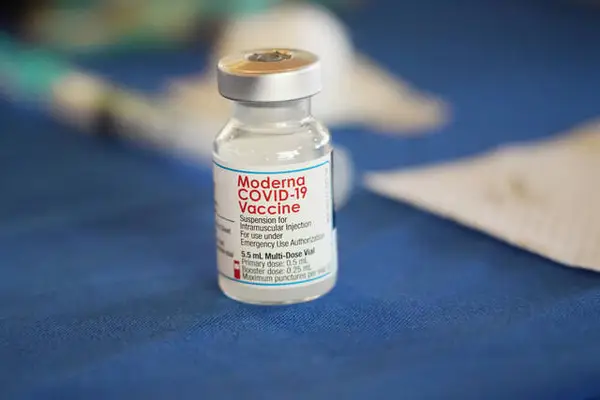
The best approach to covid-19 prevention may be to discuss it with your doctor, a leading vaccine expert told TribLive.
But a drastic shift in national policy published Tuesday in the New England Journal of Medicine raises as many questions as it answers, Dr. Paul Offit, a vaccine expert at Children’s Hospital of Philadelphia, said.
The 74-year-old Offit said he plans to continue receiving the vaccine annually because he is over 65, an age group considered at risk and recommended to get the vaccine. Drs. Vinay Prasad and Martin A. Makary stated the new recommendations in a position paper reflecting the official stance of the Food and Drug Administration.
“…the benefit of repeat dosing — particularly among low-risk persons who may have previously received multiple doses of covid-19 vaccines, had multiple covid-19 infections, or both — is uncertain,” the doctors wrote.
In light of that uncertainty, the new framework detailed endorsed by the FDA is for adults 65 and older to receive the annual vaccine, along with children and younger adults with other health issues that put them at a greater risk of have covid-related complications.
It isn’t clear who is supposed to verify if a person meets those risk factors, Offit said.
“Therein lies the problem. Many people get their vaccines from a pharmacy,” he told TribLive on Wednesday. “I’m not sure how all this plays out.”
It may mean those who want the vaccines but do not have any of the two dozen risk factors may need to pay out-of-pocket for it, Pittsburgh-based infectious disease expert Dr. Amesh Adalja said.
The risk factors include a host of respiratory conditions, cancer, diabetes, mental health issues and other ailments that plague many Americans.
Individuals are encouraged to speak with their healthcare provider regarding specific questions about vaccinations, said Dr. Michael Fiorina of Butler Memorial and Clarion Hospitals.
Dr. Fiorina and Dr. Carol Fox, chief medical office of Independence Health System said they are awaiting more guidance from the FDA and insurers in regards to those who want the vaccine but do not fit the guidelines.
A spokesperson for UPMC Health Plan, one of the region’s leading insurers echoed those comments.
“UPMC clinicians are happy to help individual patients determine which vaccines are recommended for them, based on their health status” the health plan said in a statement.
Allegheny Health Network declined to comment about the issue.
The FDA’s proposal is in line with how other countries are dealing with covid, said Adalja, who is a senior scholar at the Johns Hopkins Center for Health Security.
The one-size-fits-all approach the U.S. has taken disregards that covid is a different disease in a low risk person than it is for someone with other health issues, he said.
“Influenza vaccines contain three different strains of influenza whereas the current covid vaccine contains one strain,” Adalja told TribLive. “The cadence at which influenza screen changes are needed, fairly predictable compared to covid.:
Covid-19 is also vastly different from influenza, which means the way each disease’s vaccines works is also different, he said.