
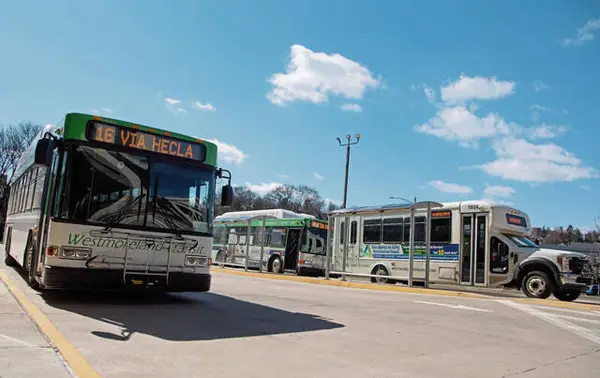
Westmoreland transit bus fares will stay the same over the next year, officials said this week.
Westmoreland County Transit Authority will maintain its fees for the fiscal year that begins July 1, under a $17.9 million budget, Alan Blahovec, executive director, told the authority board Thursday.
The board unanimously approved the 2025-2026 budget, which represents a 5.1% increase from the $17 million budget for the current fiscal year. The state provided $5.89 million in this fiscal year and the upcoming budget assumes the same support, though it could increase,
The state House of Representatives this week approved the governor’s proposal to allocate $292 million toward mass transit to support the state’s 52 transit systems, which would give the Westmoreland’s transit authority an additional $1.16 million in state aid, the authority said. That amount of additional state aid would represent a 21% increase, said Ashley Cooper-Brounce, the authority’s deputy executive director.
The transportation funding still must pass the Republican-controlled state Senate, before it goes to Gov. Shapiro.
A spokeswoman for Senate Majority Leader Joe Pittman, R-Indiana, whose district covers a portion of Westmoreland County, could not be reached for comment on whether he supports Shapiro’s budget for mass transit funding.
The state funding is the largest amount of revenue the authority receives from any single source. The budget also projects receiving $3.7 million from transporting those needing rides for medical assistance. The authority will get $3.3 million from covid-related federal funding — the CARES Act, the American Rescue Plan Act of 2021 and the Coronavirus Response and Relief Supplemental Appropriations Act of 2021. The Covid Response and Relief bill funneled $14 billion to support mass transit nationwide.
All of the CARES Act funding has been allocated, Cooper-Brounce said, and all covid-related funding the authority has received will be depleted by the 2027-2028 fiscal year.
The revenue from fare box and tickets is projected to be $478,000 for the next fiscal year, up from $450,000 in the current year, Cooper-Brounce said. But, fares from revenue — and passenger and third-party co-pays — will amount to only $921,590. That will account for only 4% of the authority’s total budget, she said.
Operational costs will amount to $14.4 million, with general administrative costs projected to be $3.4 million.
The authority will start the fiscal year with 150 employees, five less than last year, Cooper-Brounce said. There will be 18 positions available in the upcoming fiscal year, including six para-transit drivers, two mechanics and two utility workers, but it does not mean the authority will fill all those positions, she said.