
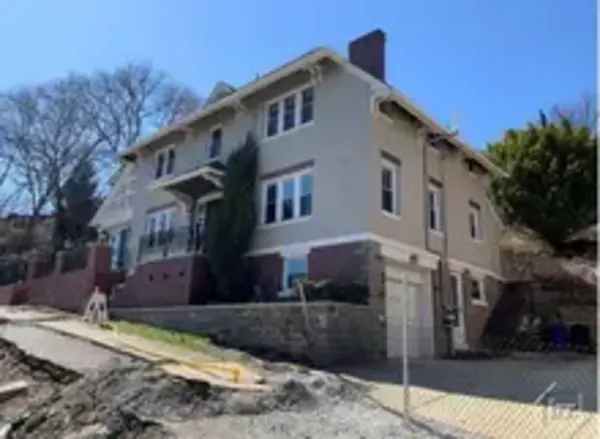
When the street began pulling away from their house in Pittsburgh’s historic Schenley Farms neighborhood house in March 2022, Brian and Donna Albert reported it to the city.
Over the following weeks, Pittsburgh officials determined a landslide was causing Andover Terrace to collapse and a retaining wall to fail.
The city closed off the street and sidewalk, and the Alberts haven’t had access to their property since April 2022.
In October, the state’s Commonwealth Court accused Pittsburgh of “strongarm tactics” and agreed with the couple that the city’s actions amounted to a “de facto taking,” requiring that they be compensated for their home.
The city initially obtained an appraisal valuing the property at $730,000.
But now, Pittsburgh officials argues the city should be required to pay the Alberts $350,000 — less than half that amount.
Both sides are scheduled to appear Monday before Allegheny County Common Pleas Judge Mary C. McGinley for a hearing on the matter.
Eminent domain
The Commonwealth Court opinion lays out the details of the landslide and damage to the Alberts’ home in Schenley Farms, a historically significant 170-acre tract straddling the Hill District and Oakland near the University of Pittsburgh.
Pittsburgh tried to slow the landslide by removing pavement and underlying brick pavers and installing soil nails.
But by September 2023, the street level had sunk 20 feet.
To do the necessary work to the Alberts’ property, as well as others on the street, the city sought easements from the homeowners.
Initially, Pittsburgh officials sought voluntary cooperation instead of using eminent domain.
The homeowners refused, however, prompting the city to cite them for code violations “in an attempt to bully the owners into granting the easements,” the Commonwealth Court wrote.
Although the citations were dismissed, the owners still had to waste time and money to fight them, the court said.
Ultimately, the city used eminent domain to obtain the Alberts’ property in February 2023, paying them $26,000 initially.
However, when the Alberts went to the Allegheny County Board of Viewers to determine damages they were entitled to, the city objected.
Common Pleas Judge Michael Della Vecchia found in the Alberts’ favor, as did the Commonwealth Court, which ruled that the city delayed stabilization efforts and failed to promptly seek funding for remediation — not doing so until its 2024 budget.
“Under the totality of the circumstances – the city’s complete denial of access to the Alberts’ property for several years, and with no definite end date in sight, along with serious structural damage to the house, and the city’s intentional delays and strongarm tactics – the trial court properly concluded there was a de facto taking,” the Commonwealth Court wrote.
Dickering over value
At Monday’s hearing, the city is expected to call as witnesses an appraiser and engineer. Brian Albert is also expected to testify.
According to the Alberts’ pre-trial statement, the couple bought the house as an investment property in 2018 for $410,000. They still owe about $143,000.
They argue in the court filing they are entitled to $730,000 for “estimated just compensation,” as required under condemnation law.
The figure, they said, was provided by the city in an appraisal setting the property’s fair market value.
Since then, though, the city claims the value is significantly reduced.
In its pre-trial statement, Pittsburgh argues it should be responsible for only the value of the property after the landslide had already damaged the house and reduced its worth.
An engineer estimated the cost to repair the damages from the landslide could be $230,000.
Citing that figure, as well as an estimated $150,000 loss from the stigma associated with the house being part of the landslide, the new appraisal provided by the city asserts the value of the house is just $350,000.
The Alberts object, citing Pennsylvania law on condemnation that says damage resulting from a natural disaster “shall be excluded in determining fair market value of the condemnee’s entire property interest immediately before the condemnation. “
“Clearly, both the plain language and intent of the statute are meant to prevent exactly what the city proposes,” the Alberts’ attorneys wrote. “This court needs to put a stop to the city’s perseverating in its bad faith conduct.”