
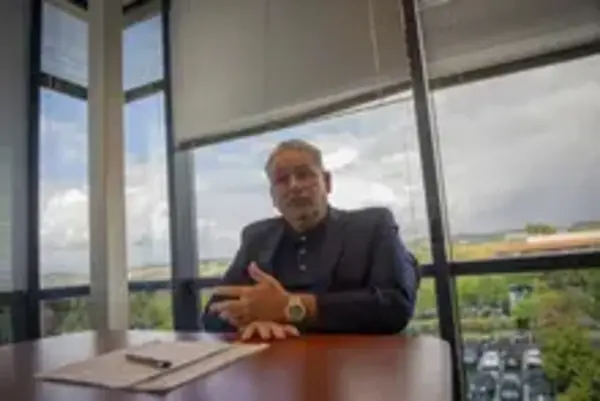
Flush with cash after selling GetGo for $1.6 billion, Giant Eagle is prepared to spend more than $100 million to renovate stores and show customers it’s serious about lowering prices.
The investment spree starts Thursday and will run through 2026, marking the start of a “new era” for Giant Eagle, according to president and CEO Bill Artman.
The Cranberry-based grocer calls it the “Because It Matters” campaign — a marketing push, strategic shift and apology tour for high prices rolled into one.
“I want to be the best version of Giant Eagle that we can be,” Artman told TribLive on Tuesday at Giant Eagle’s headquarters. “And I know we haven’t done that over the last couple of years.”
Giant Eagle, one of the nation’s largest private firms, is navigating an increasingly crowded grocery market in its stronghold of Southwestern Pennsylvania.
After years as the top dog, Giant Eagle is dueling with Walmart for supremacy in the Pittsburgh area, according to market share data from Chain Store Guide.
Dollar General and Target have made inroads in recent years, and Wegman’s plans to open its first store in the Pittsburgh region — in Cranberry, no less.
Giant Eagle has about 30,000 employees and more than $11 billion in annual revenue.
Artman brushed off concerns about competition, rattling off a history of the company withstanding challengers in its five-state footprint.
“It’s about evolving and changing to what the current environment, the current landscape is,” he said.
The chain’s latest evolution walks a fine line on prices.
On one hand, Artman acknowledged sticker shock is the top complaint from shoppers.
Giant Eagle hopes to address these concerns with flashy promotions, like a one-week sale starting Thursday that lowers 1,000 items to $1, as well as longer-term price cuts on meat, produce and pantry staples.
But Artman also views his stores as a premium experience worth paying for.
“Are you going to pay a little bit more? Yes, you are,” Artman said. “But if we can provide a better experience, better variety and better quality, I believe customers will make the trip.”
Justin Weinstein, chief merchandising and marketing officer for Giant Eagle, declined to give exact figures, but said the more than $100 million investment will be split roughly down the middle between lowering prices and improving the customer experience.
In terms of store upgrades, about a dozen supermarkets in Pennsylvania and Ohio will get a facelift.
Giant Eagle is also replacing its noisy metal carts with plastic ones that are quiet and easy to maneuver, according to Artman. So far, nearly half of chain’s 200-plus stores have the new carts.
A good chunk of the company’s strategy is geared toward taking a cue from what’s already working.
Services like Instacart and Doordash, combined with curbside pickup make up about 8% of revenue and counting, according to Weinstein, so the company is adding delivery options to 33 more supermarkets.
In addition, Giant Eagle will continue to focus on hiring and training the butchers, bakers, cake decorators and cheesemongers that company leaders see as an area of competitive advantage.
Pharmacy investments
Giant Eagle knew its pharmacies would be put to the test after purchasing prescription files from 78 closing Rite Aid stores, which is the equivalent of about 6 million prescriptions a year.
Most customers absorbed in the sale stuck with Giant Eagle, according to Artman.
The influx, especially at first, brought long lines that frustrated some customers.
“Our infrastructure is not designed to pick up double the business,” Artman said.
In response, Giant Eagle will expand pharmacy sections at more than 60 stores and make extra room for health and beauty products in at least some of them.
The company is betting big on its prescription business as traditional drugstores decline.
“I think you’ll see Giant Eagle evolve as a drugstore within a supermarket, not just a pharmacy within a supermarket,” Artman said.
And yet, it’s also trying to emulate that struggling model at six standalone pharmacies.
Giant Eagle is opening two more drugstores at former Rite Aid locations in Pittsburgh’s Mt. Washington neighborhood and Sewickley.
Running a freestanding drugstore has been tough as of late, in part because of low reimbursements from pharmacy benefit managers, the middlemen who set the prices pharmacies get from insurers for dispensing medications.
These reimbursements vary depending on the drug and can cause pharmacies to take a loss on certain medications. Rite Aid partly blamed unsustainable reimbursement rates for its bankruptcy.
Nonetheless, Artman said Giant Eagle makes a profit filling prescriptions, bolstering his confidence in his standalone pharmacies. The more prescriptions, he figured, the better.
For Artman, there’s also an obligation to make these pharmacy investments in the wake of Rite Aid’s collapse. Dozens of the troubled company’s stores in the Pittsburgh area have closed or will cease operating soon, forcing people to look elsewhere for a pharmacist.
In some communities, Giant Eagle is the only other option.
“If we didn’t step up, who was going to do it?” Artman said.