
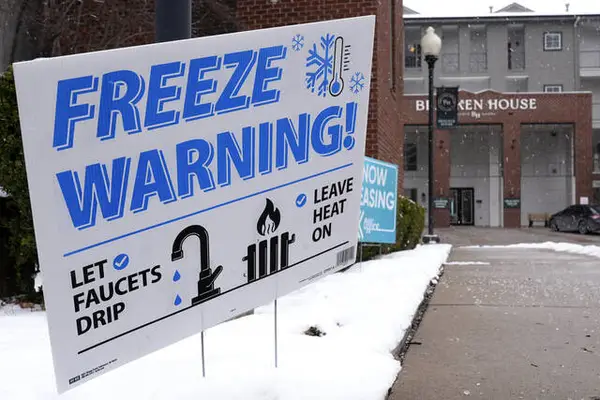
Western Pennsylvania may be avoiding heavy snowfall this week, but frigid temperatures are still sticking around.
Matt Brudy, meteorologist at the National Weather Service in Moon, said colder air is on the way during the second half of this week and this weekend, which could lead to single digit wind chills in some parts of the region.
Water pipes have the potential to freeze over as well.
The typical high in the region this time of year is 43 degrees, and according to Brudy, only Wednesday of the next seven days is expected to approach that mark. The remaining days are forecasted to be colder than usual.
Similarly, the normal low hovers around 28 to 29 degrees, and temperatures are expected to stay below that for most of the week.
“They will be below average as well,” he said, with some areas reaching up to 20 degrees below average.
The forecast for this week is as follows:
- Monday: Lows in the teens at night
- Tuesday: Highs in the mid-30s
- Wednesday: Highs in the low-40s
- Thursday: Low-20s at night
- Friday: Teens at night
- Saturday: Teens at night
- Sunday: Single digits at night
Brudy said these numbers will be 2 or 3 degrees colder in Westmoreland County compared to Allegheny County, as there are typically slightly warmer temperatures in urban areas.
The numbers will be even lower at areas of higher elevations, he said.
The most concern for wind chill into the teens and single digits are Friday night, Saturday night and Sunday night, according to Brudy. In higher elevations, wind chill might even be into the negative single digits, he said.
Combined with the incoming wind, which Brudy said will cause some concerns, temperatures will feel even colder.
The reason he cited for the incoming cold temperatures is a dip in the mid-level jet stream that is allowing cold air from Canada to filter down into the United States.
“That allows that colder air from the north to sink farther south than it otherwise would,” Brudy said.
Protecting your pipes
With several days of below-freezing temperatures ahead, water pipes could freeze, Julianne Pelusi, media and government affairs manager at Pittsburgh Water, warned.
She explained that when temperatures fall to around 32 degrees and water freezes, it can expand inside a pipe, putting extra pressure on the pumping system.
Brudy said the most common way to prevent this is to keep faucets on a slow drip—leaving them slightly open so water continues to flow.
“Keep it on a slow drip so you keep water flowing through the pipes,” he said. “When you get prolonged periods of cold, it’s a good idea to do that.”
Brudy also recommends keeping sink cabinet doors open to allow warmer indoor air to reach the pipes.
“If you have any hoses or any water running outdoors for any reason, it might be a good idea to bring those inside in the colder weather,” he said as well. “Don’t forget to bring pets indoors.”
Pelusi said Pittsburgh Water also suggests insulating vulnerable plumbing, sealing off any drafts or cold entry points in people’s homes and winter prep any outdoor water setups.
“We recommend taking these steps as soon as possible if you haven’t already done so this season,” she said, as it’s best to complete winter prep and insulation before temperatures drop to the freezing range.
Pipe wrapping materials can be found at local hardware or building supply stores, according to Pelusi. Pipes in attics, garages or anywhere near an exterior wall should be wrapped.
“People should’ve already done that hopefully,” she said.
For winterizing outdoor plumbing, she advised disconnecting, draining, and storing garden hoses, and shutting off the indoor valve for the outdoor spigot. Once the valve is closed, she said to open the spigot so any remaining water can drain before freezing temperatures arrive.
Pelusi suggested that water meters located outdoors can be insulated using packing peanuts, household insulation, blankets, or even towels.
“If you’re going to be away from your house for awhile, shut off and drain the water supply,” she said.
Brudy said temperatures might return to near normal next week.
“If you’re going out, maybe try to limit your time outdoors,” he said. “Dress in layers — cover up as much skin as you can.”