
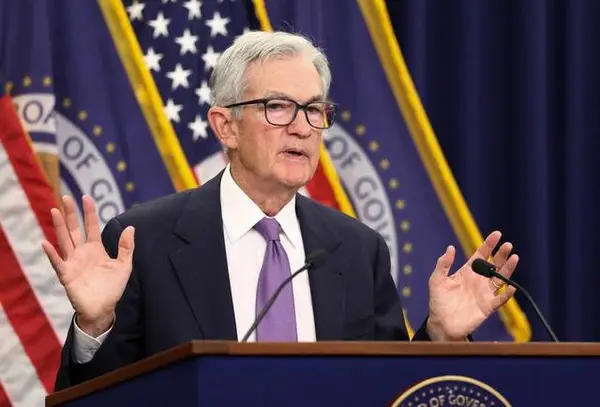
After cutting interest rates in September and October, the Federal Reserve should pause at its December meeting — the jobs market isn’t in crisis but inflation remains menacingly high.
By the summer of 2023, the economy was at full employment but continued to grow robustly.
From September 2023 to December 2024, it added 174,000 jobs a month, even though indigenous population growth and legal immigration could support only about 90,000 additional workers a month. Illegal immigrants made up the difference.
In 2025, President Donald Trump’s deportations and tightened legal pathways for immigration slowed legal additions to the workforce to about 55,000 a month.
Since he announced his big tariffs in April, jobs creation has been choppy but through September, it averaged 44,000 jobs a month.
Additional stimulus from lower interest rates would juice inflation more than it would add more jobs.
Since March 2021, inflation has been significantly above the Fed’s 2% target.
In September, the Consumer Price Index was up 3% with Trump’s tariffs contributing about 0.5%.
That’s not encouraging, because we have seen only about half of the tariffs’ effects if the Supreme Court does not strike down most of them.
Fed policymakers place a lot of stock in consumer expectations about future inflation, and those have hardened.
Conference Board and University of Michigan surveys put those closer to 5% than 2%.
Even if exaggerated, those indicate well-founded fears, because until at least recently, producers abroad and American businesses like automakers have been absorbing many of the cost pressures from Trump’s tariffs.
That can’t last forever.
Altogether, expect inflation close to 3% next year and any shock could boost it further.
We have considerable data independently collected by the Federal Reserve, industry associations and commercial statistical services.
Those indicate the economy remains on a reasonably good footing for long-term growth.
Jobs creation has been slowed mostly by Trump’s deportations, his tighter stance on immigration overall, uncertainty about tariffs and the downsizing instigated by AI.
In October, the payroll processor ADP and Revelio Labs estimated the private sector added 42,000 and 13,100 respectively. State and local hiring would add to that.
The federal government shutdown and the Trump administration’s reductions in force will subtract from those figures, but the government reopening makes those effects transitory.
In 2025, AI investments accounted for virtually all the growth in capital spending. Those added 1% to GDP growth.
In 2026, AI’s boost to aggregate demand and GDP will likely be 1.5%, and Trump’s tax cuts should add a comparable boost.
On the supply side, AI will likely increase productivity growth 0.8% to 1.5% a year. That’s on a scale similar to the transcontinental railroads, moving assembly line and interstate highway system.
If the Supreme Court strikes down most of Trump’s tariffs, the impact would be another large tax cut.
Mortgage and business borrowing interest rates tend to track the 10-year Treasury rate, which is currently about 4%.
Even if economic growth slowed to 2% and with inflation about 3%, the neutral rate, consistent with neither accelerating inflation nor excessive unemployment, should be 5% for 10-year Treasuries.
By that reckoning, monetary policy is too loose.
The Fed should stand pat for now and see what happens at the Supreme Court regarding Mr. Trump’s tariffs.