
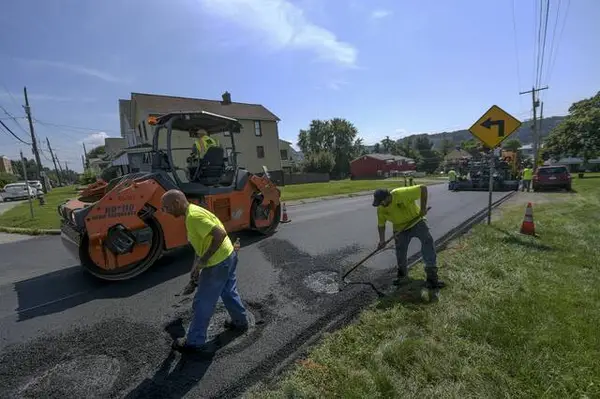
Think about the last time the temperature approached 90 degrees, with oppressive humidity. Now imagine working under those conditions all day — maybe in a warehouse, on a farm, on a roof, inside a sweltering kitchen or factory, or delivering goods. Across Pennsylvania, many essential workers do this every summer, often with minimal safeguards. It’s time for the commonwealth to act. The Workplace Heat Protection Standards Act (House Bill 1580), now under consideration in the state Legislature, offers a vital public health intervention.
Heat is not just uncomfortable — it kills. Heat exposure is the leading weather-related cause of death in the U.S., responsible for heat stroke, dehydration and kidney failure, as well as countless cases of heat exhaustion, cramps, fainting and the worsening of conditions like heart disease.
In Pennsylvania, as average temperatures rise and extreme heat events become more common, the danger increases. Many workers already report symptoms of heat stress — dizziness, disorientation, muscle cramps, nausea — but feel compelled to push through, fearing lost pay, discipline or job loss.
Agriculture, construction, landscaping, delivery, warehouse work and indoor jobs lacking climate control are particularly vulnerable. Some workers are more at risk because of chronic medical conditions, medications, older age or lack of acclimatization. Without structured protections, the burden falls disproportionately on low-wage workers, immigrants and communities of color — groups that already face deep health inequities.
It shouldn’t be this way. HB 1580 would finally set basic statewide protections for workers exposed to extreme heat. This is not radical legislation; it’s a long-overdue public health measure that recognizes heat as the serious occupational hazard it is.
HB 1580 would require employers to develop heat illness prevention plans, train supervisors and workers to recognize warning signs, and provide water, rest breaks and shade when the heat index reaches 80 degrees or higher. It would also direct the Department of Labor & Industry to issue detailed, enforceable standards based on temperature and humidity — similar to laws already in place in California, Maryland, and Colorado.
These aren’t burdensome requirements. They’re simple, low-cost interventions that save lives. A shaded rest area or a five-minute cooling break can mean the difference between recovery and a trip to the emergency room. Yet under current Pennsylvania law, there are no statewide rules guaranteeing these protections.
Occupational health experts have witnessed firsthand the devastating effects of heat on workers. Dr. Pouné Saberi, adjunct assistant professor of emergency medicine at the Perelman School of Medicine at the University of Pennsylvania, emphasizes that these tragedies are entirely preventable with simple, life-saving interventions — such as acclimatization programs for new employees, access to rest, shade and hydration, and medical surveillance to detect early warning signs. Establishing workplace heat protection standards, she notes, is an essential step for all at-risk industries as the climate continues to warm.
The absence of clear standards leaves workers — especially those in low-wage or temporary jobs — vulnerable. It also leaves responsible employers without guidance or consistency across industries. HB 1580 would fix that by establishing a clear baseline: when heat becomes dangerous, employers must act.
In fact, research shows that protecting workers from heat not only prevents illness — it increases productivity and yields a strong return on investment. A 2024 study in the Annals of Work Exposures and Health found that workplace cooling measures significantly improved worker output and safety.
Beyond economics, there’s a deeper issue of fairness and dignity. The workers who grow our food, repair our roads and keep our supply chains moving deserve the same health protections as anyone else. They shouldn’t be expected to sacrifice their well-being to keep the state running.
Pennsylvania now has an opportunity — and a responsibility — to act. HB 1580 represents common sense and compassion grounded in science. It acknowledges that our climate is changing, and our workplace policies must change with it.
As summer heat continues to intensify across Pennsylvania, this bill offers a simple promise: No one should have to risk their health or life just to earn a paycheck. Lawmakers should pass HB 1580 and make that promise real.
Matt Shorraw is the policy and program coordinator for Physicians for Social Responsibility of PA.