
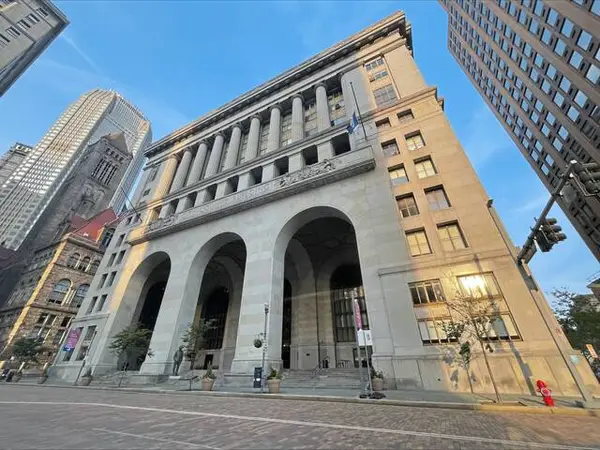
Pittsburgh City Council members agree they won’t pass the 2026 budget Mayor Ed Gainey proposed.
Though the Gainey administration is staunchly defending its budget, council members aren’t buying it, and neither is the city controller or council’s budget director.
They claim the spending plan is not balanced and grossly underestimates certain expenses.
What to do about it has been the topic of lengthy debates at City Hall over the last couple of months.
Officials have until the end of the year to pass a budget that can earn the support of a majority of council members — something that may not be easy.
Council is split over whether to slash spending, raise taxes or find a middle ground that includes both.
It’s anyone’s guess what will happen as the budget battle comes down to the wire. To help you understand the complex situation, TribLive has put together this primer.
Why is council so concerned?
Council members are worried the 2026 budget is not balanced and does not account for all of the city’s expenses.
Pittsburgh’s Home Rule Charter demands a balanced budget.
The Gainey spending plan seems to lowball costs for public safety overtime, utility bills and vehicle maintenance, officials said.
Critics say it also underspends on investments in the city’s decrepit vehicle fleet and demolitions of blighted buildings — and not by just a few dollars.
Estimates from Council Budget Director Peter McDevitt show the mayor’s spending plan seems to allocate about $17.5 million less than what’s needed to cover operating costs.
Plus, several council members have said they’d like to spend millions more on the city’s fleet of aging ambulances, fire trucks, snowplows and other vehicles.
Jake Pawlak, the chief architect of Gainey’s budget, has argued the spending plan is balanced, but by the tightest of margins.
His analysis revolves around the assumption that the city won’t actually hire all the employees listed in the budget and can find money in trust funds to help cover utility bills.
The structural deficit question
Making matters worse, officials for years have passed budgets that don’t count all costs as expenses.
As a result, they have presented budgets they say are balanced — even when the city spends more than it brings in.
Officials refer to those costs outside the budget as “transfers.”
If those transfers were counted among expenses, the city would be operating at a deficit this year of more than $20 million, McDevitt said.
The same would be true under Gainey’s plan for next year.
Pittsburgh draws from its reserves and any budget surplus to fund transfers.
Councilwoman Erika Strassburger, D-Squirrel Hill, who chairs council’s finance committee, said the situation concerns her — but isn’t her top priority to fix next year.
Pawlak, director of the Office of Management and Budget, acknowledged officials may want to consider counting transfers as expenses.
He argued, however, that’s not something to tackle right now. Pawlak said it would be best to slowly move those transfers into the expense column over a period of several years.
What do transfers fund?
Some of the so-called transfers that don’t count as expenses are essentially operating costs.
They include money that pays city workers’ salaries, provides grants to local nonprofits, offers rent assistance to low-income residents and funds employee benefits.
Others include funding for the capital budget, which covers longer-term, costlier projects.
As well, the city annually allocates through transfers $10 million each to the Stop the Violence fund and the Housing Opportunity Fund.
Stop the Violence pays for the city’s Office of Community Health and Safety and provides grants to community groups that combat violence.
Meanwhile the housing fund is used to help low-income renters avoid eviction and to create and preserve affordable housing.
The mayor’s 2026 budget also includes a $2.1 million transfer to a technology modernization fund.
On top of that, every year for the next 25 years, Pittsburgh must spend $2.5 million to pay off a controversial bond the Urban Redevelopment Authority took out to pay for affordable housing programs.
That, too, is counted as a transfer.
Why is Pittsburgh being squeezed?
The city’s revenues have dropped in recent years, leaving Pittsburgh struggling to find the cash to cover its costs.
Real estate tax revenue — which had been the city’s largest revenue stream but is now eclipsed by earned income tax — has been declining and is projected to continue shrinking in the coming years.
That decline has been driven by the lack of a countywide reassessment and decreasing values in Downtown commercial properties, as demand for office space has dwindled since the pandemic.
At the same time, federal covid-19 relief money is running out. The Pennsylvania Supreme Court ruled Pittsburgh can no longer collect a tax on out-of-town performers and athletes, yanking another roughly $4 million from the budget each year.
Plus, costs are increasing due to inflation. And the city hasn’t increased its real estate tax rate in more than a decade.
How can the problems be fixed?
Everything is on the table, officials have said.
Councilwoman Barb Warwick, D-Greenfield, pitched a 30% tax increase.
Council President R. Daniel Lavelle, D-Hill District, has asked all department heads to find ways to shave 5% of their spending.
Other options include laying off part-time workers, revoking planned pay raises for non-union workers or decreasing transfers to the Stop the Violence fund or Housing Opportunity Fund.
Strassburger believes the best solution will likely involve a mix of increasing taxes and cutting costs.
What’s next?
The deadline for Pittsburgh to pass a balanced budget is December 31.
Council plans an initial vote on amendments on Dec. 18 before hearing public feedback on Dec. 20.
A vote on the budget is scheduled for Dec. 21, a Sunday.
Mayor Ed Gainey will have 10 days to approve or veto the budget.
If he does nothing, the budget as amended by council becomes law.
Council would have to vote to override any vetoes on Dec. 31. A virtual vote, if needed, is scheduled for 11 p.m. to ring in the new budget and the new year.