
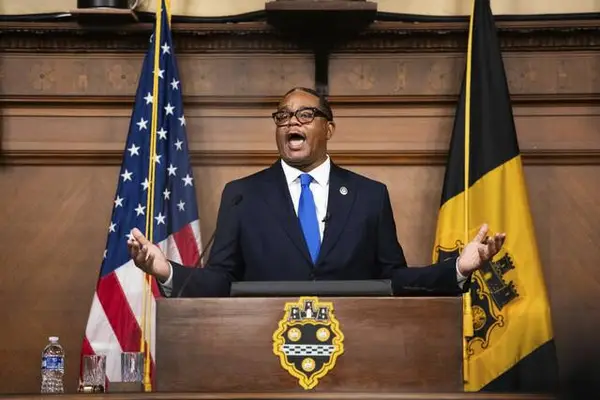
Pittsburgh Mayor Ed Gainey plans to let next year’s $693 million, City Council-backed budget — and the 20% property tax hike set to come with it — become law without his signature.
Gainey, in a letter Tuesday to council President R. Daniel Lavelle, called the 2026 budget he initially pitched in November “balanced” and slammed the city’s governing body for increasing spending from his original proposal of $680 million.
Critics have claimed Gainey’s budget lowballed costs by at least $20 million and lacked necessary funding for public safety overtime, utilities and investments in the city’s aging vehicle fleet.
“I am not opposed to tax increases as a matter of principle and share the view, expressed by council during its deliberations, that small tax increases to ensure that city revenues remain in line with growing costs may be periodically necessary,” Gainey wrote.
“However,” he added, “I believe that a 20% increase is greater than current fiscal circumstances warrant.”
In his letter, Gainey said he opted to avoid a veto fight with council.
“Despite my concerns, I recognize that these bills were adopted by council by margins that could overturn my veto, and I do not wish to unnecessarily prolong the legislative process for merely symbolic purposes,” the mayor wrote.
Councilman Bob Charland, D-South Side, told TribLive Tuesday that Gainey’s decision to not sign the budget underlines “his lack of appreciation for how severe the budget situation is.”
“Mayor Gainey put in his letter something about the fact that we added spending — well, we added spending to cover his inadequacies,” Charland told TribLive. “The fact that he doesn’t want to sign it? Good luck with that. And good riddance.”
The Gainey administration did not respond Tuesday to phone calls or emails seeking comment. Around 1 p.m., mayoral spokeswoman Olga George’s cellphone sent calls directly to voicemail.
‘Essential’ program
Gainey’s letter criticized council members for failing to increase funding for homestead exclusions and property tax discount programs for senior citizens.
The outgoing mayor, who lost his first reelection bid to Allegheny County Controller Corey O’Connor in May’s Democratic primary, also criticized council for halving the money for the city’s Stop The Violence Fund, a vital priority for the Gainey administration.
Council’s version of the budget provides the fund, started under former Mayor Bill Peduto, with $5 million in 2026, down from $10 million this year.
Gainey, in his letter, said Stop The Violence programs “have been absolutely essential to the massive reduction in violence we’ve seen during my term in office.”
The letter provided no additional details.
City Council voted Sunday to raise Pittsburgh’s property taxes by 20%, down from an earlier proposal for a 30% tax hike. It is set to be the city’s first tax increase in more than a decade.
That increase will bring the city an additional $28 million next year, raising the city’s total real estate tax revenue estimate to more than $171 million, according to calculations prepared by City Council Budget Director Peter McDevitt.
The average household would pay an extra $164 a year, McDevitt’s estimates show.
On Sunday, Councilman Khari Mosley, the Point Breeze Democrat who sponsored the 20% compromise, called council’s budget “the best path forward to address our aging vehicle fleet.”
Additional revenue is essential to maintain current city services, according to Councilwoman Barb Warwick, D-Greenfield, who floated the 30% tax increase earlier this month.
“This is something no elected official wants to do, but it is the responsible thing to do,” Warwick said Dec. 8. “Times are tough for everyone right now, but after 11 years without a tax increase, the city needs additional revenue in order to keep providing the core services that our residents deserve and depend on.”
Override power
George, the mayor’s press secretary, said in a Sunday statement that Gainey planned to “thoughtfully evaluate the decision made by City Council.”
“That review will focus on understanding the impact on residents, businesses and the long-term financial health of the city with the goal of continuing to serve the community in a fair, responsible and transparent manner,” George said.
City Council appeared to have enough votes this week to override a potential Gainey veto. Six would be needed.
City Code mandates that elected leaders adopt a budget by Dec. 31 each year. Council had arranged for a session at 11 p.m. on New Year’s Eve if an override were necessary.
Councilman Bobby Wilson, D-North Side, was one of the two votes Sunday against the budget. Outgoing Councilwoman Theresa Kail-Smith, D-West End, was the second.
“We have to fix our own house before we charge you more for your house,” Wilson said.
Gainey, in late September, had unveiled a spending plan that did not raise taxes, lay off workers or cut services.
But council members, their budget director and the controller unanimously agreed the mayor’s budget also failed to properly account for all of the city’s expenses.
Council members before voting on the budget explored a range of solutions, including spending cuts and an increase to property tax rates.
The city in recent years has seen its revenues dip, fueled largely by the lack of a countywide property reassessment and declining values in the Downtown commercial real estate base.
Federal covid-19 relief money is mostly exhausted. The Pennsylvania Supreme Court also has barred the city from collecting the facility usage fee, a tax on out-of-town professional athletes and performers.