
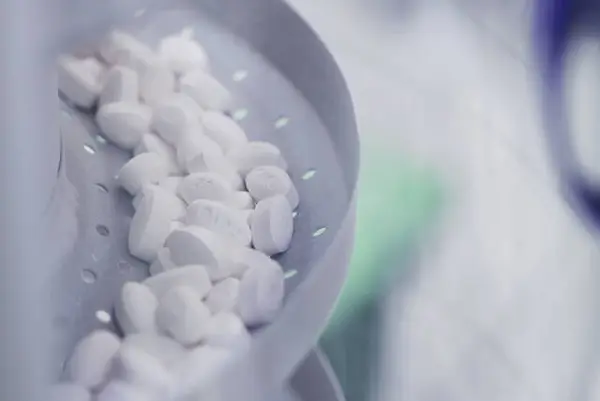
A pill version of the GLP-1 weight-loss drug Wegovy is expected to debut in the U.S. in early January.
But how will the pills stack up against the already widely used injectables?
Doctors in Western Pennsylvania said the pills will be a welcome addition to GLP-1 drug options for their patients.
The main difference between the pills and injectables is frequency, according to Dr. George Eid, chair of the Bariatric and Metabolic Institute at Allegheny Health Network.
The new pills will have to be taken once every morning, whereas the injectables are once per week and include a needle, which can be intimidating for some, he said.
The Food and Drug Administration on Monday approved the Wegovy pill, which is made by Novo Nordisk. Eli Lilly, which makes another injectable, Zepbound, will also have an oral drug version called orforglipron, but it’s still under review.
With Monday’s approval, the Wegovy pill is expected to be available within weeks, according to Novo Nordisk’s announcement.
Though a once-per-week injection sounds like less of a hassle than daily pills, Eid said, there are other logistical considerations with the injectables, which must be refrigerated.
“It comes down to patients’ preference,” he said.
When taking the Wegovy pill in the morning, it must be taken with four ounces of water on an empty stomach, the company said, with a 30-minute break before eating or drinking.
The Wegovy obesity pill contains 25 milligrams of semaglutide, which is the same ingredient in the injectables.
However, Novo Nordisk said the pill comes in a higher dose than the injections and must be taken daily because the body breaks down part of the pill as it moves through the digestive tract, so less of the medication makes it into the bloodstream compared to the injectables.
‘Another tool’
According to a clinical trial, those who took the Wegovy pill lost 13.6% of their total body weight on average over about 15 months, compared to a 2.2% loss if they took a placebo pill. The injectable version of Wegovy has an average weight loss of about 15%.
Injectable shots overall result in a range of 15%-20% in weight loss, according to Eid.
“It’s another tool in our toolbox that we will use with patients,” he said of the pill. “The real test will be starting to use it. … Time will tell.”
Like the injectable medication, the pills have potential gastrointestinal side effects, including nausea, vomiting and diarrhea, which doctors said are the most common side effects with the injectables.
“That can sometimes be limiting,” Eid said. “Not everybody tolerates those.”
He said it’s important to remember that obesity is a heterogeneous disease, meaning different patients will respond differently to various treatment options.
“You need different modalities for different patients,” Eid said. “The more options we have, the better it is.”
GLP-1 drugs aren’t short-term weight-loss treatments like being on a diet for six months, he said.
“This is a lifelong treatment,” Eid said. “Many studies have shown that once you stop the treatment, the weight will come back.”
Dr. Thaddeus Pajak, medical director of obesity medicine at Independence Health System, said the availability of GLP-1 drugs as pills is opening the door to more discussions about obesity as a disease.
“It’s not something any longer that people need to live in shame about,” he told TribLive. “Finally, because we have medicines to help those lifestyle efforts, we can have a good conversation about it.”
Pajak likened taking GLP-1 drugs to manage obesity to using an inhaler to treat asthma.
“It deserves to be treated with a multidisciplinary approach, and these pills are just one of those things,” he said.
Cost-effective alternative
About 1 in 8 Americans have used injectable GLP-1 drugs, according to a survey from nonprofit health policy research group KFF.
In the U.S., 100 million people have obesity, a chronic disease. Numbers are rising, with a projected 50% of people affected by 2030, defined as having a body mass index of 30 or above.
“It affects a lot of people, and the more tools we have, the better it is,” Eid said.
Despite the large number of people seeking GLP-1s, cost has been a barrier, doctors said.
Novo Nordisk said the starting dose of the Wegovy pill would be available for $149 per month from some providers. Additional information on cost will be available in January.
Injectable versions of the GLP-1 drugs cost more than $1,000 per month initially, or around $12,000 or $13,000 per year, doctors said.
“What was bad about it was it was so darn expensive,” Pajak said. “Desire drives demand — it couldn’t keep up with the production.”
He said the spring-loaded injection device can be somewhat complicated to use, adding to the cost of the injectable GLP-1 options.
“There’s much less likely to be a shortage of this medication,” Pajak said, as he believes the company has been stockpiling the pills so they’re widely available. “It’s just going to be much simpler for patients.”
Dr. Timothy Anderson, a primary care doctor at UPMC, believes the pill option will appeal to patients.
“It’s going to come down to a mixture of how much does one value the convenience of using (an injectable) once a week or taking a pill,” he said. “Any time you have to take something seven times a week instead of once a week … it obviously requires that routine building, which can be simple for some folks and more complicated for others.”
For someone who travels regularly, the pills might be more convenient than transporting the shot, which needs to be refrigerated, Anderson said.
The lower cost of the Wegovy pills, Eid said, will allow patients to have less fragmentation of their long-term obesity care and will allow results to stick better.
Though the entry dose for Wegovy pills is $149 per month, he’s unsure what the increased doses will cost. Typically, patients start with the base dose and doctors escalate as long as they aren’t having serious side effects, he said.
And the possibility of insurance coverage remains to be seen, Eid said. The $149 per month is if for someone buying the pills directly from Novo Nordisk rather than a pharmacy. A prescription is still needed, according to Eid.
Comparatively, the injectables’ base doses start around $250, he said. That price used to be around $400 to $500 per month.
Anderson said it’s too early to know what kind of coverage decisions insurance companies will make regarding the GLP-1 pills.
“It depends on why people are on the meds,” he said.
With additional interest in the pill versions of GLP-1 drugs, the conversations surrounding use and cost will continue, according to Anderson.
“We are likely to see additional approvals in the next year,” he said.