
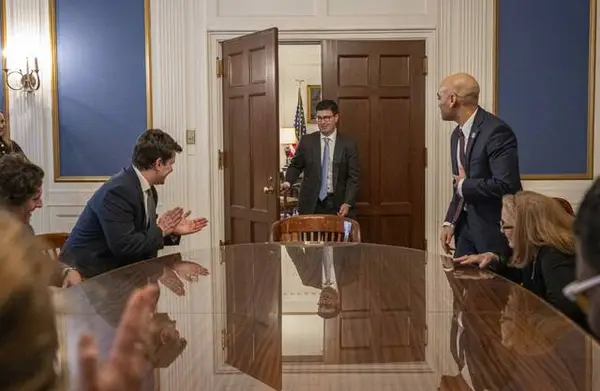
On Monday, Pittsburgh started a new story. Corey O’Connor was sworn in as the city’s 62nd mayor. As with so many such moments, it came with optimism about what comes next.
It also has to come with realism. There is much that must be examined with clear eyes and honest objectives.
Pittsburgh’s recent mayors arrived with different visions, but each took office buoyed by promise — and each left behind a mix of progress and unfinished work. Ed Gainey spoke to a city seeking broader inclusion. Bill Peduto pushed Pittsburgh toward sustainability and global relevance. Luke Ravenstahl assumed office at just 26 after the death of Bob O’Connor, bringing youth and urgency at a moment of transition. Tom Murphy presided over a deeper transformation, helping move the city away from the remnants of a declining industrial economy toward new public uses.
Each administration carried ambition. Each also accumulated baggage. Highs and lows alike are part of the city Corey O’Connor now leads.
For Pittsburgh, the O’Connor name carries history as well as expectation. Bob O’Connor’s tenure was cut short before it could be defined by either success or failure. Two decades later, his son steps into a role shaped by far different pressures — not as a sequel but as a new chapter.
There is as much to learn from where past administrations stumbled as from where they succeeded. The city still struggles with limited funding and growing expenses. Crime, homelessness and aging infrastructure remain persistent challenges. The city’s vehicle fleet continues to falter. The police bureau still needs stability.
These are not failures unique to any one mayor. They are the realities O’Connor inherits — and the standards by which his leadership will be judged.
The mayor of Pittsburgh is accountable to city residents, but the city does not exist in a bubble. Decisions made at the confluence of its three rivers shape surrounding municipalities, influence Allegheny County and affect the economic health of the region.
Leadership must reflect those responsibilities. It will require cooperation beyond City Hall, a careful balance of economic facts and social needs, and disciplined management of core functions. The city must run with fiscal seriousness, operational discipline and an understanding that government exists to serve people — and it must do so quickly.
That work should begin with spending, basic operations and public safety. Fiscal discipline is not optional; it is foundational. The city’s fleet must be stabilized. And the police bureau needs consistent leadership and clear support to function effectively for officers and communities alike.
None of this will be easy. Progress rarely is.
Pittsburgh has no shortage of ideas or ambition. What it has needed — repeatedly — is follow-through grounded in reality. What comes next will depend less on speeches than on choices: difficult ones, carefully made, with a clear understanding of what the city can afford and what it owes its people.
This story isn’t a “happily ever after.” It’s a “to be continued.”