
Spotlight PA is an independent, nonpartisan, and nonprofit newsroom producing investigative and public-service journalism that holds power to account and drives positive change in Pennsylvania. Sign up for our free newsletters.
HARRISBURG — Democrats and Republicans who lead the Pennsylvania legislature have singled out increasing energy production as a goal for the year, as electricity prices rise and demand increases.
Consumers could feel an even greater squeeze in the years ahead, as utility companies predict that efforts to build data centers across the state to meet the artificial intelligence demand will worsen the crunch.
But environmental and labor advocates are skeptical that lawmakers can overcome partisanship in the state Capitol and take meaningful action.
That skepticism persists despite a major policy hurdle — which led to legal fights costing taxpayers more than $4.2 million — now being out of the way.
As a part of a $50.1 billion budget deal that resolved a four-month impasse, Democratic Gov. Josh Shapiro and members of his party who control the state House agreed to pull out of the Regional Greenhouse Gas Initiative. The controversial interstate program would have capped the total amount of carbon emissions that some companies in Pennsylvania could emit and forced them to pay for each ton emitted.
Leaving RGGI was a major Republican goal. State Senate Majority Leader Joe Pittman, R-Indiana, previously told Spotlight PA that his chamber was unlikely to move energy legislation until the state courts resolved a lawsuit regarding Pennsylvania’s entrance into the program.
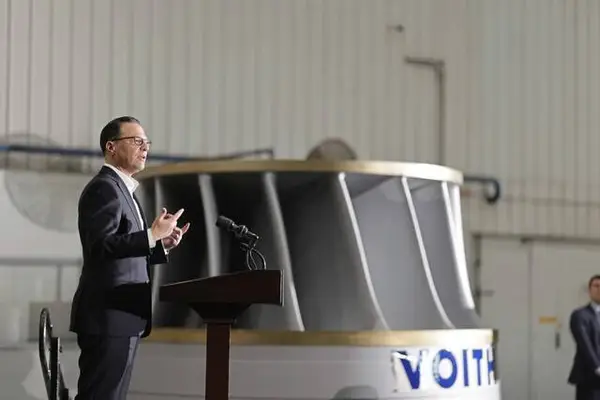
With the program out of the way, Shapiro said he expects action.
“For years, the Republicans who have led the Senate have used RGGI as an excuse to stall substantive conversations about energy production. Today, that excuse is gone,” Shapiro said at a news conference following the budget’s passage. “It is time now to look forward.”
Energy auctions in Pennsylvania offer a window into the challenge facing utility companies and consumers. The auctions are held by the operator of the state’s vast energy grid and are used to procure enough electricity for the future, and in recent years, prices have skyrocketed. In 2024, prices increased by more than 800% from the year prior. And at the December auction, energy prices hit a record high and would likely have increased further without a cap agreed to as part of legal action brought by Shapiro.
The Pennsylvania Public Utility Commission also told consumers this past summer that the state saw “soaring power usage during multiple heat waves since mid-June and scorching conditions that pushed electricity demand on the regional power grid to its highest level in 14 years.” Supply and demand are the biggest factors in prices, an expert told Spotlight PA at the time.
Rob Routh, a lawyer and advocate for the Natural Resources Defense Council, said he’s watching the state Senate in particular to see if lawmakers are willing to move legislation that would increase renewable energy production or if the caucus will only support the natural gas industry.
“Are they just going to be ideologically fixed on one type of resource to generate electricity — gas?” Routh told Spotlight PA. “Are they willing to consider an all-of-the-above energy approach, or is it an explicit rejection of renewables?”
More energy on the table
Lawmakers’ proposals to increase energy production take many approaches — from speeding up permitting to adjusting tax credits. They’ve also focused on various industries, from solar to nuclear power.
Shapiro told reporters that he wants to see state Senate Republicans pass his energy package, a slate of bills also known as the “Lightning Plan.”
It includes legislation that would amend some tax credits to benefit clean energy production, create a new board to streamline permitting for energy projects, and require electric companies to buy more renewable energy.
Another key part of Shapiro’s plan is to create a Pennsylvania-specific carbon cap-and-trade program, similar to RGGI. A majority of the payments from power producers to emit carbon dioxide — 70% — “would be returned to Pennsylvanians as rebates on their electric bill,” according to the Shapiro administration.
Pittman has shot down that idea outright, saying that his caucus is not interested in supporting “any type of artificial cap-and-trade” program.
He has been more open to the other parts of the plan. He told Spotlight PA that revisiting the renewable energy standards “has merit,” and that the caucus is “willing to have a conversation over” the tax credit rewrites. These tax credits currently can be claimed by companies for a variety of purchases, including natural gas to manufacture petrochemicals, milk for dairy processing, and hydrogen fuel. Shapiro’s rewrite would include a new tax credit for clean energy producers.
“We would certainly be willing to have a conversation about any initiatives that help speed up projects in development so shovels get in the ground as soon as possible,” Pittman said.
Pittman said his caucus’ energy priorities include efforts “to enhance the use of our resources,” naming carbon capture as an example — a process through which carbon emissions are contained before they reach the atmosphere and are injected into deep underground wells. The waste can also be used to drill for more oil.
He also talked about speeding up efforts “to lower the taxes on job creators,” and issuing permits more quickly. However, he did not name specific legislation that he would support in the new year.
“I really think the best approach is to be as nimble and inviting as possible, to not try to have government programs and government initiatives artificially attempt to drive the marketplace,” Pittman told Spotlight PA days after the final budget deal.
Renewable energy, not climate protection
State House Democrats have proposed a range of legislation to lower barriers to increasing renewable or low-carbon energy sources, such as requiring that new warehouses be built to be compatible with solar panels and reducing permitting fees for small nuclear power plants.
Both the state House and Senate have passed bills that touch on solar energy with bipartisan support in recent years, although they had different goals.
Last session, the state House passed a proposal that would allow third parties to operate community solar energy facilities, which consumers could opt into. The idea is that “solar energy reduces the load on the grid while lowering electric bills,” according to the bill’s prime sponsor. The bill was reintroduced last year, but hasn’t been considered by either chamber.
Last summer, the state Senate passed a measure that would tighten oversight of Pennsylvania’s growing solar energy industry to help ensure that solar panels are properly decommissioned and all waste is properly disposed of. The requirements would not apply to homes and businesses that use solar panels to “generate electricity for their own use,” according to the bill’s prime sponsor. The full state House has not taken it up.
Katie Blume, legislative director for Conservation Voters of Pennsylvania, doubts that Democrats and Republicans will push energy bills to the finish line.
She pointed to other unresolved disagreements, including the regulation of slot-like skill games, that both parties have agreed are priorities but have been unable to advance.
“Why should I have faith in the Senate to do anything on energy, let alone affordability, when they can’t even figure out skill games in their own caucus?” Blume told Spotlight PA.
Rob Bair, chair of the Pennsylvania State Building & Construction Trades Council, which represents many unionized workers who build power plants, echoed Blume’s concern. Bair said lawmakers will have to compromise and bolster both natural gas and solar, industries that are often pitted against each other.
“Everyone understands we need to do it,” Bair said of increasing power generation in the state. “But we are watching everything closely to see if the chambers can actually come together.”
Environmental protection bills have even worse odds of passing the General Assembly, said state Rep. Greg Vitali, D-Delaware County, at a December advisory committee meeting on climate change issue.
Vitali said that the “political reality” in the Capitol is that legislators have to focus on proposals that are “in conformance (with) labor and labor jobs.”
“Climate isn’t among the top five issues of legislators,” Vitali said. “There’s a need for leadership. … They have to do more than introducing bills and paying (climate change) lip service.”
Data centers on deck
Lawmakers have also singled out data centers as a major reason to increase energy production in the state.
Companies such as Amazon Web Services and Blackstone announced tens of billions of dollars in private investments to build out data centers in Pennsylvania. These facilities require huge amounts of both energy and clean water — the latter is used to cool the campuses. One projection estimates that global energy demand will increase by up to 165% by the end of the decade because of AI.
At the same time, Pennsylvania’s grid operator — PJM Interconnection — is seeing record-high prices at energy auctions. Those higher prices trickle down to consumers, according to utilities.
The most recent energy auction hit the price cap negotiated by Shapiro and the grid operator, and still failed to procure the amount of energy PJM had targeted.
Pittman has also identified data centers as a key cause for increasing energy production in the state. Though he has not identified specific regulatory procedures that he supports for the burgeoning industry, he said consumer prices and energy production go hand in hand.
“The best way to protect consumers with the advent of data centers is to make sure supply meets demand,” Pittman said at a news conference following the budget’s passage. “We want to see responsible growth of data centers. We want to see (the) responsible growth of power supply.”
Any energy-related legislation will likely be referred to the state Senate’s Environmental Resources and Energy Committee, and its chair, Gene Yaw, R-Lycoming, said he doesn’t think more renewable energy is the answer.
“Renewable energies and data centers, they don’t go together at all,” Yaw told Spotlight PA. “Data centers require continuous, non-intermittent power. And renewable power — it’s intermittent and of limited duration at best.“
Routh, the advocate with the Natural Resources Defense Council, said gas plants have their own limitations and argued that Yaw’s comments ignore the effectiveness of battery storage technology for renewable energy.
Still, he called the data center issue “top of mind for legislators and their constituents,” and said there’s potential for state House Democrats and Senate Republicans to collaborate on regulating their energy usage.
He pointed to a bipartisan agreement in the state budget deal related to the PUC, which oversees utilities across Pennsylvania. The legislation, which is now law, allows the agency to review and validate utility companies’ predictions to PJM of the amount of electricity needed — those estimates help set costs for consumers.
Routh said that one bill he’s keeping an eye on would direct the commission to draft regulations to oversee data centers and prevent spikes in electricity costs.
“It’s a new issue. It’s the key driver for why people’s electric bills are going to be going up in Pennsylvania,” Routh said. “There is the potential for bills around data centers to break through traditional partisan ideological lines.”
BEFORE YOU GO … If you learned something from this article, pay it forward and contribute to Spotlight PA at spotlightpa.org/donate. Spotlight PA is funded by foundations and readers like you who are committed to accountability journalism that gets results.