
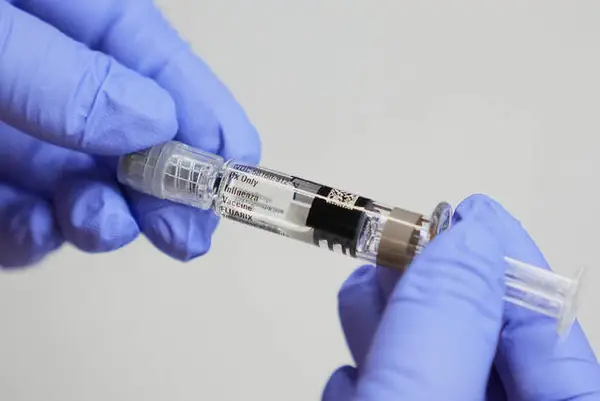
A dramatic overhaul Monday of childhood vaccine recommendations could confuse parents about which shots their kids should receive and when, Southwestern Pennsylvania medical experts say.
The new vaccine schedule, established in a memo from Centers for Disease Control and Prevention Acting Director Jim O’Neill, clouds recommendations for several immunizations doctors say are crucial.
“All they have done is created a lot of confusion for families,” said Dr. Todd Wolynn, executive director of the Trusted Messenger Program, a Pittsburgh-based nonprofit focused on patient-doctor communication.
TribLive spoke with Wolynn and several other medical experts to set the record straight on what the new guidelines mean, why they were implemented and how vaccine access could be impacted.
What changed?
With Monday’s decision, the Centers for Disease Control and Prevention say there are just 11 vaccines all children should receive, down from 17 at the end of 2024.
Shots for hepatitis A, hepatitis B, meningococcal disease, rotavirus, influenza and respiratory syncytial virus have all lost their universal recommendation.
They should now only be given to high-risk children, like those who are immunocompromised, or as part of “shared clinical decision making” between parents and doctors, U.S. health authorities say.
This process considers each child’s characteristics, such as their risk of infection or, if they receive the vaccine, their chance of having an adverse reaction. Family preferences are also factored in.
It’s not unlike how doctors talk to parents about vaccines, anyway, said Dr. Joseph Aracri, system chair of pediatrics with the Allegheny Health Network Pediatric Institute.
“It’s everything that we do every day,” he said.
Federal guidelines still call for routine immunizations against diphtheria, tetanus, whooping cough, haemophilus influenzae type B, pneumococcal conjugate, polio, measles, mumps, rubella, chickenpox and human papillomavirus
Why was the schedule updated?
The new schedule stemmed from a December executive order by President Donald Trump.
He told the Department of Health and Human Services, led by Robert F. Kennedy Jr., and the CDC to review vaccination timelines for other wealthy nations and adjust America’s accordingly.
The agencies found the U.S. was a “global outlier” in terms of the number of diseases its children are inoculated against and total doses.
Several medical experts disputed this claim Monday, noting the American schedule was highly regarded by other countries.
The government also claimed many peer nations achieve favorable health outcomes and high vaccine uptake while universally recommending fewer shots.
Denmark has been held up by Kennedy as a beacon of good vaccine policy.
Danish health authorities call for routine immunization against 10 diseases. The U.S. now mirrors that schedule, plus the chickenpox vaccine.
Public health experts note Denmark has a vastly different disease burden and health care system from the U.S., making its vaccine schedule ill-suited for American children.
Is vaccine access restricted?
The new vaccine schedule is only as influential as parents, doctors and insurers want it to be. The CDC merely issues recommendations on immunizations.
“It does not really change our practice at all,” said Aracri, who uses guidelines published by the American Academy of Pediatrics.
The pediatric group and other professional organizations matched their vaccine schedules to federal recommendations from 1995 to 2024, according to a September report from the Congressional Research Service.
As Kennedy has pushed — and often succeeded — to weaken immunization guidelines, those groups have declined to follow suit.
Dr. Donald Yealy, UPMC’s chief medical officer, said his organization continues to recommend a “full childhood immunization schedule” but did not get into specifics.
Regardless of what doctors think, the choice has always been up to parents. The federal government has never mandated vaccines, and states can only do so in targeted ways.
Pediatricians are there as a resource to help guide those decisions, Aracri emphasized.
“We are your trusted source,” he said. “Please ask us anything.”
Those conversations take time, though. Even before Monday, questions from patients were piling up.
That will lead to already overburdened doctors being able to help fewer patients each day, said Wolynn, who worked as a pediatrician in Pittsburgh for more than 30 years.
Pharmacists, who can administer shots to some pediatric patients, will not be impacted in Pennsylvania, according to state Department of Health spokesman Neil Ruhland.
In September, the state Board of Pharmacy changed its policies so pharmacists could give vaccines recommended by the American Academy of Pediatrics, the American Academy of Family Physicians and the American College of Obstetricians and Gynecologists — not just federal authorities.
Will insurers still pay for the affected vaccines?
No-cost shots appear safe, at least for now.
All vaccines recommended by the CDC at the end of last year will remain covered by insurers, federal health authorities say.
Insurers have also pledged to maintain existing vaccine coverage through 2026, according to a September statement from industry group AHIP.
Highmark, Aetna and UnitedHealthcare each said they weren’t changing their policies in response to new federal guidelines.
Cigna and Humana did not return requests for comment. In its statement to TribLive, UPMC did not address possible coverage changes.
Jonathan Greer, president and CEO of the Insurance Federation of Pennsylvania, stressed “people shouldn’t be concerned about coverage.”
He was unsure about what might be in store after this year, though.
Generally speaking, insurers are required to pay for shots recommended by the CDC. The new guidelines may open the door for companies to restrict coverage of certain vaccines.
Are school vaccine requirements impacted?
Vaccination requirements to attend school are set by individual states — not the federal government. As a result, Monday’s announcement has no bearing on school immunizations.
Any changes to the list of mandatory shots in Pennsylvania would come from the state Department of Health.
Ruhland, the department spokesman, said the Shapiro administration will “continue to lead with clear, science-based guidance that doctors and parents can count on to make informed health care decisions.”
The department requires children be inoculated against diphtheria, tetanus, whooping cough, polio, measles, mumps, rubella, hepatitis B, chickenpox and meningococcal disease — all of which remain broadly recommended by the Centers for Disease Control and Prevention.