
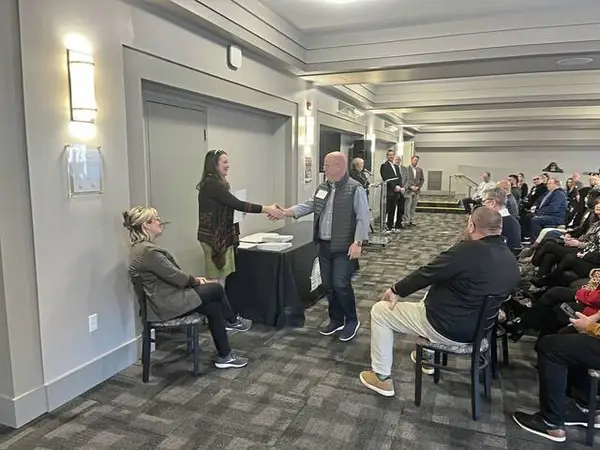
Dwight Brown knows that word of mouth isn’t enough to sustain business growth.
Brown opened Great Scott Escape in November 2020, a Scottdale business that has grown over the last several years to include three separate rooms for gaming enthusiasts. He wants to see it continue to grow and said revenue collected from Westmoreland County’s hotel tax can help him do so.
“It’s critical and of upmost importance. If people don’t know about us we close down,” Brown said upon receiving a check for $6,300 from the nightly room rental tax proceeds to help advertise and market is five-year-old escape room business.
A portion of Westmoreland County’s hotel tax, implemented in 2003, has been recirculated to hundreds of local tourism attractions and businesses through a program administrated by Go Laurel Highlands, the agency that promotes the region that also includes Fayette and Somerset counties.
Hotels, motels, beds and breakfasts, inns and other nightly rentals are assessed a 5% tax. Two thirds of those funds are turned over to Go Laurel Highlands for promotions that include annual allocations to Westmoreland County entities. The remaining funds are doled out annually by county commissioners to pay for other tourism related projects that in past years included the funding of a new visitor’s center at Historic Hanna’s Town and upgrades to the county parks.
On Thursday at the Palace Theatre in Greensburg the tourism agency distributed more than $632,000 to 51 businesses and agencies for promotion and marketing activities in 2026. It’s the most ever awarded and 15% more than was handed out a year ago, said Go Laurel Highlands head Ann Nemanic.
“We want this money to no only help support our tourism sector but also to promote economic impact all over the county,” Nemanic said. “It’s our job to make sure these (tax) dollars are reinvested properly.”
Westmoreland County Commissioner Ted Kopas said the community continues to benefit from the decision county leaders made more than two decades ago to implement to hotel tax.
“These are truly investments , investments that will pay for itself over the years. Nine million dollars, that’s what has been brought into our businesses and our economy,” Kopas said of the hotel tax revenue.
The $3,700 doled out to the Rostraver Township Historical Society will be used to publicize what for now will be a one-time event at the historic Cook’s Farm as part a local celebration of the country’s 250 birthday.
Cook’s Farm, was built in the 18th century and remains a working farm and has been home to seven generations descended from Edward Cook, an Army colonel who had ties to George Washington, the Whiskey Rebellion and a Westmoreland County’s past.
Mark Cook, who serves as the vice president of the Rostraver historical society, still lives in his ancestors home, which will for the first time in about two decades be opened for tours during the township’s sesquicentennial celebration on Aug. 8.
Funding from the hotel tax revenue will be used to market the event to the general public, Cook said.
“If this works out we may do this every year. We want this to be a living history event. Take a walk back in time and see how they lived and how they worked,” Cook said.