
If you want a measure of where 2026 will take Pennsylvania politically, this week has been a great yardstick.
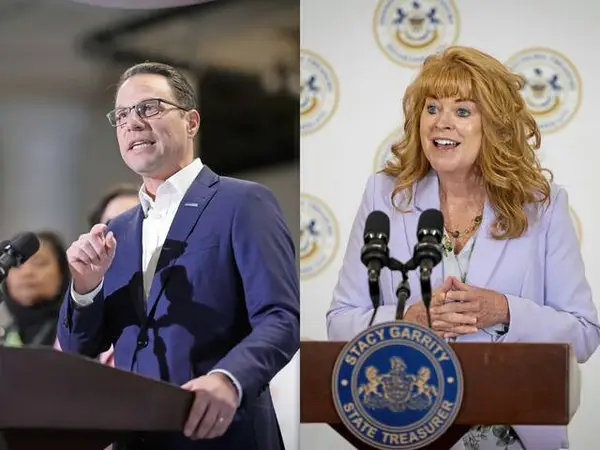
Gov. Josh Shapiro formally launched his reelection bid with events on opposite ends of the state, beginning in the Pittsburgh region and closing in Philadelphia.
At the same time, Republicans learned Doug Mastriano, their 2022 nominee, would not seek the office again. Republicans already have endorsed state Treasurer Stacy Garrity, though she is not alone on the primary ballot. John Ventre of Hempfield, who has mounted previous statewide and Westmoreland County bids, also has announced.
None of that decides the race. But taken together, it reveals how both parties are positioning themselves — and what they believe Pennsylvania voters will reward next.
Shapiro’s decision to begin in the Pittsburgh region was deliberate. Western Pennsylvania has long been a proving ground for statewide candidates, a place where claims of governing “for all Pennsylvanians” are tested against experience rather than rhetoric. The emphasis was less about applause than proof.
What this week also revealed was something more structural than campaign messaging. After years in which Pennsylvania primaries became bruising and expensive, both major parties are signaling a preference for consolidation rather than combat.
On the Democratic side, that consolidation is unmistakable. Shapiro enters the primary with no serious opposition, strong institutional backing and a party content with the choice made in 2022. The bet is that early unity will preserve resources and keep the focus on governing in a closely divided state.
It also reflects geographic strategy in a state that can fracture east to west as easily as it can along ideological lines. Shapiro brings the Eagles fans. His running mate, Lt. Gov. Austin Davis, a McKeesport native, pulls the Steelers. The shorthand works because it reflects something real: winning statewide still requires cultural fluency on both sides of the turnpike.
Republicans are attempting a balancing act of their own. Rather than playing on names that have generated headlines but only district-level success, the party has lined up early behind Garrity. The GOP’s blueprint appears to be that a candidate with statewide wins can bridge Pennsylvania’s familiar regional divides and avoid another season-ending primary.
That alignment — parties lining up early rather than fighting among themselves — is not accidental. It reflects a shared calculation that Pennsylvania’s electorate is less forgiving of internal chaos than it once was and that persuasion in the general election now matters more than ideological sorting in the spring.
The 2026 governor’s race already is viewed by many as a dress rehearsal for 2028. Shapiro often is mentioned among Democratic governors seen as potential national contenders, including Gavin Newsom and Gretchen Whitmer.
But the lesson might not be about personalities. If early consolidation produces a less bruising primary in Pennsylvania, it raises a broader question about whether discipline and restraint could offer a different model two years from now.
It is tempting, this early, to treat consolidation as destiny — to read money, endorsements and quiet primaries as proof outcomes already are decided. But how the race will be won and how it will be run are very different questions.
This week did not tell Pennsylvanians who will win in 2026. It did offer a clear measure of where the race is headed — and how closely voters should be watching.