
Pittsburgh needs stability at the top of its police bureau. The question is how to get it.
For much of the past several years, the Pittsburgh Bureau of Police has operated under a cloud of uncertainty concerning its chiefs.
Scott Schubert retired after a three-decade career with the department. A lengthy search followed. His replacement, Larry Scirotto, served about 18 months before departing amid controversy over his continued work as an NCAA basketball referee.
Since then, the bureau has cycled through acting and interim leadership, with authority shifting even as staffing fell to its lowest level in two decades.
That churn has consequences. It affects morale inside the bureau and public confidence outside it. For a city of more than 300,000 residents — and the millions more who pass through Pittsburgh each year for work, play and travel — stability in public safety leadership is not optional.
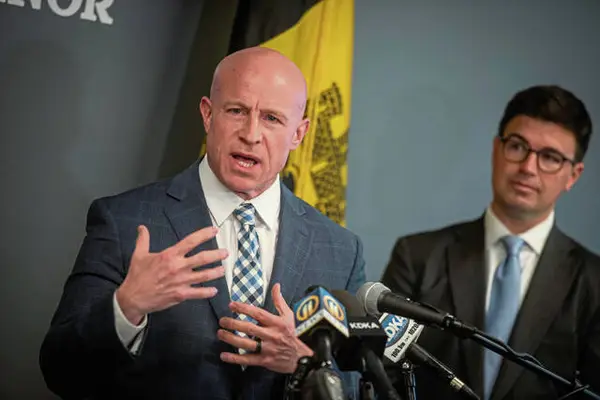
That is the backdrop against which Jason Lando serves as acting police chief, pending City Council’s review of his nomination by Mayor Corey O’Connor.
Lando already is leading the bureau even as questions raised by a former subordinate in Maryland hover over his nomination. An investigation there ended without criminal charges, and City Council will have the opportunity to question Lando publicly and under oath before deciding whether to confirm him.
There is an understandable temptation to reduce this moment to competing narratives — to focus on a personal grievance, to speculate about motives or to treat scrutiny itself as an attack. That should be resisted.
Instead, the focus should be on what Pittsburgh needs most: steady leadership, public confidence and an end to years of uncertainty at the top of its police bureau.
The city gains little by relitigating a dispute investigators have closed. It also gains nothing by rushing past legitimate questions in the name of expediency. Pittsburgh has tried acting leadership before, and too often “temporary” has stretched into the standing condition.
Being unaware of key details has been a problem here before. That was the core failure with Scirotto’s time, when his side work as an NCAA referee was not fully disclosed or clearly understood at the time of his hiring. City council should not have been left to learn the quiet parts of his agreement with then-Mayor Ed Gainey after the fact. The cost was another abrupt leadership change — and more instability for the bureau.
O’Connor campaigned on restoring order and momentum to city government, including public safety. Council’s role now is not to frustrate that goal but to ensure it is met. Careful vetting is not a hurdle to stability; it is how stability is built.
The central question, then, is not whether Jason Lando deserves a fair hearing. He does. The question is whether this appointment — and the process surrounding it — finally can bring consistency, clarity and confidence to a bureau that has lacked all three.
Pittsburgh has made real progress in several areas of law enforcement. A sustained decrease in homicides, for example, cannot be ignored. Imagine how much more progress could be made — and how much more securely it could be sustained — with leadership stable enough to last.