
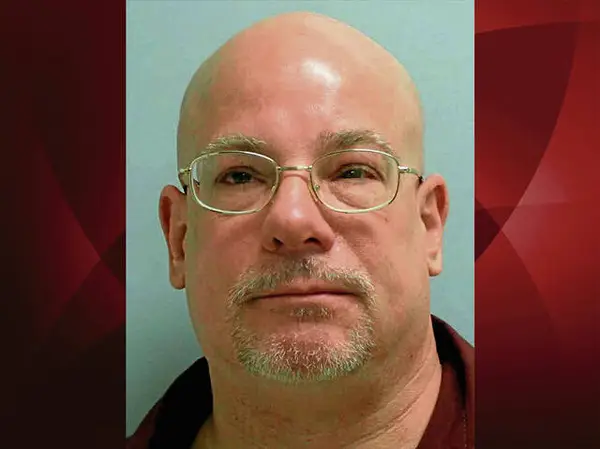
Lawyers for a former Jeannette man awaiting retrial for the 1993 death of his wife and two young children claim Westmoreland County prosecutors cannot prove the fire that killed them was intentionally set.
In pretrial motions submitted Monday, defense attorneys for James Young, 58, argued that homicide and arson charges filed 32 years ago should be dismissed. Young’s 1995 convictions and three life sentences were overturned last year.
“Since Young’s 1995 conviction, the evidence supporting the commonwealth’s case has collapsed,” wrote defense attorneys Elizabeth DeLosa and Nilam Sanghvi with the Pennsylvania Innocence Project. The defense team claims the original finding of arson was based on “junk science” and methods no longer accepted as valid fire investigation tactics.
Young was originally convicted of three counts of first-degree murder and arson following a 1995 trial. While a judge overturned those convictions last year, Young remains in jail without bond awaiting a new trial.
Last year, prosecutors conceded that modern fire investigation standards required the cause of the blaze — which killed Gina Marie Young, 26, and her children, ages 3 years and 7 months — be reclassified as “undetermined.” However, the state contends there is still enough circumstantial evidence to prove Young set the fire.
The defense argues that without a scientific determination of arson, the legal burden of proof cannot be met.
“The case now rests on mere suspicion and conjecture,” the defense wrote. “For these reasons it cannot meet its burden of proof and this case is of the rare type that Pennsylvania precedent makes clear should not go to the jury.”
During the original trial, witnesses testified to domestic violence in the home. Neighbors also testified they saw Young in his underwear on the burning roof, alleging he failed to help his wife while she called for rescue from an upstairs window.
Defense attorneys are now asking the court to bar that testimony, calling it prejudicial and irrelevant to whether a crime was actually committed.
Common Pleas Court Judge Michael Stewart II said he will hold a hearing on the motions later this year.