
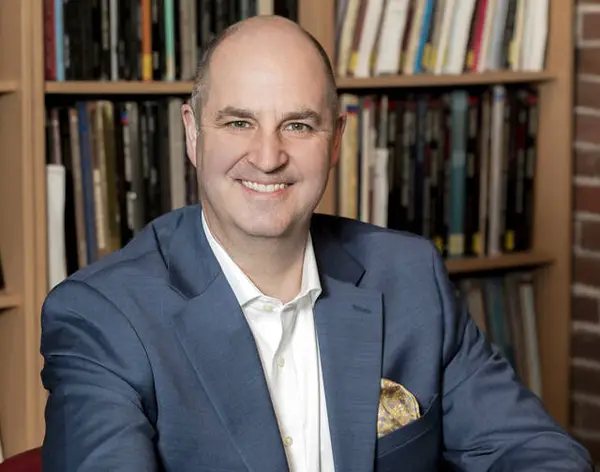
The Pittsburgh Opera announced Tuesday that it will enter a fresh chapter with new general director William Powers, who will take the reins on July 1 after the company’s 2025-26 season.
Powers — who has decades of experience working in the performing arts and has spent much of his career with the Pittsburgh Opera — will replace general director Christopher Hahn, who is set to retire. Hahn has served in the role since 2008.
Powers said in an interview that he looks forward to continuing the Pittsburgh Opera’s legacy while continuing to grow and connect with younger generations.
In a release, Hahn said, “There is no one I would rather turn the reins over to than Bill Powers. Having worked with him for well over a decade, I have witnessed and benefited from his expertise, judgment and counsel. His work ethic and integrity are second to none.”
Before beginning his current role as executive director of the Pittsburgh Youth Symphony Orchestra in 2021, Powers worked for 14 years at the Pittsburgh Opera in various roles, ending as managing director.
“My journey brought me back,” Powers said in an interview. “I’ve been in performing arts organizations my whole career, engaging communities, working with patrons, working with artists and selecting programming. Over the last number of years, it was kind of good to take a step back. I didn’t know where my journey was necessarily going to lead, but when the position became available and I started talking to people, it seemed like heading home, so to speak.”
He earned his bachelor’s degree in music from Hamilton College and his master’s in finance from Fordham University. He got a fellowship at The Juilliard School in New York City, where he met his wife, an accomplished opera singer and faculty member at Carnegie Mellon University. Powers also spent time working at the Metropolitan Opera in New York City.
Powers acknowledges that this is a difficult time for arts organizations.
“The challenges are great,” he said. “I think you need a skill set, a toolbox and some experience these days to do it. I’m certainly hoping that mine is sufficient to do so.”
While Powers does have a vision for the future of Pittsburgh Opera, he’s also pleased with the current direction of the company.
“I think that is in large part curating a portfolio of varied operatic offerings, from the chestnuts that we see at the Benedum to smaller chamber operas or new world premieres that are presented at the Bitz Opera Factory in the Strip or other venues that might address the community,” he said.
The remainder of the Pittsburgh Opera 2025-26 season will include performanees of “Curlew River” staged at Calvary Episcopal Church in Shadyside; world premiere “Time to Act” at the Bitz Opera Factory in the Strip District; and Verdi’s “Falstaff,” based on Shakespeare’s “The Merry Wives of Windsor,” at the Benedum Center in Downtown.
He thinks that bringing a wide range of choices to the stage addresses the cultural landscape. “They’re picking and choosing and they want certain experiences,” he said.
In the future, look for Pittsburgh Opera to concentrate on community collaborations, something that Powers prioritized during his time at the Pittsburgh Youth Symphony Orchestra and at his previous time at Pittsburgh Opera.
“I feel like those conversations are going to be more and more important and I’m eager to have them,” he said.
He also wishes to prioritize engaging young people — especially young artists — as much as possible. He hopes to use technology and social media to foster a sense of accessibility and excitement about the opera in the younger generations.
Having spent about two decades in the city, Powers believes strongly in the Pittsburgh arts community and hopes to bring more eyes to the stage in his tenure at the Pittsburgh Opera.
But this is a bittersweet moment — current executive director Christopher Hahn was the person who first brought Powers to the Pittsburgh Opera, and the two worked together for many years.
“We were tied at the hip a lot during our work there together,” Powers said. “He’s an extraordinary leader and has made such an impact on the community. I certainly hope to carry on the mantle of the rich artistic legacy that he’s left at the company.
“I’ll have him on speed dial,” he joked.
While he may not be a native of Pittsburgh, Powers has adopted the city and its people. “We raised our daughter here. We came out here and we made it home, and we made it artistic home.”
He’s even adopted the sports, especially the Penguins, much to the chagrin of his New York Rangers fan friends. While he acknowledges that the sports, technology and medical aspects of the city are well-known, the local arts scene isn’t far behind in its renown.
“I think it’s demonstrative of the patron base here and the desire to participate,” he said. “People care and they want to see good things happen. They want us to exist. That’s the beauty, I think, and the richness of what Pittsburgh and the art scene have that gives certain faith and confidence and hope that down the line it will continue to be a vibrant part of where we live.”