
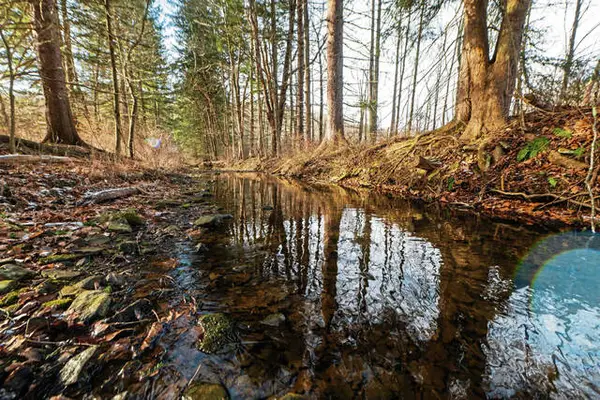
A conservation organization has protected more than 2,400 acres of undeveloped forest land on Chestnut Ridge in eastern Westmoreland County.
The land contains the headwaters for several wild trout streams.
The Western Pennsylvania Conservancy said agreements reached on land donations and a conservation easement on property owned by several families in Derry, Fairfield and Ligonier townships provide a forested buffer along several miles of Trout Run, McGee Run, Hillside Run and their tributaries.
Those streams are designated as Cold Water Fisheries by the state Department of Environmental Protection.
About 2,190 acres were placed under a conservation easement and will remain private property to protect sensitive habitats, such as Trout Run and various species, the conservancy said. Another 300 acres were donated to the conservancy for a nature preserve that is open to the public.
“This is an ecologically important area in the Laurel Highlands, and we appreciate these gifts to our region that will protect this forested area along the Chestnut Ridge with a perpetual conservation easement and for a nature preserve,” said Tom Saunders, the conservancy’s president and CEO.
The Ligonier Valley is a key component of the conservancy’s Laurel Highlands priority conservation landscape. Its Mountain Streams Project has added 9,600 acres of land to Forbes State Forest in the Ligonier Valley, while more than 10,000 acres of private land have been protected through conservation easements, according to the conservancy.
The Westmoreland portion of Chestnut Ridge is of special interest to the Forbes Trail Chapter of Trout Unlimited. It is part of the Laurel Highlands, which the organization’s Pennsylvania Council has deemed one of four watersheds in the state to receive special attention to protect threatened trout streams, said Larry Myers, former president of the Forbes Trail Chapter of Trout Unlimited.
“Just like Linn Run, where we are currently focusing our attention, these other headwater streams emanating from Chestnut Ridge have been dealing with the effects of acid rain, development, invasive species, abandoned mine drainage, abandoned gas wells and climate change for decades,” Myers said. “They need all the protection they can get.”
The wild trout that reproduce in those headwaters and the macroinvertebrates — or “trout bugs” — that they rely upon for food are being stressed like never before, Myers said. Because of acid, the forest soils and bedrocks have lost their buffering capacity to keep the pH of the streams neutral and alkalinity at proper levels, he added.
Part of Chestnut Ridge has been designated as the Chestnut Ridge Penn View Mountain South Natural Heritage Area and has been deemed a site of global significance, according to the Pennsylvania Natural Heritage Program.
Some of the recently donated property is within the heritage area, the conservancy said. The area provides a habitat for several species including the Allegheny woodrat and plants including Western hairy rock cress and spreading rock cress.
Managing the development along that area provides buffers along the mountain streams for trout, which need colder water than most species, Myers said. It also prevents soil erosion and pollution runoff and ensures the habitat in a stream is adequately protected.
“The WPC’s recent land acquisition is a big step in the right direction,” Myers said.