
Pastor James Arter of First Evangelical Lutheran Church and Cross Roads Community Presbyterian Church in Leechburg vividly recalls the moment he experienced a cellphone etiquette faux pas during a funeral viewing.
Arter witnessed a female snapping selfies with her phone over an open casket that contained the deceased.
“I had never seen that before, and I was a bit shocked,” Arter said.
With decades of clergy experience officiating weddings, funerals and church services, Arter said it’s best to leave the phone alone.
“It’s better to remember the person while they are alive,” Arter said. “It’s (phones) such a part of who we are, we don’t think about it, but it’s important to turn off your phone during a funeral,” he said. “I feel bad for the family members because it’s the respectful thing (to the family) to have the phone off.”
TribLive asked Western Pennsylvanians which cellphone habits they consider impolite in a public space and had them chime in on what makes for “considerate cellphone” etiquette.
Calling all diners
Somma Pizza & Sports Bar owner Susan Somma of Plum didn’t sugarcoat her opinion of cellphone manners at her eatery.
“I have customers sitting at the table — mom, dad, little Bobby and Becky — and they’re all on their cellphones,” Somma said. “I’ll go up to them and ask them if they’re texting each other, then they’re embarrassed and they put their phones down.”
Somma said she does professionally address some patrons who overstep cellphone etiquette in her establishment.
“I tell them to go to the foyer or go outside. I think there isn’t any courtesy anymore with cellphones,” she said.
Somma instructs her staff to avoid using their personal cellphones during a work shift and she puts her phone on silent.
Customers sometimes order while on their phone, Somma said. Additionally, folks have come in to pick up takeout orders while on the phone the entire time.
“It’s gotten worse. People are FaceTiming at the bar. We don’t want to hear that,” Somma said. “I’m not alone in this.”
During the TribLive interview with Somma, a customer walked by talking on his cellphone but stepped outside to finish the call.
“That’s a good cellphone customer,” Somma noted.
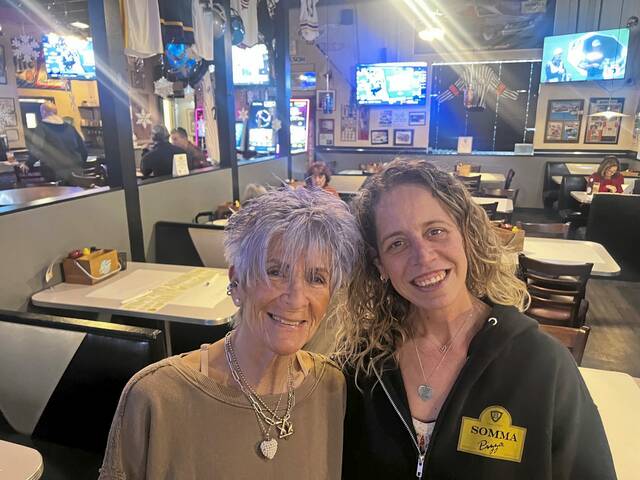
Etiquette expert Melissa Botta-Havran of Oakmont owns and operates Elite Etiquette Consulting. She said she often sees folks watching videos on their phones with the volume on at restaurants — upscale restaurants at that.
“It’s that inability to focus and hone in,” said Havran, recalling what she labeled a cellphone faux pas during a night out at Eddie V’s Steakhouse during a celebratory anniversary dinner with her husband.
“We turned around and a couple were watching a video together. Where are we in society where everything has to be related to a screen?” Havran said.
Havran said the public should tune in before they tune out on their phones.
“Read the room,” said Havran, who also is a professor at Point Park University.
Havran added she has attended performances at the Pittsburgh Opera where people were filming with their phones.
“It distracts from my viewing experience. Once, a man behind us kept filming and nobody said a word,” Havran said.
Havran teaches etiquette, specializing in courses that cover professional etiquette, which includes addressing proper cellphone use.

Her “Rising Professionals” eight-week course includes mock interviews, attending a business lunch and email etiquette.
Havran was surprised at the response from students when asked about where to have one’s cellphone during a business lunch.
The students’ overwhelming response was to have the phone at the table.
“I explain to them you only have one chance to make a good first impression,” Havran said.
The students do seem to get the message during the course, Havran noted.
“It really helps them. And by the end of the course, it’s amazing to see the progression. They’re coming into the classrooms and those cellphones are put away,” she said.
Weddings
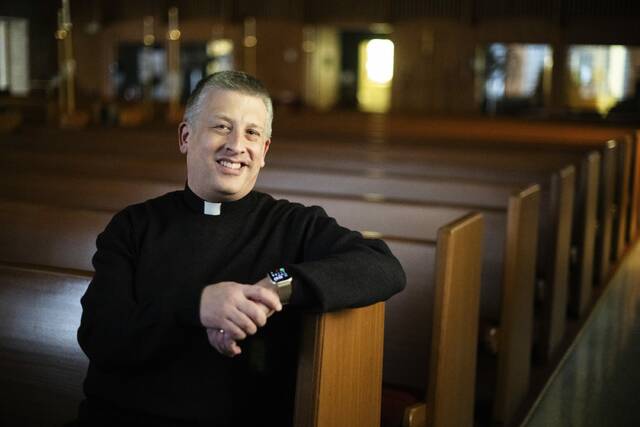
Arter has officiated too many wedding ceremonies to count and, due to the current cellphone climate, offers a gentle reminder to wedding guests.
“The wedding couple wants to see your face, not your phone,” Arter said of the matrimony message he delivers to wedding guests in attendance. “I came to Leechburg in 2011 and we were saying no flash photography, but now typically you see almost everyone holding the phone up during a ceremony.”
And what’s Arter’s pet peeve with cellphone use?
“I don’t want to hear them, the speaker turned up and/or watching shows on their phone,” Arter said. ”I do approach things overall with the thought that I teach myself to be more patient with rude behavior.”
Windy Neff of O’Hara remembers life without a cellphone, but in today’s modern world, cellphones are a daily reality for most.
Neff’s pet peeve is when a person puts their phone conversation on blast for all to hear.
She’s even heard folks talking on their phones while using public bathrooms.
“I think it’s very much a crutch and people are addicted to their phones,” said Neff, 48, a former professor at the former Art Institute of Pittsburgh and Chatham University.
Neff doesn’t enjoy seeing and hearing strangers FaceTime while they’re shopping or at doctors’ offices.
“You can hear the conversation and it’s not the place. And I see people doing it even while they’re driving,” Neff said.
Neff encourages folks to leave the phones behind when dining out.
“At dinner, we want to spend time with each other and not be on our phone,” Neff said.
Neff acknowledged that the younger generations have grown up with cellphones and can’t recall a “before cellphone” era that others have experienced.
“Their culture is to always be on the phones,” she said.
Arter has used cellphones and modern technology as content in weekly church sermons.
“I do talk about how we are more connected than ever, yet we are more separated than ever, because the technology can make it harder to be fully present,” Arter said. “When your phone is out and you are receiving notifications, these phones can put us into our own little worlds.”
Corporate cellphone use
Havran stresses to her etiquette class participants that when meeting someone for the first time, a cellphone should be on silent and kept concealed.
Havran’s father was a member of the Harvard-Yale-Princeton Club in Downtown Pittsburgh and she now incorporates a visit there to have her students experience a formal social setting.
She has offered etiquette sessions at Oakland Catholic, Nazareth Prep, Carlow University and corporations, and encourages students to be very aware of cellphone etiquette.
Havran noted adults set a significant tone regarding considerate cellphone etiquette for the younger generation.
“Adults make a conscious effort to be more self-aware, and they’re modeling for our children. We are the older generation. Just put the phone down,” Havran said.
Former wealth management senior executive Scott Umstead of Sewickley Heights can recall when the business world operated without cellphones.
His No. 1 cellphone pet peeve is when people use the speaker phone or FaceTime in public places.
“Why can’t they take it outside? It happens a lot — in grocery stores, airport terminals and on planes, too,” Umstead said.
Umstead has witnessed people walking on nearby Sewickley-area trails listening to audiobooks without earphones.
“I want to enjoy the serenity of nature when I’m walking,” he said. “Not listen to someone else’s personal business.”
And his best business etiquette tip while on the phone?
“Listen. When people are talking, we should be on ‘receive’ and not ‘send’ and genuinely listen, not be distracted and not talk over one another. People, customers and clients do more business with someone who shows they care enough to listen,” Umstead said.