
Once upon a time, there was a small, regional airport in Westmoreland County.
It had steady passenger traffic, popular leisure routes and a loyal base of travelers who appreciated skipping the long drive and long lines elsewhere. For years, that story held. Flights came and went. Suitcases rolled through the terminal. The future felt predictable.
But fairy tales are comforting precisely because they smooth over hard truths. And Arnold Palmer Regional Airport is not a storybook princess. It is public infrastructure — and it is facing a real, measurable problem.
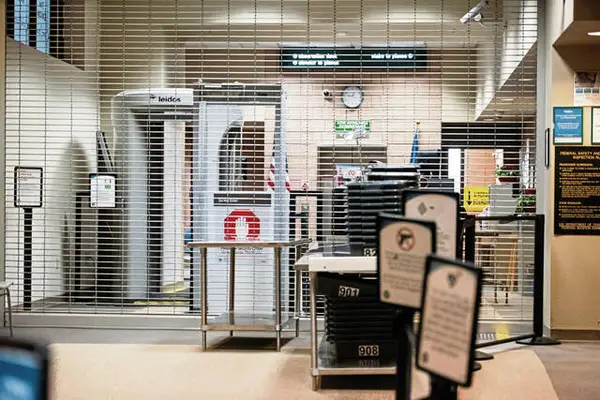
Passenger traffic through the airport last year fell to its lowest level since commercial service began in 2011. More striking still, fewer passengers flew through Arnold Palmer Regional in 2025 than in 2020 — when people worried the travel industry might never recover. That comparison matters. It removes any remaining comfort in the idea that this is simply a slow recovery or a temporary dip tied to airline schedules. When traffic falls below covid-19 pandemic levels, the issue is no longer cyclical. It is structural.
Against that backdrop came welcome but limited news. Spirit Airlines announced it will resume a seasonal route to Myrtle Beach this spring. For travelers dreaming of warmer weather, that is good news. For the airport, it might provide a modest, short-term bump.
But in fairy tales, a single event — a rescue, a lucky turn, a kiss — magically solves all problems. Real airports do not work that way.
For years, Arnold Palmer Regional’s commercial identity has rested almost entirely on a single discount carrier. That model worked — until it didn’t. As Spirit reduced schedules amid financial trouble, the airport was left exposed, with little margin for error and few alternatives ready to step in.
Even airport leadership has framed the future in passive terms. Executive Director Gabe Monzo described Spirit’s status as a “50-50 proposition,” suggesting the airport can thrive if service returns — or that it must hope someone else arrives. That framing matters. It casts the airport as a bystander, waiting to be chosen, rather than as an institution shaping its own future.
Arnold Palmer Regional Airport cannot afford to wait for a passing airline and hope for a happily ever after. That does not mean clinging to commercial passenger service at all costs.
There are other viable paths forward, and many regional airports have taken them. Private aviation, air freight, air ambulance service, government and law enforcement flights and flight training can all provide stable revenue and consistent activity without relying on the volatility of leisure travel and airline balance sheets.
If that is the direction Arnold Palmer Regional intends to pursue, it should be said plainly and pursued openly. If commercial growth remains the goal, the public deserves to hear what is being done beyond hoping for restored routes or seasonal announcements. Those paths require different investments, different partnerships and different measures of success. Choosing among them is not failure. Waiting for fate to make the decision is.
A beach flight is pleasant news. It might even be necessary news. But it is not a plan.
Arnold Palmer Regional Airport does not need a fairy-tale ending. It needs a future grounded in reality, regional purpose and long-range planning. Happily ever after is not something an airport waits for. It is something it earns, deliberately and in full view of the public it serves.