
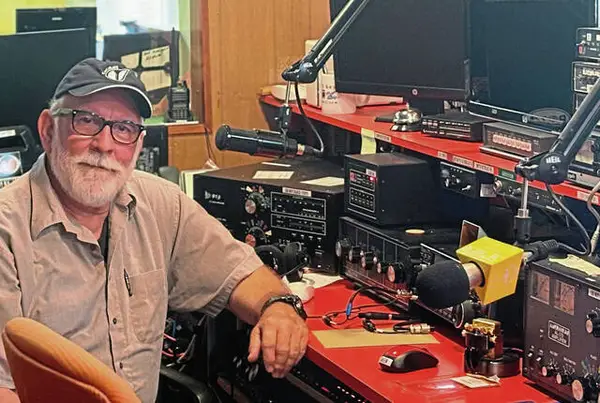
If all else fails, amateur ham radio usually doesn’t.
The Skyview Radio Society in Upper Burrell will participate in an annual event to make sure that remains the case, putting their communication skills to the test with other ham radio clubs across the continent.
The radio society will take part in a winter field day Saturday, Jan. 24, and Sunday, Jan. 25, at its clubhouse, 2335 Turkey Ridge Road. Operating hours are from 11 a.m. on Saturday to 5 p.m. on Sunday. Skyview’s call letters are K3MJW.
“The idea was built around seeing how well you could communicate in adverse weather conditions,” said Steve Fazekas, radio society member. “The intensity of the event is really subject to what the weather’s doing. If you get a day where it’s really winter out, it’s pretty challenging.”
The first Winter Field Day was held in January 2007 in an effort to improve ham radio operators’ preparedness for disasters and to improve the operational skills in subpar conditions, according to the Winter Field Day Association. Freezing temperatures, snow, ice and other winter hazards present operational concerns for ham radio communications.
Fazekas, for example, said he has operated in blowing snow and has communicated messages to other operators, including a FEMA station in Harrisburg. If the weather is ever so bad that communication infrastructure goes down, ham radio could sometimes be the only way to communicate.
“Whenever the weather’s getting rough and you’re operating from the field, the elements are trying to beat you,” Fazekas said. “If it’s adverse weather, you need to get the message through, and this is tremendous practice for that.
“I’ve worked through a few snowstorms, and being able to get the message through is paramount.”
Some members of Skyview also are part of the National Weather Service’s SkyWarn program. There, weather “spotters” report local weather conditions to help NWS meteorologists in an effort to provide a more accurate weather forecast.
The event also provides some fun competition — operators can communicate with other ham radio operators across North America. The goal is to make as many connections and communications as possible, Fazekas said.
“Contesting helps you become a better operator,” Fazekas said. “It’s busy, fast and a challenge.”