
It’s a challenging and uncertain time for America’s clean energy industry. Congress repealed the federal clean energy tax credits through President Trump’s “one big beautiful bill” last summer, and Trump has made his love for fossil fuels and disdain for renewable energy clear through his statements and his policies.
In the midst of this bleak federal landscape, there’s a bright spot of opportunity: Local and state governments can and should champion clean energy that creates good-paying jobs while bringing down our sky-high energy bills.
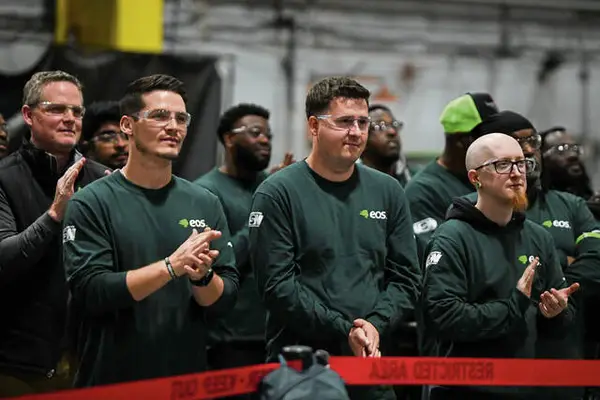
Here in Allegheny County, we’re already reaping the benefits of state investment. Recently, Eos Energy Enterprises announced it will relocate its corporate headquarters from New Jersey to Pittsburgh.
Eos makes zinc-based batteries that can store energy for long amounts of time, which helps strengthen power grids and meet increased energy demand caused by data centers popping up everywhere. As part of its headquarters relocation, Eos will invest $352.9 million and create an estimated 735 new jobs.
Our state’s manufacturing jobs have declined by more than 33% in the past two decades. Clean energy investments provide an opportunity to rebuild our state’s manufacturing industry for the economy of the future.
In 2024, Pennsylvania’s clean energy industry employed 104,499 workers, representing a 3.7% increase from 2023. Before Trump’s second term, federal investments in clean energy had spurred more than $1.3 billion and created more than 4,500 jobs in Pennsylvania, including a $500 million expansion of Eos’s Turtle Creek battery manufacturing facility. Unless state and local leaders take proactive and decisive action, all of that progress is in jeopardy.
Eos’ recently announced expansion will include a 432,000-square-foot manufacturing facility in Marshall Township and a new headquarters on Pittsburgh’s North Shore, opening next year. This is great news for manufacturing and the economy overall in Pennsylvania, and it wasn’t the result of good luck: this move is supported by $22 million in state grants and capital funding.
“Pennsylvania is positioning itself at the forefront of America’s energy transition — enabling us to bring America’s battery to scale,” Eos CEO Joe Mastrangelo said. Our state leaders are making a concerted effort to bring Pennsylvania to the forefront of clean energy manufacturing, and it’s paying off.
JM Steel, which supplies steel for solar farms, located its factory at the former Bethlehem Steel factory, which shut down in 1998 after nearly 150 years of operation. JM Steel prioritized hiring local workers and sourcing the 5,000 tons of steel it uses annually from local suppliers.
And many clean energy companies are funding workforce development programs to help ensure Pennsylvanians are well-equipped for these jobs. Eos developed new educational STEM programs for local high school students and partners with local organizations to ensure its jobs are accessible to workers without college degrees.
In 2024, 160 workers at Eos voted to join the United Steelworkers, with United Steelworkers District 10 Director Bernie Hal saying at the time, “these are the jobs of the future, and workers deserve the opportunity to shape their working conditions and secure their place in this vital industry.” Hall said of the relocation of Eos’ headquarters, “At the heart of this, union workers are helping build a more affordable, sustainable energy sector here in Pennsylvania.”
Under the clean energy tax credits, projects that paid prevailing wages and hired registered apprentices to work on clean energy projects received a fivefold increase in clean energy deployment tax credits. Now that these tax credits are being phased out, states and counties are left to pick up the slack.
States and counties are also being asked to fend for themselves when it comes to grid reliability and utility prices. In 2025 alone, six of Pennsylvania’s investor-owned utilities increased rates for over 4.3 million customers. Continued federal investment in clean energy would have strengthened our grid and lowered energy costs by bringing more cheap, reliable energy online.
Instead, PJM has delayed connecting hundreds of clean energy projects to the grid, which were expected to deliver enough energy to power 58 million homes. At the same time, Trump’s efforts to cut federal funding from the Bipartisan Infrastructure Law and Inflation Reduction Act threaten at least $93 million in projects across Pennsylvania aimed at improving the state’s electric grid.
Between 2000 and 2023, Pennsylvania had 82 weather-related power outages, the ninth most in the U.S. As climate change continues to increase the frequency and severity of extreme weather events, Pennsylvanians could be left in the dark.
By continuing to invest in clean energy capacity and infrastructure, state and local leaders can create jobs, bring down energy prices and increase our energy independence. The relocation of the Eos headquarters to Pittsburgh is a great example of the benefits that forward-looking clean energy investments can bring to our state.
Erika Strassburger is a member of the Pittsburgh City Council.