
Call me a world-class procrastinator, if you will, or simply someone who performs better under deadline pressure, but I wait until the final day allowed to mail my Baseball Hall of Fame ballot.
Baseball Writers Association of America voters are permitted to pick 10 players, so following the elections of C.C. Sabathia, Ichiro Suzuki and Billy Wagner last summer, I had three open spots to go with seven holdovers: Carlos Beltran, Mark Buehrle, Andruw Jones, Andy Pettitte, Manny Ramirez, Alex Rodriguez and Francisco Rodriguez.
That’s where it got tricky, and why I took the future candidacy of a Pittsburgh Pirates great into consideration.
Based on Baseball Reference Wins Above Replacement, Chase Utley appeared the most qualified candidate for one of those three votes. The six-time All-Star second baseman was a four-time Silver Slugger who had a 64.6 bWAR — including 45.5 bWAR between 2005-10, which ranked second only to Albert Pujols in that span — and won a World Series with the Philadelphia Phillies.
But how do you separate Utley and Jimmy Rollins? Rollins was a three-time All-Star shortstop who won an MVP, four Gold Gloves and a Clemente Award. Where Utley had 1,885 hits, Rollins had 2,455. It would be an injustice similar to the Detroit Tigers double play duo of Alan Trammell and Lou Whitaker. Where Trammell got in the Hall of Fame through the Modern Era Committee, Whitaker has been left out despite being a four-time Silver Slugger and three-time Gold Glove winner who had a higher bWAR (75.1) than Trammell (70.6).
So, I voted for both Utley and Rollins. Which only created another dilemma. I believe Dustin Pedroia to be deserving of a vote, given his career. The Boston Red Sox second baseman had a .299/.365/.439 slash line and a 113 OPS , despite only 1,805 hits and 725 RBIs. Pedroia, however, won two World Series, an MVP, rookie of the year, four Gold Gloves and had a 51.8 bWAR. That’s lower than Utley but higher than Rollins, whose 47.9 bWAR is considered borderline.
Given that Jeff Kent, whose 377 home runs are the most by a second basemen, was elected in December, it seemed appropriate for him to be joined by Utley and Pedroia, who received 11.9% of the vote in his first time on the ballot last year. But I didn’t expect either Utley or Pedroia to receive enough votes for election.
This is where Hall of Fame voting can be complicated.
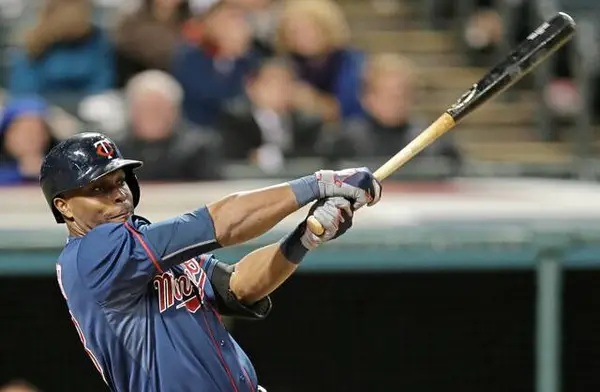
Beltran barely missed making the Hall last year, receiving 70.3% of the votes in an election where 75% is the cutoff. Jones was just behind him, at 66.2%. Both center fielders were expected to cross that threshold this year — and were elected Tuesday, at 84.2% and 78.4%, respectively — yet Torii Hunter was in jeopardy of being cast out of contention.
Hunter received only 20 votes last year, putting his 5.1% perilously close to the 5% minimum to remain on the ballot. Where Beltran would have been a first-ballot inductee if not for his role in the sign-stealing scandal with the Houston Astros’ 2017 World Series champions, Jones has a 62.7 bWAR, 434 home runs and was a 10-time Gold Glove winner who is considered one of the premier defenders of his generation. Yet Jones saw his career drop off dramatically after the age of 30.
While Hunter wasn’t the defensive equivalent of Jones — who had 60 defensive runs saved in center from 2002-10 — Hunter recorded 36 DRS and won nine consecutive American League Gold Gloves. Jones had a decided advantage in home runs (434-353), but Hunter’s career batting average was 33 points higher, his 2,452 hits were 519 more than Jones had and Hunter also produced more doubles and RBIs.
So, it’s difficult to imagine one making the Hall and the other being forced off the ballot. And this is something else I took into consideration when casting my vote: If Hunter isn’t worthy of Hall of Fame consideration, what chance does Andrew McCutchen have?
McCutchen has an MVP and a higher OPS than Hunter (125-110) but trails in most other career offensive categories. McCutchen’s credentials are close to those of Ellis Burks and Bernie Williams — neither a Hall of Famer — so McCutchen’s candidacy might be considered borderline at best. But what he meant to the Pirates in his prime, serving as the catalyst for ending two decades of losing, goes beyond the numbers.
Unlike Beltran and Jones, Utley and Rollins and Pedroia, McCutchen wasn’t surrounded by superstars. He was the superstar. So was Hunter, even if he didn’t shine quite as bright as Beltran and Jones.
But if Hunter belongs in the conversation with two center fielders who were elected to the Hall of Fame and compares favorably to McCutchen, it’s my belief that his name deserves to remain on the ballot.