
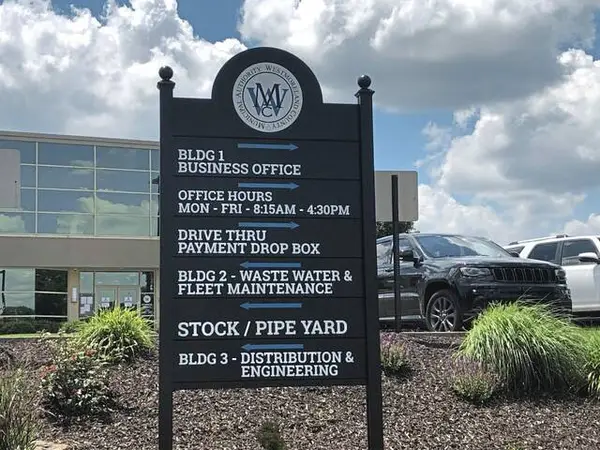
Water and sewer rates for Municipal Authority of Westmoreland County customers will remain unchanged for at least the next year.
Authority board members this week approved a $129.7 million budget for the multi-county agency that keeps its current rate structure in place after two straight years of increases.
“We always attempt to keep the same rates,” said MAWC board Chairman Randy Roadman. “This budget keeps the status quo. And because it is thoughtful, there is no intention to raise rates next year.”
The authority’s last two budgets each included average rate hikes of 9.5% for water and sewer customers.
Under the current rate structure, the average MAWC water customer will pay $45.57 each month. Sewer rates vary depending on the location of the service. Most residential customers are billed quarterly.
The new fiscal year starts April 1.
MAWC has more than 123,000 water customers in five counties: Westmoreland, Allegheny, Armstrong, Fayette and Indiana.
It also serves about 30,000 sewer customers who are a part of 10 municipal systems owned by the authority, each with its own individual rate structure.
Water sales are expected to generate about $102 million in revenue while sewer service is slated to bring in about $22.7 million over in the next fiscal year.
Ancillary revenue, including royalties paid by local energy companies on natural gas wells on authority property and rental fees paid to locate cell phone towers are expected to generate another $4.1 million in revenue, according to authority Business Manager Brian Hohman.
Expenses, which include operating costs and $31 million in debt payments, are expected to reach $126.7 million for the 2026-2027 fiscal year.
In all, revenues are predicted to outpace expenses by about $3.1 million. That’s money that will be added to MAWC’s surplus fund, which is expected to grow to nearly $31 million over the next 12 months.
That surplus is expected to be bolstered by an infusion of $10.6 million in cash generated through last year’s refinancing of existing debt and proceeds from the two years of rate hikes, Hohman said.
“After two to three years with growing operating expenses in which we felt the pain of inflation that every household has felt,” Hohman said, “we now see positive signs and those previous rate increases have now put the authority’s financial position in strong shape moving forward.”