
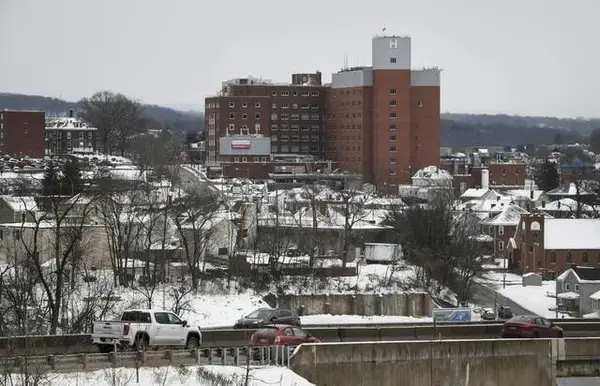
When a massive snowstorm descended on Erie late last year, it threatened to snarl operations at Allegheny Health Network’s Saint Vincent Hospital.
The Great Lakes city is no stranger to harsh winter weather. But 5 feet of snow between Black Friday and the following Sunday was extreme, even for Erie.
By early morning Saturday, dozens of doctors, nurses and other workers had called in to say the snow-caked roads kept them from traveling to work.
“So, we mobilized our command center to start providing rides to get our employees into work,” said Karen Surkala, chief operating officer at Saint Vincent.
Hospital police and facilities staff drove more than 150 trips in the next few days, ferrying staff to and from the hospital and keeping operations running smoothly.
Southwestern Pennsylvania isn’t bracing for anything like 5 feet of snow in the coming days. Forecasters are calling for 10 to 12 inches between late Saturday and early Monday, though, enough to pose challenges with commuting, supply chains and patient care for local hospitals.
Health care leaders say they’re up to the task.
“We’re ready to serve you, period,” said Dr. Donald Yealy, chief medical officer at UPMC. “You should not worry about: should I be able to get the services necessary?”
Overnight accommodations
Allegheny Health Network’s Forbes Hospital in Monroeville set up overnight accommodations for staff in spaces that typically go unused over the weekend, like the ambulatory surgery area.
Already, 45 employees have said they may need a place to sleep so they’re able to make it to their next shift, according to Jeffery Carlson, chief operating officer at Forbes.
UPMC has told staff to be prepared to alter their work schedules and identified areas where they can sleep, including some hotels adjacent to its hospitals, Yealy said.
Independence Health System is providing onsite accommodations for essential workers and will adjust staffing plans as needed, according to spokeswoman Kelley Skoloda.
Dr. John Sullivan, chief medical officer at St. Clair Hospital, said essential staff will come in ahead of the storm. The Bethel Park medical center is also maintaining backup teams for critical units in case commuting becomes too dangerous.
Patient care
Heavy snowfall tends to reduce hospital visits for less serious conditions as people wait out the storm while introducing its own set of injuries and ailments.
Regional hospitals are bracing for upticks in frostbite and hypothermia, as they would during any cold weather. Snow, in particular, produces more injuries from falls as well as cardiovascular issues. Medical experts say shoveling snow is hard on the heart.
“In general, when weather is bad like this, the emergency departments see fewer people, but the people who come in have a higher level of illness burden,” Yealy said.
A 2017 analysis of hospital records in Boston found admissions for heart issues fell 32% on days with high snowfall, but rebounded to 23% above normal levels the following two days. This trend suggests people may be delaying care because of weather conditions, the authors note.
Neither UPMC nor Allegheny Health Network are planning any broad cancellations of elective procedures or outpatient appointments, which usually are restricted to weekdays.
Patients are able to reschedule if they don’t feel comfortable traveling.
At the Veterans Affairs Pittsburgh Healthcare System, patients are being asked to make their Monday appointments virtual or choose a different date, spokeswoman Shelley Nulph said.
Visitation policies at UPMC, Allegheny Health Network and St. Clair are unchanged. Carlson expects, however, the number of visitors will drop because of the weather.
Medical transport
Ambulance services are also gearing up for heavy snow.
Darrick Gerano, executive director of Murrysville Medic One, said the service may have ambulances stationed throughout its coverage area to help cut down on response times.
“Once these roads start getting bad, we’re not going to get anywhere fast,” Gerano said.
Long driveways can be tough for ambulances to negotiate in the snow. So can neighborhood roads that get less attention from plow crews. In rare cases, Gerano has sent side-by-sides to pick up patients.
“We’ll find a way,” he said.
Addie Birch Jr., EMS manager for New Kensington Ambulance Service, said he has tire chains arriving today to help his vehicles handle the snow. He only expects calls to take slightly longer.
“Instead of it taking five minutes it might take us seven minutes because the fact is we can’t drive full speed on bad roads,” Birch said. “We’re not going to cause ourselves to be in an accident.”
Medical helicopters generally do not operate in this type of weather, according to Carlson.
Supply chain disruptions
Much like shoppers raiding grocery store shelves, hospitals are mindful of having crucial supplies on hand if the expected heavy snowfall materializes.
Carlson said extra pallets from Allegheny Health Network’s distribution center in Zelienople arrived Friday morning. The goal is to have enough materials to last until the middle of next week.
Yealy is confident UPMC will stay well-stocked through the storm.
“We have the supplies that would allow us to provide the highest level of service for an extended interval,” he said. “I don’t really have any concerns about that.”