
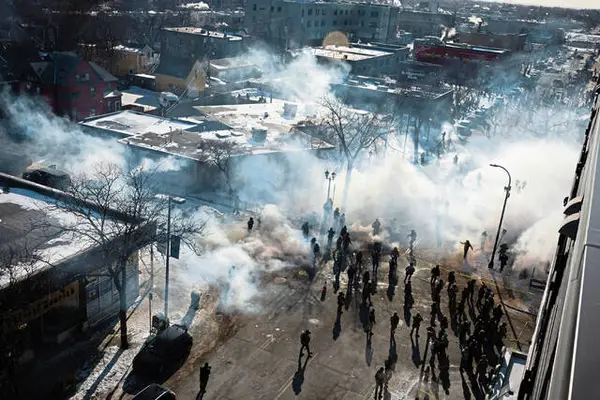
Armed conflicts and U.S. citizens’ deaths in Minneapolis have riveted attention across the nation. We’ve seen the videos and the photos of graphic violence. We’ve seen the heartbreaking photos of a 5-year-old preschool boy and a 2-year-old girl detained by ICE. We have read the upsetting media accounts of countless armed assaults in Minneapolis and other cities coping with a sudden influx of ICE agents.
Homeland Security has characterized ICE agents’ “surge” in Maine in dehumanizing language: “Ice Launches Operation ‘Catch of the Day’” compares people to lobsters, crabs and fish to be devoured while fresh. We know from history where dehumanizing language in government leads. Nazis compared Jews to vermin. Extermination ensued. Dehumanizing language should never be used by any government officials in the United States.
On Jan. 22, Vice President JD Vance announced in Minneapolis that he was there to “lower the temperature” and called for “better communication.” A week earlier in a speech to the citizens of Minnesota, Gov. Tim Walz had called on President Trump to “lower the temperature.” Subsequently, the Department of Justice launched costly investigations of him and four other elected Minnesota representatives allegedly for impeding immigration enforcement.
Frankly, Vance appears ill prepared to de-escalate these armed conflicts, because he cannot resist calling peaceful protesters “radical leftists” and “domestic terrorists.” Name-calling does not de-escalate. Such troubling language choices warrant questioning such administrators’ abilities to “lower the temperature” in a state that is already literally sub-zero — a state where courageous U.S. citizens have showed up to protest in minus-23-degree weather and where ICE agents without a judicial warrant dragged a U.S. citizen in only his underwear and a blanket from his home into frigid cold.
The prospects for de-escalation appear bleak. Setting aside misgivings, what can ordinary citizens do to help with bipartisan desires to de-escalate tensions rising across the nation concerning Minneapolis? One vital part of a solution concerns improving our communication concerning these conflicts.
Many of us may feel powerless to do anything meaningful to intervene. Yet, as a native of Minnesota and a professor emeritus of communication, I believe that our conversations, dialogues, discussions, debates and deliberations can be empowering to us, as citizens, and could help to de-escalate this alarming situation. Your voice might make a difference now.
I offer some suggestions on how we might get along better and chart our common future by improving the ways we communicate among ourselves and with our elected officials.
Five suggestions for better communication with each other:
1. Disagreement can be a good thing. It can make us think. Welcome public discussions, deliberations and debates concerning controversial propositions, which each of us can turn into questions rather than as settled convictions as we cope with the ongoing tragedies. We are and should be free to disagree with one another in a democratic republic.
2. Speak and listen attentively to others in communities, especially neighbors with whom we disagree, if it is practical and safe. Speaking and listening to others can enable us to grow in our own understanding and together improve community actions. Resist temptations to be silent for self-protection. This protection is illusory. Spend your time wisely: choose your audiences.
3. When friends are grieving or angry, try to be a model of restraint, sympathy and compassion.
4. While an incident involving human rights is being investigated, speak out against premature efforts to shape one single narrative before investigations are complete. Be open to considering a range of narratives. Ask probing questions to get evidence and reasons. View available videos. Be skeptical of advocates who insist on only one story.
5. Be alert for patterns of denial and resistance, exemplified by efforts to blame victims in the aftermath of irreparable harms. Blaming victims typically sustains the bystanders’ illusions of their own invulnerability — bystanders who usually are a lot like the victims. Realize that being a U.S. citizen did not prevent the irreparable harms from happening.
Five suggestions for better communication with elected and appointed government leaders:
1. Communicate regularly with local leaders and members of Congress. Reiterate constantly that they are responsible to their constituents. Keep them informed about your concerns and priorities so they have no excuses. Ask members of Congress to illustrate how they are fulfilling their oversight responsibilities. Make them and appointed representatives accountable by writing them. Keep records of what you have written.
2. Should we ask Congress to reallocate substantial sums of money from Homeland Security to atone for harms to U.S. citizens and to care for vulnerable people living in precarious circumstances? Why? Prepare your reasons. Welcome difficult discussions of such controversial questions. Exercise our democratic responsibilities to each other through conversations, discussions and deliberation. Communicate your conclusions to elected officials soon, possibly with a long list of co-signers, because these questions have been voted on in the House and will be taken up soon by the Senate, where 60 votes are required.
3. We have numerous controversial topics to discuss with each other and our government representatives at every level. Let’s pace ourselves. If we are silent, are we condoning:
• ICE agents blocking a medic from rapidly providing medical attention?
• ICE agents detaining a 5-year-old preschooler and a 2-year old girl?
• ICE agents entering private homes without a judicial warrant in violation of the Fourth Amendment?
• One or more homicides in the Montana detention facility in Texas for immigrants?
• Deficient training for ICE agents? Could ICE agents’ training include recognition of protesters’ de-escalation language, such as “I am not mad at you.” Those were Renee Good’s last words to the ICE agent who only seconds later shot her three times.
4. Credibility is vital in communication, especially from leaders in government, but also from each of us. Demand that members of Congress fulfill their oaths to uphold and defend the Constitution, especially the rights to life, liberty and the pursuit of happiness, free speech and peaceful assembly, and a free press. In your letters and phone calls, ask them to explain how they are fulfilling their oaths.
5. If you feel let down, inform appointed and elected officials that you no longer have confidence in them. “No confidence” is a powerful message coming from a large number of constituents.
“I realize that we might disagree, but could we try to talk about this?” That’s one way to start a difficult conversation. As citizens, let’s reclaim our role as engaged and informed public communicators in our civil society. Above all, let’s reclaim and revitalize our participatory, democratic republic.
Lester C. Olson is professor emeritus of communication at the University of Pittsburgh.