
By the time the snow begins to fall, the most important decisions already have been made. When it’s time to clear the driveway, it’s too late to buy a shovel.
You can see that after a massive winter storm swept across 17 states, closing schools, snarling roads and forcing public institutions to adapt in real time. For parts of the country that rarely see prolonged cold or heavy snowfall, there is room for grace. Systems that rarely are tested by winter weather cannot be expected to perform flawlessly when it arrives.
Pennsylvania does not have that excuse.
Snow is not a surprise here. Although we don’t always get a foot of snow, we know it is a possibility. Preparation is not a “well, maybe” theory in this state. It is a responsibility that begins long before the first flakes appear in forecast — and long before the consequences are unavoidable.
That difference — between reacting and anticipating — was visible before this storm arrived.
Days ahead of the snowfall, dozens of municipalities across Allegheny, Butler and Washington counties were facing critically low road salt supplies. That was because of a trucking issue with the company contracted by the South Hills Area Council of Governments. Late deliveries forced officials to talk openly about rationing, prioritizing hills and intersections and deciding which roads might not be treated at all.
Other communities, which had expanded storage, diversified contracts or ordered earlier, approached the storm with less uncertainty.
The warning signs were not subtle. They were simply inconvenient.
As snow fell, the same contrast repeated itself. Some school districts shifted smoothly to remote instruction using flexible instructional day plans already approved and practiced. Others still were weighing options, burning through contingency days in January and pushing consequences into Easter break and beyond.
Hospitals, meanwhile, offered a model of anticipation done right. Doctors and nurses arranged to stay overnight before conditions deteriorated. Facilities adjusted staffing, cleared walkways, secured supplies and shifted non-emergency care without closing doors. Emergency rooms remained fully operational not because the storm was mild but because planning assumed it would not be.
Then there is the cost of treating preparation as optional — until it no longer is.
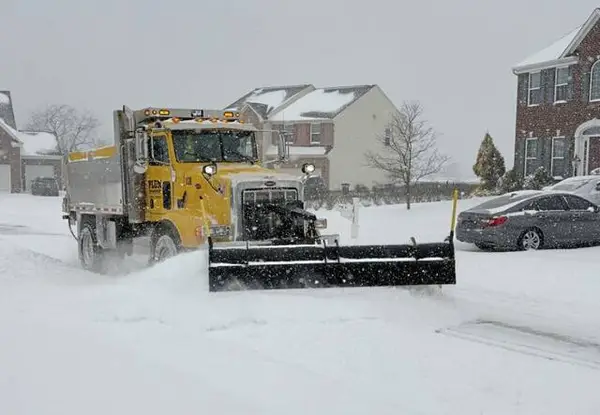
In Pittsburgh, the long-known issues with the city’s fleet crystallized into a crisis as dozens of snowplows broke down during the storm, forcing the city to declare an emergency so it could bypass normal approvals and hire private contractors.
That problem skidded into others. Crews worked around the clock, equipment was strained, snow had to be hauled away, garbage pickup was delayed and residents were told there was no clear timeline for clear streets.
The governor declared a state of emergency — proactively, happening Friday when snow didn’t start falling until the earliest hours of Sunday. Pittsburgh and Allegheny County also declared an emergency — but that didn’t happen until Monday afternoon.
Preparation is not about predicting every detail. That’s impossible. Recognizing patterns and building systems that bend without breaking isn’t.
Weather forecasts offer only days of warning. However, supply chains, staffing needs, infrastructure wear and seasonal demand offer months — sometimes years — of notice. When problems appear to come out of nowhere, it is often because early signals were ignored or postponed.
Snowstorms make this lesson easy to see. Life does not pause because conditions are difficult.