
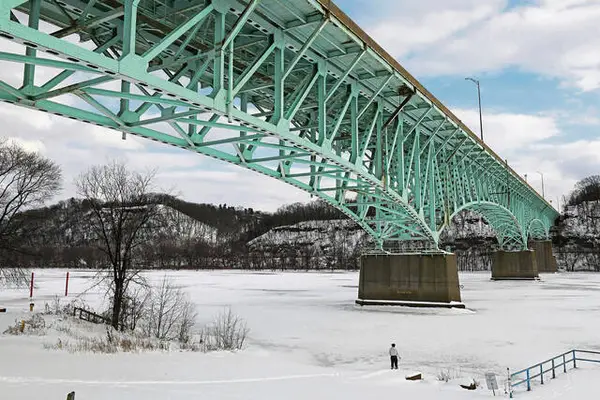
The Allegheny River in Pittsburgh is shut down to all traffic through March 1.
The U.S. Coast Guard made the announcement Thursday afternoon after several inches of ice accumulated in the wake of last weekend’s snowstorm.
“I’ve been referring to this as a once-in-a-decade freeze,” said Shane Checkan, navigation chairman for the Waterways Association of Pittsburgh. “In Pittsburgh, we do get extreme cold. But the difference-maker in this is the extreme cold sustained over this length of time.”
The Allegheny River closure, which is called a “safety zone,” was issued Thursday by Capt. Justin Jolley, the Coast Guard’s captain of the Port of Pittsburgh, due to “ice conditions.”
It includes the length of the river from mile marker 1 to mile marker 72.
The closure is set to last through March 1.
“Vessels will not be allowed to transit this area without the permission of the U.S. Coast Guard,” according to the announcement.
Ice on Pittsburgh’s iconic three rivers is currently ranging between 5 and 8 inches thick, according to Checkan.
But the Monongahela and Ohio rivers were not included in the Coast Guard’s closure.
“The word ‘closure’ scares a lot of people,” Checkan said. “There’s a lot of false narrative out there that everything is closed, and it’s not.”
Pittsburgh’s supply chain has been affected, including shipments of coal for power plants and U.S. Steel, according to Checkan.
“There’s a lot of critical products that we’re working with,” he said. “The main thing (is) that the focus is going to shift to operation-sustaining products. Those are the things that are getting prioritized during these times.”
The sheer amount and thickness of the ice on Pittsburgh’s rivers restrict the amount of barges that can move.
“Therefore, it creates a backlog in the supply chain,” he said.
No end in sight
Although the rivers have already seen ice this winter, Checkan said none of it had significantly impacted transit.
At some points Thursday, temperatures were minus 8 degrees on the water around Pittsburgh, he said. Lows are expected to stay below zero for the next several days — with no temperature above freezing over the next 10 days.
“The hard thing about these situations is there’s so many variables,” Checkan said. “All the government agencies — we’ve been on calls every other day. The communication is key to be able to keep the rivers open and navigate safely to get end users their products.
“There is not a good end in sight currently based on the forecast.”