
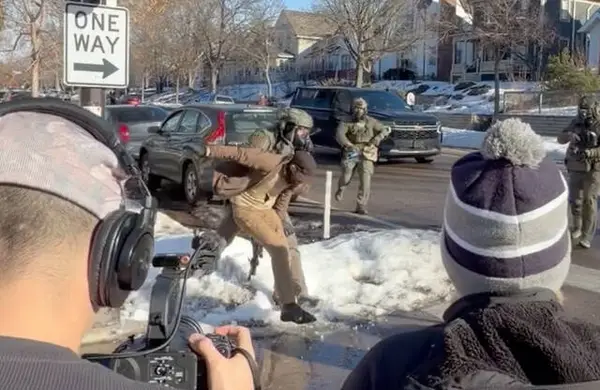
After the killing in Minneapolis of ICU nurse Alex Pretti by Border Patrol agents, more Americans have started to pay attention to the ongoing assault on their freedoms. After the earlier killing of Renee Good and other atrocities committed by masked renegade federal agents, there is some hope that this latest tragedy will lead to the great awakening that the nation needs.
There has been a pattern of high-profile thuggery that has included the detention of a crying 5-year-old and his father in a filthy detention center, an innocent citizen dragged from his home in his underwear, widespread racial profiling and the daily verbal and physical abuse of citizens for exercising their constitutional rights. Good people are living in fear.
In the past, it has taken something big to muster our collective outrage and get our leaders to recognize when a shared line has been crossed. At times, when Americans have experienced un-American cruelty at the hands of their government, it has led to a reaffirmation of what it means to be American.
The nation was horrified at the video that led the evening news in March 1965. Six hundred civil rights marchers were peacefully walking through Selma, Ala., toward the state capitol in Montgomery to demand the right to vote.
Once they crossed the Edmund Pettus Bridge — named after a former Confederate general and grand wizard of the Ku Klux Klan — law enforcement officers and deputized private citizens attacked them. They were stampeded by troopers on horseback, tear gassed and savagely beaten with wooden batons, their bodies strewn everywhere.
Eight days after what became known as “Bloody Sunday,” President Lyndon Johnson addressed a joint session of Congress and called for a federal law to protect the rights of Black people to register and vote. Six months later, with broad bipartisan support, Congress passed the Voting Rights Act of 1965.
That kind of political courage may not be possible anymore, but the killing of Pretti has touched a national nerve, and some officials who have been squarely in President Trump’s camp have questioned his immigration strategy. Officials from both parties have called for a national de-escalation of Trump’s strategy and the firing of those appointees who have directed it.
Trump’s immigration czar Stephen Miller called Pretti a “would-be assassin” after the shooting. Homeland Security Secretary Kristi Noem blamed Pretti for his own death. But anyone who saw the many videos of the shooting knew that they were lying. Pretti was shot multiple times while being held on the ground and not resisting.
Trump began to soften by mid-week, removing Border Patrol commander Greg Bovino and replacing him with former ICE director Tom Homan. Trump told Fox News, “Bovino is pretty good, but he’s a pretty out-there kind of guy. Maybe it wasn’t good here.”
It is hard to prosecute nameless and faceless killers, especially if the Trump administration protects them. The always incendiary Miller has wrongly assured ICE agents that they have absolute immunity from local prosecution.
But Steve Vladeck, Georgetown law professor and editor of the Supreme Court newsletter One First, wrote that it is clear that Miller “is wrong.” Vladeck added that “local and state criminal prosecutions, in at least some cases, are not remotely foreclosed.” So, stay tuned on that.
In his 1965 speech to Congress after Bloody Sunday, Johnson said, “Rarely are we met with a challenge, not to our growth or abundance, our welfare or our security, but rather to the values and the purposes and the meaning of our beloved nation.” This is another one of those times.