
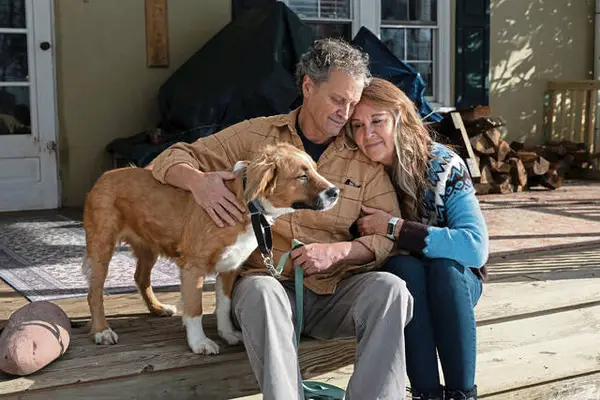
On Aug. 13, 2021, Marc and Jane Fogel pulled away from their white colonial-style home in Oakmont to drive to New York City.
There, they boarded a plane to Moscow to begin their final year teaching at the Anglo-American School, an elite institution built for the children of western diplomats.
But when the couple landed, Russian authorities detained Marc, seizing from him less than an ounce of marijuana he had been prescribed in Pittsburgh to alleviate severe back pain. A judge convicted Marc of drug smuggling and sentenced him to prison.
So began an excruciating ordeal that kept him in Russian custody for 1,277 days.
On Feb. 11, 2025, President Donald Trump’s administration secured Marc’s release and brought him home.
This is Marc’s story.
CHAPTER FIVE: HOME
After spending a sleepless night in the luxurious Waldorf Astoria in Washington, D.C., on the morning of Feb. 12, Marc Fogel, accompanied by two federal employees with the Office of the Special Envoy for Hostage Affairs, made his way to Dulles International Airport.
Knowing that Marc had been in the media’s eye following his release from Russian captivity, the agents took Marc to a back door at the airport, where he quickly made it through TSA screening.
Marc still had to walk through the crowded airport, including the food court, on the way to his gate. It was the first time he had smelled any kind of fast food in 3½ years. It made him nauseous.
The men made it to the gate and boarded a commercial flight to San Antonio, where Marc would undergo post-isolation support activities.
Recognizing Marc had been away from American culture for so long, Rob Crotty, with the special envoy for hostage affairs, thought they could spend some of the flight catching up on what he had missed. Among the things mentioned was the phenomenon of the New York Times’ game, Wordle. It had risen to popularity just a few months after Marc’s arrest in August 2021 at a Moscow airport for bringing medical marijuana into the country.
Marc found his attention span was limited.
“I just sat there, and my head ached,” he said.
But he was excited, too.
“I knew I was home,” he said. “I knew I was going to see Jane and the boys in San Antonio.”
Marc’s wife and sons, who were in their mid-20s, were already at the hotel on base at Brooke Army Medical Center, where all Americans who have been wrongfully detained in a foreign country are taken for evaluation.
Marc arrived at the facility, known in government circles, as BAM-C. When he first saw Jane and hugged her, Marc couldn’t stop touching her face.
“You’re so soft,” he kept saying.
Jane laughs now, calling her husband during that initial interaction “unhinged.”
In their first reunion, the four of them spent a little more than an hour in a community room getting reacquainted.
The entire time, doctors and therapists quietly watched from the perimeter. Those professionals, who work extensively with Americans returning from detention, are tasked with helping them ease back into life in the U.S.
Marc was impressed. Part of his trip to the base was for a full medical evaluation, which doctors likened to what astronauts undergo when they return from space. The potential outcome of that physical examination, Marc said, was one of the things he most feared.
Throughout his time in Russian detention, he did not have access to the medical care he had been accustomed to as an American citizen — or even as an expat working overseas as a teacher for more than three decades.
He didn’t know what routine tests might show: his cholesterol levels, his prostate health or the condition of his teeth. That list didn’t include checks on Marc’s extensive back and hip problems that dated back decades, or the potential consequences of the more than 400 mystery injections he received while in Russian custody.
As part of the evaluation, Marc underwent extensive imaging.
“I’ve never been so thoroughly prodded,” he said.
Despite losing more than 20 pounds during his imprisonment, Marc was relieved to earn a clean bill of health.

In addition to medical tests, those days in San Antonio were packed with therapy sessions and time for reflection. During his stay, Marc was the only person on the wing there for that kind of treatment.
“They were so attentive,” he said of the staff.
There was therapy — individual for everyone in the family in the mornings as well as group sessions in the afternoons. All four Fogels stayed in their own rooms, with Marc in a private hospital room, and Jane and their sons in the hotel.
“When you’re done, you go back, and you are to sit and quietly ponder what’s going on and ask questions for the next session,” Marc said.
Everything about Marc’s stay at the base was managed. Although there was no time for fun and sightseeing, one of the highlights in San Antonio came when Marc received approval to go to a restaurant. Everyone on staff had told him about a delicious taco place nearby.
“I lived in Mexico. I love Mexican food,” Marc said. “I wanted to speak Spanish.”
But the doctor warned him how chaotic the restaurant was and suggested a calmer environment for Marc’s first real foray in public since his release from prison.
He and his family settled for a more tranquil Asian restaurant. Marc remembers sitting at the table and asking, “Where’s the menu?”
There wasn’t one. Instead, there was a QR code to scan. Marc was perplexed, so Crotty took his phone and tried to show him.
“I’m just going to let you order,” Marc told him. “I can’t.”
Several days into Marc’s time at the medical center, the family had an especially intense therapy session that proved to be the key to completing the program.
“It was really when the dam broke,” Marc said. “And the next day, they said, ‘If you guys are ready to leave, we’re comfortable with it.’”
At 5 p.m. Monday, Feb. 17, the Fogels landed at Pittsburgh International Airport.
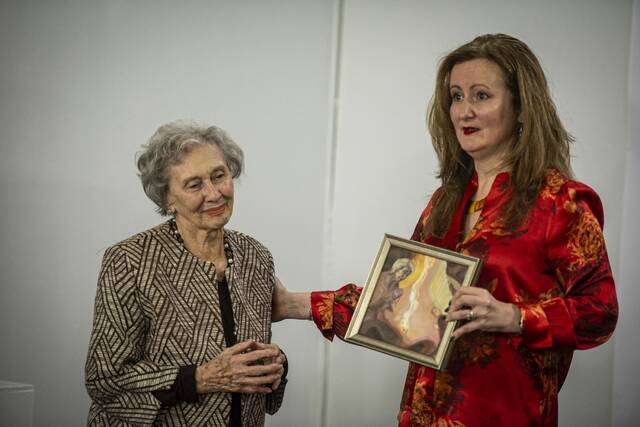
Marc had kept his travel plans a secret from his 95-year-old mom, Malphine, hoping to surprise her the next day.
His arrival invariably attracted attention, even though the special envoy for hostage affairs had requested that Allegheny County Police escort Marc in an understated way.
Reporters showed up outside Marc’s house on the North Side.
There was no keeping Malphine in the dark.
She saw on the news that night that her Marc had finally come home.
A trip to Washington
The next day, they reunited at his childhood home in Butler Township where Malphine still lived.
She broke down.
He recalls holding the petite woman and feeling her whole body shake in his arms.
“It’s one of those moments where I really can’t remember my emotions,” Marc said. “It’s really hard to distinguish little parts of it because you’re so overwhelmed, your mind, your body.”
The first few weeks home for Marc were like that — a whirlwind of intense gratitude that he was back and sorrow that he had put himself and his family through the ordeal.
“I was drowning in the most intense emotions, good and bad,” Marc said.
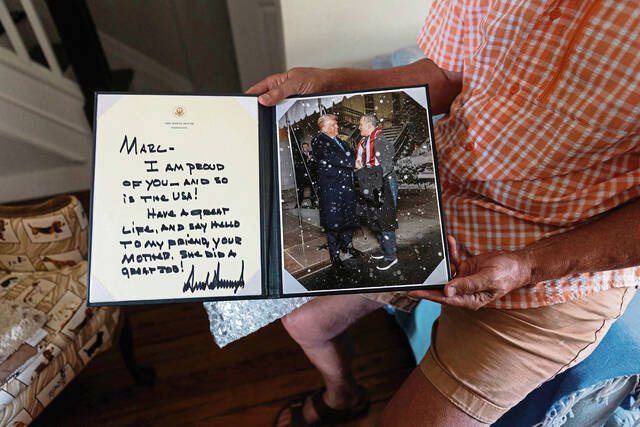
In early March, first lady Melania Trump invited Marc and Malphine to attend a speech by her husband, President Donald Trump, to a joint session of Congress.
At first, Malphine declined. She worried the travel and overnight stay would be too much.
But a few days later, Steve Witkoff, Trump’s Special Envoy to the Middle East, called. Witkoff had helped negotiate Marc’s freedom and whisked him home from Moscow on his private jet.
“Marc, if I could get you the plane and fly you down in the afternoon, and we’ll fly you back that night, would your mom come?” Witkoff asked.
Malphine said yes.
“It was hard to say no to that,” Marc said.
So on the afternoon of March 4, Marc and his mom boarded Witkoff’s jet at Pittsburgh International Airport and flew to Dulles. Their flight took just 19 minutes.
At the Capitol, Marc and his mom sat behind the first lady, Elon Musk and members of the Trump family. For the longtime history teacher, it felt surreal.
As soon as the speech ended, Marc and his mom were escorted to a caravan to return them to the White House. They grabbed their bags, hopped in a car, returned to Dulles and got back on Witkoff’s plane.
Marc marveled at how little time the journey took.
“From the time we left the Capitol building to the White House to the Pittsburgh airport was, I’m telling you, it was like an hour,” Marc said.
Circumstances like those — meeting the president, flying on Witkoff’s jet, visiting the Lincoln Bedroom, having so many people fighting for him — have made it hard for Marc to comprehend the magnitude of his odyssey from captivity to freedom.
“Sometimes I wonder why. How? I want to crawl in a fetal position. I want to drink a bottle of tequila,” Marc said. “It’s all so freaking intense.”
Getting close
Marc slowly returned to his new life in Pittsburgh. He found pleasure in the simplest of things and sorrow in others. He called it “boundless joy straitjacketed by the memories of the horror of going through it.”
Part of him thought he would fall right back to the things that brought him happiness — long bike rides, fishing.
He was wrong.
“I am not a person who can just forget this, ‘I’m moving on, I’m going to play golf every day,’” he said.
Instead, much of Marc’s recovery has been about self-reflection and recognizing his limits in talking about his experiences. When he has had enough, Marc ends the conversation.
That doesn’t always stop people from trying to talk to him.
Marc, a die-hard Pittsburgher at heart, decided one morning during his first week home to ride his bike by himself to Primanti Bros. in the Strip District. He arrived just before noon. There were few customers inside.
He ordered a pastrami with egg and cheese.
“And it came, and it’s just sitting there, and I’m just enjoying this incredible moment, which is happy and sad — as everything is in my life right now,” Marc said.
A few minutes later, the server returned to his table.
“And she said, ‘Don’t you like the sandwich?’”
“I really love this sandwich,” Marc responded. “I haven’t had one for a long time.”
“Where have you been?” she asked.
“That’s a long story,” Marc answered.
The server left and a short time later returned with the cook.
“I’m Ukrainian,” the cook said, recognizing Marc. “My dad dealt with that KGB shit, too.”
Suddenly, customers and staff were stopping by Marc’s table to talk and take selfies with him.
Those types of interactions with the public were still happening months later as he had become something of a local celebrity.
Marc and his family were invited to attend a Penguins game, where he was welcomed home on the big screen.

On April 4, he threw out the first pitch at the Pirates’ home opener. Taking the mound in a Roberto Clemente jersey, Marc tipped his cap, blew the crowd kisses and threw slightly inside to Pirates pitching ace Paul Skenes, who served as catcher for the ceremony.
Months after his return, Marc still was being recognized. One morning in early June, he ventured into a Costco with his nephew. Marc was three steps inside the store when a woman approached.
“You’re Marc Fogel! Oh my God, can I hug you?” she asked him.
“Of course,” he responded.
That was on Day 112 of freedom. That’s how he measures time now.
At that point, Marc mostly just wanted to be at home. He characterized himself as being in the nesting phase.
“It’s like cooking an omelet for my wife in the morning, sweeping the porch — I could give you a hundred things that I’ve done with just pure delight,” he said.
For months, when Marc talked about his experiences, the words tumbled from him fast and unabated. In a visit with longtime friends just days after his release, they barely could get a word in. When he visited his sister, Anne, in Montana a few weeks later, it was still the same.
“He couldn’t stop talking,” Anne recalled. “He was just wound up like a crazy person.”
When he visited again in May, she said, “He was still really whipped up.”
Her brother always has had a lot of energy, but what she was seeing was more than that.
As the months have passed, Marc has started to get a hold on it.
“I wouldn’t say he’s back to normal just yet,” Anne said. “He’s getting close.”
A holy trinity

Marc spent much of the last year waiting to get to each next milestone.
His and Jane’s 29th wedding anniversary.
His 64th birthday.
Thanksgiving.
Christmas.
And today, the one-year anniversary since his return home.
“I’m really looking forward to Feb. 11 and being done,” Marc said. “Starting to be able to look back and say, ‘Last year, I was here.’”
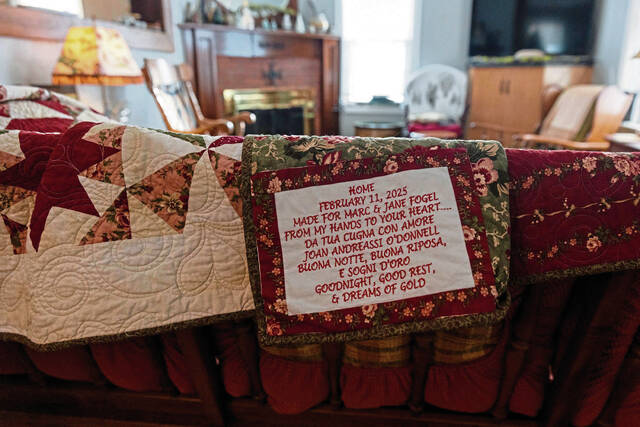
Part of the adjustment was getting accustomed to being around his family again. He, Jane and their sons are scheduled to take a trip to Italy in the spring that Marc thinks will help with that.
“It will remind them who they were, who they are,” Anne said.
She described her brother as always being the ringleader — compelling, great company, fun to talk to and full of good ideas.
“Marc is and still remains a rose-colored-glasses kind of guy,” Anne said.
Marc said he always has taken heat for being too optimistic. But he’s not sure that’s the case anymore.
“This experience has really tempered how much joy I can show right now. A sort of (part) of myself has been sidelined, or it’s asleep, or it’s never going to come back. I don’t know,” he said. “I still have these shackles around me, that I always feel this: ‘How did this happen? What did I do?’”
A few months after Marc returned, Jane told him that his personality — that optimism, the ability to talk to anyone, to get along with everyone — is what allowed him to survive.
“When you hear those things, that helps,” Marc said.
Even though he feels tremendous remorse for putting himself in the position he was, Marc said he’s proud of coming out on the other side. He’s proud of his family, too.
“My mother is one of the most amazing stories that comes out of this,” Marc said. “And my sisters, Anne and Lisa. That troika of women. They’re my holy trinity.”
He praises the group of people who helped to free him — diplomats, attorneys, agents, politicians — and the doctors, nurses and therapists who have helped him recover.
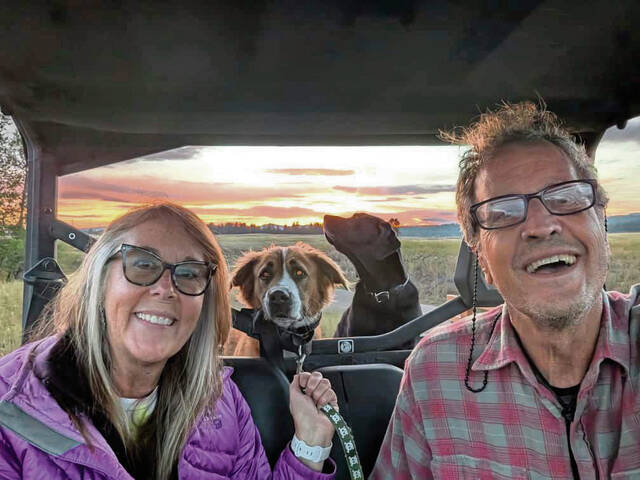
“We will be thankful for generations,” he said.
Forgiveness
Marc is in regular therapy and still talks frequently with the folks at Hostage US, a nonprofit that helps returning Americans reacclimate to life. He believes he has made great strides.
Part of the work of the last year for Marc and his family has been processing their anger for him having taken the medical marijuana into Russia in the first place.
“There’s some deep-seated stuff there that’s probably going to take years to unfold,” Anne said. “My family was in a pressure cooker. The amount of stress we were under, things go sideways.”
Marc understands that anger.
“It’s still there. I’m sure it’s still there with my kids, my wife, my sisters,” he said.
Jane once asked him why he did it — if he thought he could just get away with it. Marc had spent his life, he said, as the golden child — a lucky person, beloved by all.
“Did you just think you were invincible … that this could not happen?” she wondered.
“And that was undoubtedly a big part of the decision, that I just felt that I can do this,” Marc admitted.
He knew athletes had taken medical marijuana in for the Olympics and the World Cup. He thought it would be fine.
“I’ve got a medical card here. I’ve got a prescription,” he said. “I had all the documentation.”
None of that mattered, and the consequences were catastrophic.
“I felt much worse for my family in every way, shape and form than I ever felt for myself,” he said. “That is, to me, as clear as anything. It was never, ‘Woe is me.’ Never.
“It was always, ‘I can’t believe what I’ve done to the people who love me the most and I love the most. What did I do? How could I cause so much harm to my loved ones?’”
Anne, who is Marc’s best friend, told him he has to move on and stop apologizing.
“You did something stupid,” she said.
But for the family, it was complicated, too, especially given his medical history and the pain he endured.
“He’ll never forgive himself,” Anne said. But, she continued, he must. “You have to come to a place of forgiveness.”
When Marc first returned home, he cried several times each day over the guilt and remorse he felt for the hurt he caused his family.
“It was debilitating,” he said.
Over time, some of that has started to subside.
“But it’s certainly not great,” he said.
He paused.
“I was ready to say: I hope that ends someday. But I don’t think it will, and maybe it’s a good thing you keep it in your mind as a learning experience.”
After spending years lying in his Russian prison bunk pondering it, sick about it, sleepless, he said, “It’s kind of part of my skin now, I guess, and where it goes, we’ll find out.
“It’s just, it’s a hell of a burden to carry.”
About this project
Over eight months, TribLive reporter Paula Reed Ward met with Marc Fogel a dozen times to talk about his experiences being held in the Russian prison system, his dramatic rescue and his ongoing adjustment to freedom.
Ward spent more than 20 hours in conversation with Fogel and interviewed his loved ones, attorneys, government officials and friends. She also reviewed Russian court documents and U.S. State Department filings.
This five-day exclusive series, which includes visuals from TribLive photographer Kristina Serafini, is the culmination of that reporting.
About the author
Paula Reed Ward joined TribLive in August 2020 as a courts reporter following a 17-year career at the Pittsburgh Post-Gazette, where she was part of the team that won a Pulitzer Prize for its coverage of the synagogue shooting in Squirrel Hill.
Raised in Pleasant Hills, Paula attended Indiana University of Pennsylvania and majored in journalism. Her first job was at the Pottsville Republican & Evening Herald. She then spent five years as a police and courts reporter at the Savannah Morning News, in Savannah, Ga. It was there that she also earned a master’s degree in criminal justice.
Paula is an adjunct professor at Duquesne University and is also the author of the book “Death by Cyanide: The Murder of Dr. Autumn Klein.”
You can contact Paula at pward@triblive.com.
The series
Chapter One: From Darkness to Light: Marc Fogel’s journey to freedom
Chapter Three: Fogel spends days reading, praying and grappling unpredictable conditions
Chapter Four: Unexplained departure, and then a triumphant arrival to the U.S.
Chapter Five: Finding a new normal, and working through guilt; ‘We will be thankful for generations’