
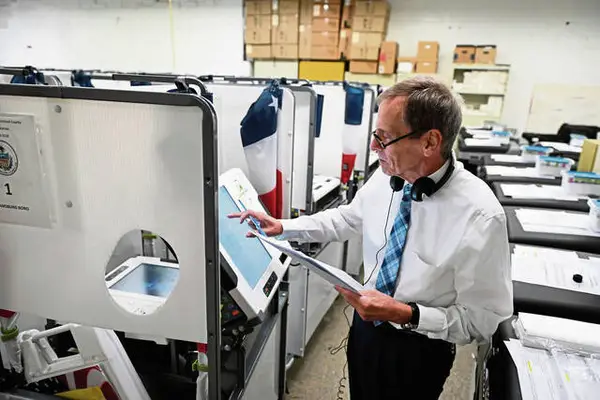
Westmoreland County voters will again be able to cast paper ballots at the polls during this year’s primary and general elections.
Republican commissioners Sean Kertes and Doug Chew on Thursday approved a contract with an estimated price tag of $18,275 to supply paper ballots at each of the county’s 306 voting precincts for the May 19 primary. Voters will continue to have an option to use the touch-screen voting machines at the polls.
Commissioners authorized the paper ballot option for the first time during the last year’s general election, calling it a test run for a future where digital ballot marking devices, such as what has been used in Westmoreland County since 2020, will no longer part of the Election Day process.
“Voting machines will eventually be defunct. That is the plan,” Kertes said of ongoing legislative federal efforts. “I don’t know if that will happen but it’d be nice for our residents to be prepared if that does happen. That’s why I would have paper ballots available as a good option. Why wait,” Kertes said.
The county last year paid $40,000 for paper ballots and other equipment needed to deliver them to and from the courthouse on Election Day. County officials said just 5% of the more than 78,000 voters, just less than 4,000, who participated at the polls on Election Day cast paper ballots.
Election Bureau director Scott Ross said 85,000 paper ballots will be needed at the polls for the upcoming primary that features races for governor, Congress, state Senate and House seats. Turnout is expected to exceed last spring and fall’s voter participation which in Westmoreland County saw few contested high profile races.
Ross said it is still to be determined how many paper ballots will be needed in November.
Chew said he expects the county’s computerized touch-screen voting system, purchased for more than $7 million ahead of the 2020 primary, to be de-certified by decade’s end.
“At that point I would never buy machines again. So getting people used to a non-machine status and using scanners is what this process is all about to me,” Chew said.
The machines currently used require voters to utilize a touch-screen computer to mark a paper ballot that is printed out and scanned at the polls.
Commissioner Ted Kopas, the board’s lone Democrat, voted against paper ballots last fall and did so again on Thursday.
“It’s a tremendous waste of money because even with the small amount who use it you still have to print enough to accommodate every potential voter,” Kopas said. “And it’s not just the cost. Actions like this feeds the myth there is something wrong with the voting machines. It just feeds the conspiracy. We should be defending our election integrity rather than trying to find ways around it.”