
Watching Savannah Guthrie sit on a couch and look into a camera is nothing new. It is how many Americans start their day — with a cup of coffee and the “Today” show.
But for two days this week, the usually upbeat host has not been interviewing others about their challenges. She has been holding the hands of her siblings and speaking about the disappearance of her mother.
The attention is national. It is the kind of cultural moment people may one day recall the way they remember the white Bronco carrying O.J. Simpson down a California freeway or the rescue of nine trapped miners at Quecreek.
But while the public may remember where they were and speculate about the mystery, most will never fully understand the unique grief of not knowing.
Kathe Gross will.
Since April 2018, Kathe Gross has longed to know what happened to her daughter, Cassandra Gross. Nearly eight years included 128 private searches that she led herself for the 51-year-old Unity woman.
A judge declared Cassandra legally dead in January 2019. That was paperwork. It answered no questions. It healed no wounds.
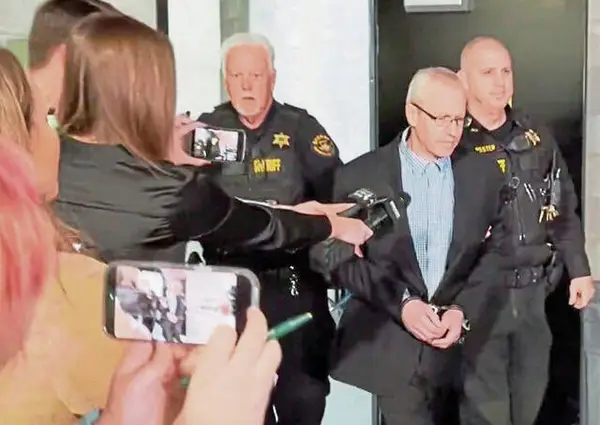
On Wednesday, a Westmoreland County jury convicted Thomas Stanko, 55, of Unity, of first-degree murder and reckless burning by arson.
The jury did its part. It gave Cassandra Gross — and her mother — a measure of justice.
But the same absence that delayed the case for years remains at its center. There is no body to lay to rest.
Murder convictions without recovered remains are uncommon. Most missing-person cases linger in uncertainty, with families waiting for proof of death and, often, a place to grieve.
Without a body, prosecutors must construct a case from what remains: digital records, forensic fragments, witness testimony and patterns of behavior. The burden does not shift. The standard remains proof beyond a reasonable doubt.
That does not make such prosecutions impossible — nor should it. It makes them harder. If the absence of a body meant the absence of accountability, the law would reward concealment.
The Gross case brings accountability but leaves a void.
“I want to know what he did to her,” Kathe Gross, 77, said after the verdict.
A conviction does not guarantee that answer. It is proof that conviction and resolution are not the same thing.
Savannah Guthrie may yet find answers to her mother Nancy’s disappearance. There may be a joyful reunion and a satisfying close to questions still unresolved. A reward has ballooned to $100,000 in pursuit of that outcome.
But missing-person cases are seldom so simple.
Ask Kathe Gross.