
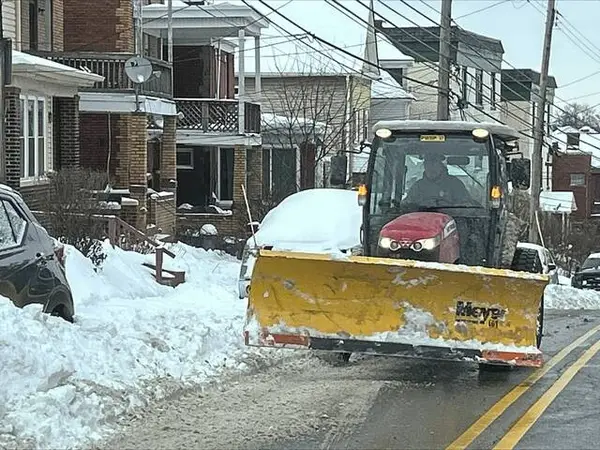
Three days after the latest storm dumped almost a foot of snow on us, my side of the city still hadn’t been plowed. But I had to get to work. So I bundled up, strapped my daughter into her car seat and headed out. In the back of my SUV, like I do every winter, I had a shovel and a bag of cat litter in case I got stuck or needed extra traction.
Halfway down a steep Pittsburgh side street, I saw a car sitting two feet from the intersection, wheels spinning, stuck in a snowbank. I approached slowly, pulled over and asked the driver if he wanted a hand. We shoveled for 15 minutes and used half of the cat litter before my daughter’s cries about being confined in the back seat made me realize I’d run out of time. I had to go. The driver shook his head and said he was headed home on foot. He left his car in the middle of the street and walked away.
Later I learned how stretched the city’s systems had become. Not only had Pittsburgh set a daily record with 11.2 inches of snow in 24 hours on Jan. 25, but officials also reported that 37 city plow trucks broke down during the storm, representing almost half the total fleet. With streets still clogged and wind chills plunging, many residents had one option: stay home.
Pittsburgh opened warming shelters, and those spaces are important. But shelters are an emergency mitigation and aren’t designed for people whose cars get trapped on snowbanks. In severe cold, even a short trip can be risky for older adults, infants and people with health conditions. In winter storm conditions where roads have become sheets of ice, the “warming center” that matters most is the place where you live.
So what does that mean? What should we be considering during these times when our residences serve as our primary protection against the cold?
We should be thinking about thermostats, for starters. This small, often overlooked device helps keep a home within a safe temperature range, and yet it isn’t universal: The U.S. Energy Information Administration reports that thermostats control central heating equipment in about 85% of U.S. homes. That is a vast majority, but it also means that 15% of us — approximately 19 million households — manage winter temperatures without a central thermostat to rely on.
And there is another problem. For those of us that do have a thermostat, our energy bill can make us afraid to use it like we should. At Carnegie Mellon, my research focuses on energy insecurity, defined as the inability to meet basic household energy needs. In utility data, we often see “energy‑limiting behavior”: households keeping temperatures lower than is safe because they’re trying to avoid an unaffordable bill. From the outside, a house may look normal. But inside, a family might be sleeping in heavy coats, using their oven to heat their house or using a space heater to heat a single room.
A winter storm like the one we experienced last month turns that hidden hardship into immediate public risk. If roads aren’t passable and offices close, people become isolated from help. A broken thermostat, a failed furnace or a disconnection notice becomes more than an inconvenience; it becomes a safety issue.
So what can we do?
Keep the warming shelters, but make the path to them clear: Issue repeated communications about locations well in advance of a storm, provide transportation options and remind residents how to reach 211 for basic‑needs and utility assistance.
At the same time, we need to build an “at‑home” safety net for the residents who will weather the storm where they live. Cities can partner with nonprofits and housing organizations on winter heat‑safety checks for seniors and families with young children, including thermostat fixes and referrals for urgent heating repairs.
Finally, we need to make bill help easier to access before arrears pile up. Programs like the Low Income Home Energy Assistance Program (LIHEAP) and utility customer assistance plans exist for a reason, but enrollment is too often paperwork‑heavy and reactive. In winter, timing is especially important. And utilities can use data responsibly (e.g., pairing smart‑meter patterns with weather and billing history) to flag households likely to fall behind and connect with them to offer help earlier, before unpaid bills pile up.
Snowplows are extremely important. We all felt that last month. But winter resilience is about more than moving through a city; it’s also about staying safe when you’re staying put. The driver who got stuck on that unplowed hill made a rational choice: if you can’t trust the road, you go home. Imagine if he had to carry a child through that foot of snow. Our policies should make sure that “going home” is a safe option for everyone.
Destenie Nock is an assistant professor at Carnegie Mellon University and founder of Peoples Energy Analytics.