
Chaz Jackson told the jury he was afraid for his life.
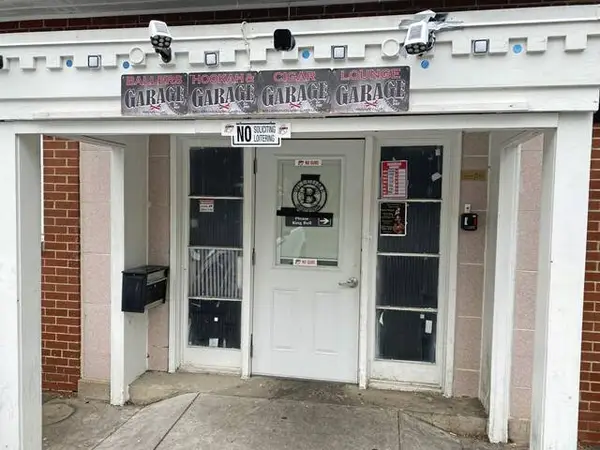
When he heard shots inside Ballers Hookah Lounge and Cigar Bar in Penn Hills around 3 a.m. on June 2, 2024, Jackson, who worked security there, said he unholstered his gun, planning to act in self-defense.
His friend grabbed him by his bulletproof vest and yanked him to the floor to take cover.
It was then, Jackson testified Friday, that his gun went off.
Police say he fired at least three shots that morning, killing one woman and injuring another.
Jackson testified that in the commotion, he didn’t know he’d fired at all. He said he didn’t find out until a few days later while counting the bullets left in his gun before turning over the ammunition to investigators.
“I didn’t pull the trigger. I didn’t take aim at anyone,” Jackson testified.
One bullet fired by Jackson — easily identifiable by the crime lab because they had a blue polymer coating on them — struck Stephanie Stuart, 28, of McKeesport in the back of the head, killing her. Another hit a woman in the knee.
Nathaniel Smiley, 44, of Pittsburgh was also killed that morning, but investigators believe he was shot by someone else who has not been charged. Several other men and women were hurt in the gunfire, as well.
A trial for Jackson began this week on charges of criminal homicide in Stuart’s death, aggravated assault and reckless endangerment.
Investigators have said the 43-year-old security guard from Pittsburgh did not know the victims and likely had no motive to shoot them.
The prosecution is seeking a conviction for third-degree murder. Jackon’s lawyer is arguing self-defense.
Allegheny County Common Pleas Judge Jill E. Rangos gave the jurors their closing instructions Friday afternoon before sending them home for the weekend.
They will begin deliberations on Monday.
Muzzle flashes
Jackson, who was the last witness called by the defense, spent a little more than an hour on the witness stand, with most of that coming on cross-examination.
During direct, Jackson described what happened that morning.
He had been in charge of patting down the men who entered the club to ensure they had no weapons.
Jackson estimated there were more than 175 people inside when the shooting occurred. The room was packed shoulder to shoulder, he said.
Jackson was near the bar of the club in the back when he said he heard a pop.
At first, he testified, he looked to the DJ booth to see if it had been a sound effect or a microphone being dropped.
Moments later, Jackson told the jury, he saw muzzle flashes out of the corner of his eye.
“I see a female with her arm extended going back and forth,” Jackson said, noting a man was shot on the floor in front of her. “I thought she was going to shoot me or someone else in the establishment.”
As he drew his gun, Jackson said, he was pulled to the floor. Then a person to his left was shot, he said.
Jackson testified that he scrambled to his feet and saw Stuart on the floor. Jackson said he watched a man pick up the gun he believed Stuart had been holding and run out.
Jackson chased him outside, he said, and told police which way he went.
An incredulous prosecutor
Under questioning from his attorney, Jackson never told the jurors he fired his gun that night.
It was a point the prosecutor pounced on almost immediately in his cross-examination.
“Mr. Jackson, did you shoot Stephanie Stuart?” Allegheny County Assistant District Attorney Jameson Rohrer asked.
“Yes,” the defendant replied.
But, he continued, he didn’t aim at her.
“Your bullet just happened to catch her in the back of the head?” Rohrer asked incredulously.
“Yes,” Jackson replied.
The prosecution called Allegheny County homicide Det. William Hermann to rebut Jackson’s testimony.
Hermann told the jury that in all of Jacskon’s previous interviews with police, he had never said the person next to him had been shot.
He also had never mentioned that Stuart had been making a sweeping motion with a gun in her hand, Hermann said.
A reasonable threat?
During closing arguments Friday afternoon, defense attorney Frank Walker told the jury that Jackson became the main suspect after police couldn’t find the man they believed started the incident that night by killing Smiley.
“They couldn’t get (him), so I guess Mr. Jackson’s the guy,” Walker said.
Jackson remained the target, Walker continued, even after he cooperated with investigators, turned over his gun and provided multiple statements.
Walker told the jury his client, who had a permit to carry a concealed weapon, was justified in using deadly force to defend himself and those around him.
“You can use it if you believe your life is at risk of imminent harm or danger,” Walker said. “The issue is reasonableness.”
It’s the prosecutor who must show Jackson’s belief was not reasonable, the defense continued.
Walker told the jury that the DA’s office could not do that.
In that case, the panel must find Jackson not guilty, Walker said.
“At the time he was being pulled backward, he had already decided he was going to neutralize the threat, and that…was reasonable,” Walker said.
But Rohrer told the jury that if the gun went off accidentally, then Jackson did not choose to act in self-defense.
“For this to be justified, he has to make a decision. Bullets falling out of your gun is not the same thing as volitionally making a decision to fire,” the prosecutor said.
“At no point has he said, ‘I was scared,’” and chose to fire his weapon, the prosecutor said.
Possible outcomes
Rohrer emphasized to the jury that Jackson was the only witness to claim Stuart had a gun.
“Not a single person … has come forward to say Stephanie had a gun in her hand, except for the man who killed her,” Rohrer said.
He told the jurors that they would have three possible crimes to consider under the criminal homicide count: third-degree murder, voluntary manslaughter and involuntary manslaughter.
Third-degree murder in Pennsylvania requires malice — a wanton and willful disregard for human life.
However, Rohrer noted that to obtain a guilty verdict on that count, the prosecution does not have to prove intent.
Voluntary manslaughter in this case, Rohrer said, would be applicable for a killing that occurs when the defendant has an unreasonable belief that his actions were justified.
Involuntary manslaughter is a killing that occurs through recklessness or gross negligence.
In this case, the prosecutor said, third-degree murder applies.
“Even if the story is exactly as the defendant is saying, it’s still not justified,” Rohrer said. “No matter how you cut this, the use of deadly force in this extremely confined space is not justified.”