
Education has been criticized in recent years — decades, really — for not teaching children how to think so much as teaching them how to take tests.
Specifically, students have learned exactly what they need to perform well on standardized exams. Those tests measure how well a school is doing its job as much, if not more, than how well the kids are doing.
There has been a focus on core issues of curriculum that are simply scored. Math might not have easy answers, but it is easy to calculate the grade. Science tests are formulaic. Reading comprehension can be reduced to multiple choice.
Still, there are concerns about what is missed. It is not just recess time or arts classes that are sometimes trimmed to fit in more test prep or the all-important science, technology, engineering and math (STEM).
What kids might be missing are skills that give them time to practice and focus — the kinds of activities that can be needed in a world full of complaints about screen time and children growing up too fast.
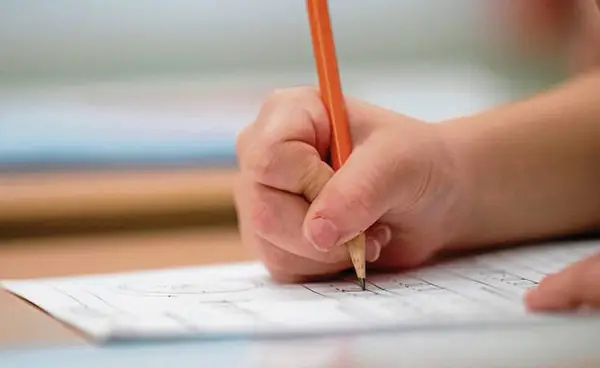
That will change as Pennsylvania brings back a relic of earlier educational days. Keystone State kids will be learning cursive again.
A law passed by legislators and signed by Gov. Josh Shapiro puts old-school handwriting back in the classroom.
Some school districts already are including cursive, which will put them ahead of the curve. Others will have to integrate it, but the Southwestern Pennsylvania schools contacted by TribLive do not anticipate problems.
“It won’t be hard to put in,” said Superintendent Christopher Sefcheck of the New Kensington-Arnold School District.
This is not about Declaration of Independence calligraphy. It is about deliberate attention to a day-to-day skill. It is not just about taking time to form the letters. It is also about the ability to decode them when reading.
While it may feed a certain nostalgia for the “back-in-my-day” crowd who lament when school was about recitation and memorization of facts, it is just as valuable for today’s students. It is like practicing scales on the piano or running drills in sports. It develops ability through attention to detail.
This is not a meaningless gesture. It is not about antiquated information. It recognizes something had been lost that still has a place in life — and therefore still has a place in education.
Maybe it has even more use than legislators believed. As lawmakers debate a bill to ban student cellphone use, it offers a chance to think not just about what should be removed but what should be brought back. Cursive does not eliminate technology. It simply creates space to breathe without it.
Sometimes that is enough.
Now let’s work on bringing back recess.