
Residents in Pittsburgh’s Hazelwood neighborhood won’t be living alongside a waste transfer station after Pittsburgh City Council on Tuesday unanimously approved legislation keeping such facilities away from homes.
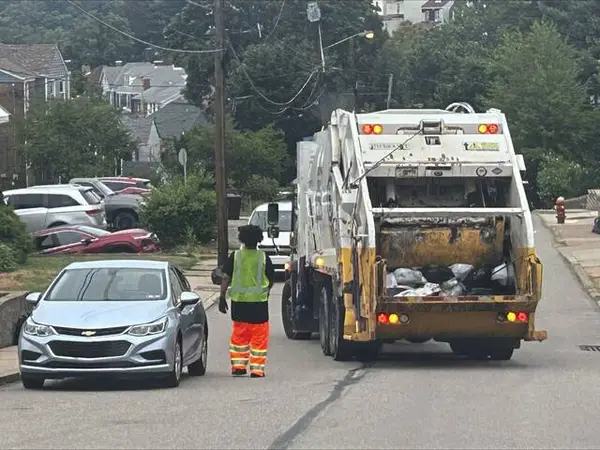
Councilwoman Barb Warwick, D-Greenfield, sponsored a zoning bill that prohibits waste transfer stations — where garbage trucks dump trash that eventually will be moved to a larger landfill — within 500 feet of residential areas, elementary or secondary schools, parks and neighborhood commercial spaces.
That means Republic Services, which operates a recycling plant in lower Hazelwood along the Monongahela River, won’t be able to operate a waste transfer station there. The company had obtained a permit from the state Department of Environmental Protection that would pave the way for such a facility on Vespucius Street near the recycling plant.
State guidelines require that waste transfer stations be 300 feet away from residential areas, a looser restriction than Warwick’s 500-foot rule.
Hazelwood residents have backed Warwick’s efforts to keep a waste transfer site out of their community — and, more broadly, away from residential areas and schools throughout the city.
Sonya Tilghman is executive director of the Hazelwood Initiative, an affordable housing and community development group. She is worried that pollution, increased truck traffic and poor air quality would negatively impact the neighborhood if a waste transfer station opened near homes and businesses.
“These impacts are not minor inconveniences,” she told City Council members ahead of a preliminary vote last week. “They directly impact quality of life and neighborhood stability.”
Dianne Shenk, of Hazelwood, lives about 350 feet from the site where Republic Services operates a recycling center and might have opened a waste transfer station if not for the new zoning rule.
She told council members she already had concerns about noise and debris associated with the recycling center and didn’t want to see a waste transfer facility so close to her home.
Lori Kolczynski, general manager of BFI Waste Services of Pennsylvania, a subsidiary of Republic Services, said the zoning bill was “targeted to exclude our facility.”
“We are a responsible community partner,” she told council members, arguing that having a waste transfer station within the city would make trash pickup more efficient.
Warwick acknowledged having a waste transfer station in the city could offer some benefits, including reducing the mileage put on city garbage trucks that now transport waste to a landfill about 20 miles outside of Pittsburgh in Imperial. But Warwick isn’t convinced the city needs a waste transfer station within its boundaries — and she doesn’t want to see such a site too close to homes.
There are no waste transfer stations within the city currently. No rules were in place to govern where they could open before council members approved the new zoning rule Tuesday.
Warwick suggested the bill could be a “template” for how officials may restrict other industrial uses that residents don’t want to see creeping into their backyards, like data centers.