
Tariffs have created economic confusion over the past year. Some don’t really understand what they are or how they impact prices in the U.S. Some support them as an American trade policy even if they do have an impact at home.
For many — including government agencies — they have simply been something to navigate.
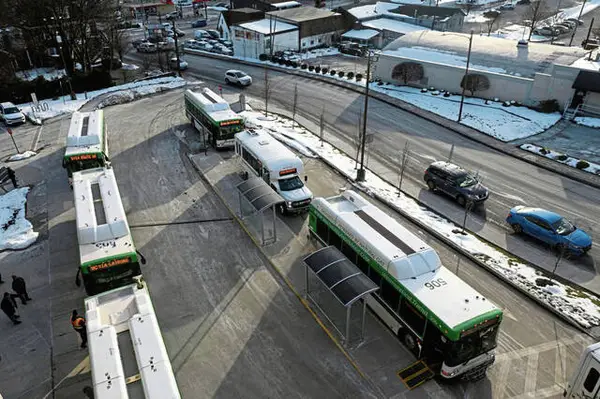
The Westmoreland County Transit Authority had a whirlwind 24 hours last week with tariffs in the eye of the storm.
On Thursday, the board authorized payment of an additional $64,000 in tariff-related costs tied to 10 new natural-gas fueled commuter buses under construction in California.
However, by Friday morning, the U.S. Supreme Court had ruled the tariffs exceed presidential power. Taxation authority is held by Congress, not the executive branch, and presidents have only limited ability to wade in those waters.
Tariffs often are discussed in terms of consumers and private businesses. Companies raise prices. Shoppers adjust. Manufacturers reconsider supply chains.
But government entities are purchasers, too. They sign multi-year contracts. They budget with taxpayer dollars. They plan acquisitions years in advance, often using restricted federal grants that cannot simply be redirected when costs fluctuate.
When something disrupts that process, local boards are left dealing with contracts negotiated under different assumptions.
In Westmoreland County, the authority’s $7.5 million purchase of 10 new commuter buses is largely funded by federal grants restricted to vehicle acquisition. The additional $64,000 in tariff-related costs would therefore be paid with federal dollars as well.
In practical terms, the federal government was holding out a hand for more money — and reaching into its own wallet to get it.
The U.S. Supreme Court decision does not eliminate the confusion. It, along with President Donald Trump’s response, may only intensify it.
The ruling does not articulate the future of tariffs already levied. The president has not backed down from plans to impose additional tariffs, doubling down on his intention to do so without going through Congress.
For the Westmoreland County Transit Authority, the question is not trade theory. It is stewardship. The agency must decide whether to account for a $64,000 cost that may or may not stand, tied to a $7.5 million purchase already in motion.
This is how many government agencies operate. They rely on grants with specific restrictions. They negotiate contracts months or years in advance. They build budgets around expectations that those dollars will remain stable and predictable.
That work becomes more difficult when those dollars are unclear or subject to change.
Riders waiting for a bus in Westmoreland County do not experience tariffs as theory. They experience them as costs, contracts and consequences. Stability for the agencies that serve them is not a luxury. It is responsible governance.