
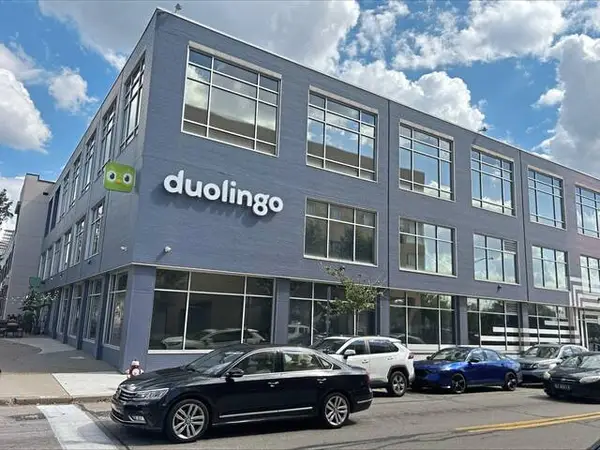
Duolingo enjoyed a strong 2025 by most financial metrics, surpassing $400 million in profit on just over $1 billion in revenue.
It’s a vast improvement from 2024, when the company made $89 million with a revenue of $748 million.
Even so, the Pittsburgh-based educational technology company on Thursday warned investors that results in the near future wouldn’t be as impressive. Duolingo reaffirmed its commitment to changing course by pulling back on paywalls and prioritizing user growth.
“In 2026, we’re adopting a strategy that will set us up to grow users more rapidly and build a larger, category-defining business, but that will lower our financial results in the short term,” Duolingo co-founder and CEO Luis von Ahn said in a letter to shareholders Thursday.
Investors were spooked, much like when Duolingo unveiled the new strategy in November. Between market close Thursday and roughly 10:30 a.m. Friday, shares of Duolingo on the Nasdaq stock exchange fell more than 17%.
“I don’t take this decision lightly, and I know it may come as a surprise to some investors,” von Ahn conceded in the letter.
Duolingo’s more than 40% year-over-year growth in daily users is tapering off. It had nearly 53 million of these highly loyal customers in the last quarter of 2025, up from almost 41 million over that same span in 2024 and reflecting a 30% increase.
Leadership is taking the slowdown as a sign aggressive monetization is lowering traffic on the app, which is best known for language-learning but also features courses in chess, math and music.
Von Ahn estimated in his letter Duolingo will miss out on $50 million in subscriptions by prioritizing growth.
With the renewed focus on its free plan, however, Duolingo projects its daily user base will reach 100 million in 2028.
Duolingo also announced Thursday its board approved a stock buyback of up to $400 million. The company did not offer a timeline for the repurchase program.
Buybacks reduce the number of shares on the market and generally increase the price of those remaining, since they represent a larger piece of the company. Firms often use buybacks as a way to signal confidence in their long-term prospects.
Duolingo did not immediately return questions about the buybacks.