
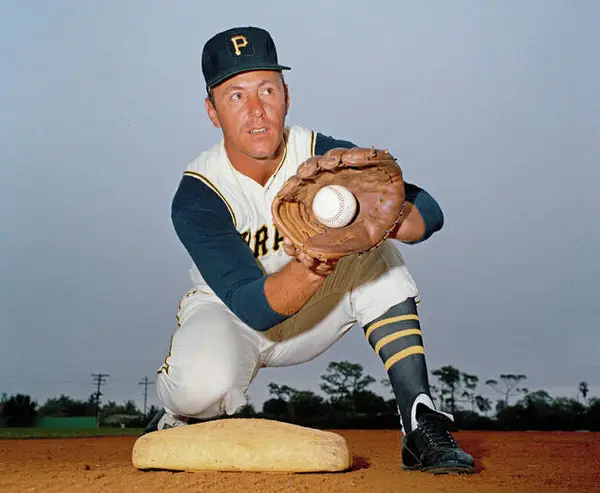
Every Pittsburgh kid knows where he was when Bill Mazeroski hit the 1960 World Series-winning home run. When Maz died last week, it all came back.
I was at Mr. Smith’s penny candy store in East McKeesport after school let out, huddled around a scratchy sounding table radio with a handful of my sixth-grade classmates.
It took mere seconds for the ball to pass over the wall, but I have remembered it in slow motion ever since. What followed was pure adolescent joy as we burst out onto the street, running toward our homes, shouting and waving our Pirates caps in the air.
Maz’s home run meant even more to Braddock families like mine because Maz had married Milene Nicholson — a “Braddock girl.” Like most millworkers, Maz grew up hard — in a one-room house with no plumbing or electricity — and quietly did his job day in and day out. As a Polish American, Maz was one of us, because we were all something different than the earliest Americans.
I was lucky to be born in Braddock. It was a mix of Irish, Italians, Slovaks, Poles, Croatians, Slovenians, Hungarians and others, all drawn to the town to work in Andrew Carnegie’s first steel mill. Each group had its own section and its own church where Mass was said in their native language, but their common bond was the grueling work in the mill.
They worked hard at being American, too, and it wasn’t easy. Many parents insisted that their children speak English only, even at home. They struggled against unfair stereotypes when seeking promotions or better jobs. They weren’t trusted because of how they looked and dressed or because their food smelled bad.
They worked for the lowest wages at the lousiest jobs. They broke their backs so that their children and grandchildren could do better. When their adopted country went to war, they sent their sons to the battlefields and their daughters into the factories until it was over.
People just like them now come here from different countries. Like my grandparents, they may not meet or understand every bureaucratic detail, but they will work harder than anyone to make it here, giving as much as they get.
Even if you are among the minority of Americans who think that ICE’s wholesale detention and deportation of immigrants is somehow putting America first, you should think about the contributions of those families that settled in towns like Braddock.
Remembering Maz made me think that the easiest lesson might still come from sports. A number of America’s Olympic athletes grew up in other countries but competed under the American flag in the Winter Olympics in Italy. From skiing to the biathlon to bobsledding and snowboarding, to the luge and speed skating — our Olympic team was strengthened by the diversity of America.
Gold medal-winning figure skater Alysa Liu is the daughter of a Chinese American immigrant who fled Communist China for a better life in the United States. Her father, Arthur Liu, was a student protest leader during the 1989 Tiananmen Square Massacre. He had to run for his life, eventually making it to America.
The violent criminals have to go, but ICE is doing far more than chasing down and deporting bad guys. They continue to go after some of the very people who simply want the chance to improve their families’ lives and make America better.
One of their children or grandchildren will certainly become a national hero and an inspiration — maybe even by winning the World Series like Maz or winning Olympic gold like Alysa Liu.