
Before the American and Israeli bombs started falling Saturday, Iran’s supreme leader, Ayatollah Ali Khamenei, the authoritarian center of the theocratic regime for nearly 40 years, had planned for a transition of power in the event of his death.
Khamenei, 86, had led Iran since 1989, and held sweeping powers as the supreme leader. He was at once revered by followers as a representative of God, and as the commander in chief of the armed forces, with the definitive word in all key state matters.
Ever since succeeding Ayatollah Ruhollah Khomeini, the founding father of the Islamic revolution, Khamenei ruled with an iron fist and refused calls for change, crushing dissent and ordering the killing of protesters who challenged his rule in the street. Above all else, Khamenei viewed himself as the guardian of the revolution, responsible for safeguarding the survival of the Islamic Republic, and had identified possible replacements to assume that role after him.
Now it appears that his plans will be put to the test.
The Iranian government said Sunday that U.S.-Israeli attacks on Iran had killed Khamenei, hours after President Donald Trump had announced Khamenei’s death. A short time later, the Iranian state news agency IRNA said that Iran’s president, the head of the judiciary and a jurist of the Guardian Council would be in charge during the transition period, without detailing what comes next.
In June, during the 12-day war with Israel, when Khamenei was in hiding, he named three candidates who could be appointed swiftly to succeed him. The supreme leader must be a senior Shia cleric and scholar appointed by a committee of clerics known as the Assembly of Experts.
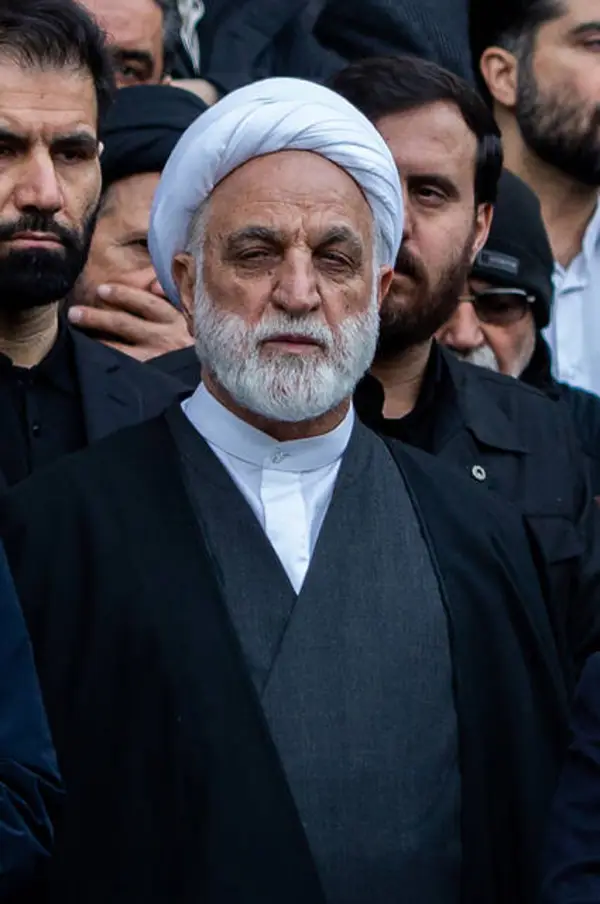
The three candidates Khamenei said he preferred for the role of supreme leader, based on interviews with six senior Iranian officials and two clerics who did not want to be identified discussing sensitive information, are the head of the judiciary, Gholam-Hossein Mohseni-Eje’i; Khamenei’s chief of staff, Ali Asghar Hejazi; and Hassan Khomeini, a moderate cleric from the reformist political faction who is a grandson of Khomeini.
The Israeli military said that Hejazi had been killed.
Khamenei’s son Mojtaba, who has been a powerful figure in the shadows, is favored by some factions, but Khamenei told followers that he did not want the post of supreme leader to be hereditary.
What happens now in Iran is unclear.
The nation’s divisions were on display by late Saturday. In some neighborhoods in Tehran, opponents of Khamenei were seen cheering, dancing and shouting in celebration of reports of his death, according to more than a dozen residents in the capital city, who were reached by phone and text messages.
“Can you hear the cheers and the clapping? Look, fireworks on my block,” said Ali, a businessperson, in a video call from Iran.
Ahead of Saturday’s airstrikes, Khamenei took precautions to prepare the country and the regime for survival. He delegated the running of the country to one of his closest allies, the veteran politician Ali Larijani, who is the head of the National Security Council and has effectively sidelined President Masoud Pezeshkian.
“We will make the Zionist criminals and the dishonorable Americans regret it,” Larijani said on social media Saturday. “The brave soldiers and the great nation of Iran will give the international tyrants who are going to hell an unforgettable lesson.”
Khamenei had also authorized a small circle of political and military allies to make decisions if he were to be killed or unreachable during a war, and named four layers of succession for senior military and political figures whom he personally appoints, according to six senior Iranian officials.
They include his chief of staff, Hejazi; Brig. Gen. Mohammad Bagher Ghalibaf, the speaker of the parliament and former commander of the Revolutionary Guard; and his top military adviser and former commander in chief of the Guard, Gen. Yahya Rahim Safavi.
It was unclear early Sunday who was in charge.
Days earlier, Abbas Araghchi, the foreign minister of Iran, told Iranian media that in the event of a war with the United States, “we may have lost some of our leaders, but this is not a big problem.”
“We have no limit in defending ourselves,” he said.