
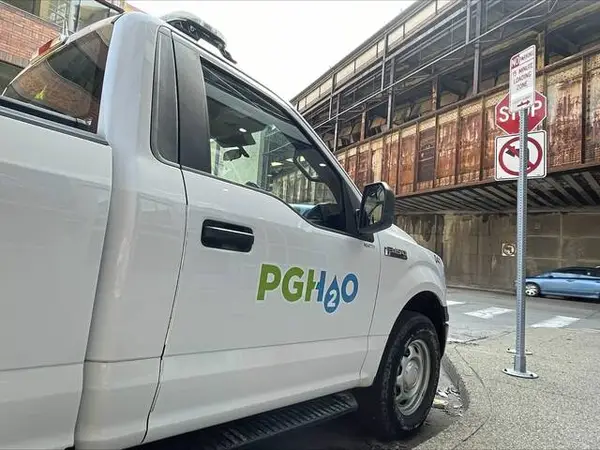
Pittsburgh Water’s 2025 report highlights a continued drop in lead levels detected in the city’s drinking water supply.
“2025 was yet another year of Pittsburgh Water turning our commitments into real results for our customers,” CEO Will Pickering said in a statement accompanying the report, released March 2.
The organization’s 2024 report said it had replaced over 12,000 public lead service lines in the city since the mid-2010s lead crisis. According to the new report, that number has risen to 14,000 as of December, with Pittsburgh Water replacing over 10,000 private-side lead lines over the same timeframe.
The utility also distributed hundreds of lead test kits.
The system’s 90th-percentile lead level measured 2 parts per billion in 2025 — far below the federal action threshold of 15 ppb and down from 3.58 ppb in 2024. This marked the lowest reading in the history of Pittsburgh Water, known as Pittsburgh Water & Sewer Authority until the 2024 rebranding.
“This remarkable progress over the past decade was a major factor in the U.S. Water Alliance’s decision to hold 2025’s One Water Summit in our city,” Pickering said.
Pittsburgh Water plans to replace all of the city’s lead lines by 2027 “at no direct cost to customers,” although most customers recently saw a 15% rate hike. One 2024 report found that Pittsburgh customers pay more for water and sewer services than the national average.
In response to questions from TribLive, Pittsburgh Water said via email that it did not anticipate further base rate increases. It did say customers’ charges related to loans from the Pennsylvania Infrastructure Investment Authority (PENNVEST), which is separate from the base rate, could change during a semiannual reconciliations process undertaken with the state’s Public Utility Commission.
The utility had initially sought an even larger base rate hike to offset the cost of lead-line replacement as well as significant upgrades to its facilities supported by $795 million in low-interest loans and some $116 million in grants from PENNVEST.
Those upgrades include Pittsburgh Water’s ABC project, which entered the construction phase last fall and is part of a larger Water Reliability Plan. The project will see upgraded and rebuilt facilities on either side of the Allegheny River. Pittsburgh Water plans to replace an aging pumping station near Aspinwall, while a new pumping station in Highland Park is nearly complete.
Pittsburgh Water told TribLive it expected the Highland Park station to come online in April, pending regulatory approval.
Pittsburghers approved a ballot measure in May 2025 barring the city from selling its water and sewer systems to a private entity. Some local officials raised concerns about a November deal selling city water and sewer infrastructure to Pittsburgh Water, which is considered a public utility, for $1.
Pickering said last year that the company supported the referendum and appreciated the community’s trust.
The latest annual report also touted the success of a new internal initiative focused on safety and efficiency. Pickering credited Pittsburgh Water’s more than 400 employees with improving the organization’s culture.
Pittsburgh Water isn’t the only utility working on systemwide improvements. The Allegheny County Sanitary Authority (ALCOSAN) is in the early stages of a $2 billion Clean Water Plan to eliminate sewage overflows during heavy precipitation. Pittsburgh Water told TribLive that its customers’ bills contribute to that regional effort.