
Export officials have spent the past decade shining a light on its future, revamping the borough’s downtown area and paving its central parking lot.
Now, they want to shine a light on its past, but it will take a big chunk of grant money to get it done.
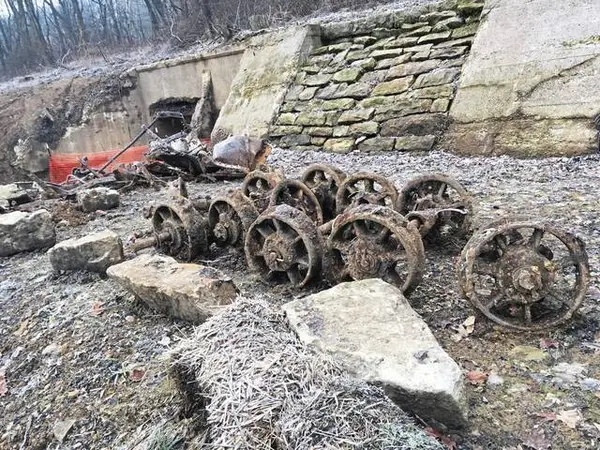
The borough has been working with mine consultants Tetra Tech and Xtraction Science & Technology to create a historical area out of the former Westmoreland Coal Co.’s No. 2 mine entrance, located behind the district court office on Washington Avenue.
The entrance was initially uncovered as part of a 2018 Eagle Scout project. Since then, borough officials have been seeking a way to to make the entrance safe for visitors and create signs featuring information and photos of the town’s mining culture, supplied by the Export Historical Society.
To further that mission, council voted Tuesday night to include a letter of support in applications for state mine grants totaling about $650,000. By applying for grants aimed at remediation and economic revitalization, the borough is also hoping to create a pathway leading from the mine entrance down to the Westmoreland Heritage Trail.
The overall goal is to clean up the area around the entrances and install a small crushed limestone path that will connect to Madison Avenue, to guide pedestrian traffic around the mine, down to the Export business district and the nearby trail.
“At the mine portal we’ll have signs talking about mining in the area, and we’ll restore the facade to how it was when the mine was open,” said Xtraction President Michael Trevits.
History buffs won’t be able to venture very far into the mine itself, however.
“We’ve been in it, and we were in there with an oxygen sensor that went off,” Trevits said. “The mine is oxygen-deficient. We could open the entrance up, but we’d have to have someone monitoring it every day.”
Bob Kudlawiec, a senior project manager with Tetra Tech, said that if the grant is approved, it would take about 12 weeks of construction to finish the mine entrance and pathway to the trail.
The Abandoned Mine Land Economic Revitalization program has been in place since 2016, providing $30 million to Pennsylvania, Kentucky and West Virginia, which have the highest number of unfunded coal-related problems in the U.S.
Its grants are intended for the reclamation of abandoned mine lands in furtherance of economic and community development.