
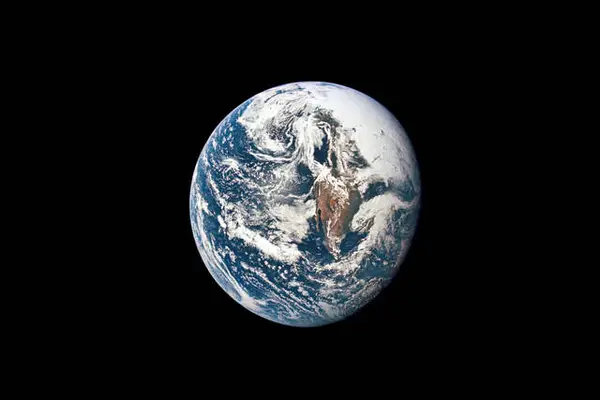
As the means of communicating its administration of the nation’s environmental laws to the public, on Feb. 18, the U.S. Environmental Protection Agency (EPA) published a Final Rule in the Federal Register stating that the prior action by the EPA regarding the control of greenhouse gases, called the Endangerment Finding, is being rescinded.
The Endangerment Finding was put in place by the then-Obama administrator of the EPA in the Federal Register in December 2009. Since then, the U.S alone has spent trillions of dollars in an effort to address the greenhouse gas harm allegation.
As we know, there are short-, mid- and long-term changes to the climate based on the natural rhythms of the earth acting in its time. Our earth has gone through many periods of naturally occurring global warming and cooling. The historical record allows us to know that the Vikings colonized and established agriculture in Greenland during the Medieval Warm Period, and we know of the dark days of a frozen Thames River in the U.K. during the Little Ice Age. Each of us older folk can remember alternating colder and warmer times, alternating periods of snowy, rainy or dry seasons in our own lifetimes.
Many eco-activists point to greenhouse gases and climate change as a reason to regulate carbon, but many scientists believe natural climate change is not an emergency. For well over 50 years now, the impending doom of our planet has been, as a strange twist on the term, imminent. If you can break through the search engine block for your politically incorrect concerns, you can find an unending source of information that indicates it is not the end of the world as we know it.
As the poster child for greenhouse gases, carbon dioxide has received the most attention of the greenhouse gases of alleged concern. Regulating such a ubiquitous compound as carbon dioxide poses many problems. Carbon dioxide’s overwhelming contribution is by natural sources, it is well mixed in the atmosphere, it permeates the entire globe and it is inherently linked to our modern world. There is no human activity that cannot be controlled by regulating carbon dioxide as a pollutant and that was and is the point: control.
There is no activity that man engages in that does not in some manner involve the use of these carbon energy sources. Movement of people, raw materials and finished goods; energy to power, light, cool or heat our homes, offices, grocery stores and factories; energy to propagate crops and animals, to power our technologies … ad infinitum. This does not even consider the vast multitude of products and by-products directly derived from these carbon-based sources; to name just a few, everything from fertilizers to shampoo additives and industrial chemicals derived from coal, and the plasticizers, waxes, pharmaceuticals, gases, and fuels and oils made possible from refining crude oil.
While it is alleged that the current anthropogenic emissions are too great, there is no definitive fact about what the appropriate or safe amount of anthropogenic carbon dioxide emissions or concentration within our atmosphere should be. Historically, the concentration of carbon dioxide in our atmosphere has been both greater and less than what we have today. The amount of man-made carbon dioxide emissions and the allegedly consequent temperature effect appear subjectively — as an analogy to Papa Bear’s personal lifestyle in the Goldilocks fairy tale, it is just too big. It can then be assumed that the concentration of carbon dioxide that is just right can be discerned only by subsequent liberal oracle-administrators of the EPA.
The knowledge of the science and history of earth’s time should mitigate the ongoing desire to regulate and proselytizing by the man-caused climate warming zealots and their desire to dictate a large portion of man’s activities through the control of carbon.
Robert T. Smith is an environmental scientist and co-owner of a Pittsburgh area environmental consulting firm.