
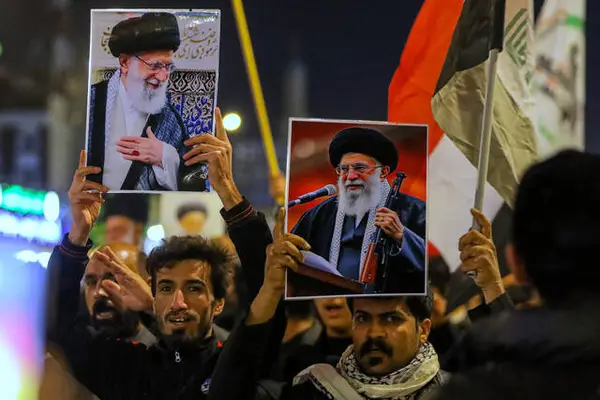
Few places on earth so revere martyrdom as Iran.
I came to that conclusion during a visit to the country in 2002, not long after the Sept. 11 attack on the United States. In my book, “Martyrs: Innocence, Vengeance and Despair in the Middle East,” I open the chapter on Iran with a visit to the Martyrs Museum in Tehran, walking down a bright red carpet symbolizing the blood of Iranians who had died in battle.
As Americans are now faced with what could be a years-long war with Iran, it’s important to note just how bloody it could be for both sides.
Central to Shia Islam is the story of the martyrdom of Hussein, grandson of the Prophet Muhammad at Karbala. Facing the overwhelming forces of the opposing army, Shias believe Hussein was martyred in defense of Islam and his rightful place as Muhammad’s successor. The story of death and sacrifice unites Shia Muslims not only in Iran, but around the world in reverence for Hussein and for those considered martyrs of their faith.
No doubt, millions are now making the same claim for Ayatollah Ali Hosseini Khamenei, killed when American and Israeli forces bombed his home in Tehran last week. Many Iranians in the diaspora cheered, but many also took to the streets and to American embassies to protest the attacks.
Authorities suspect the recent mass shooting in Austin, Texas, may be a terrorist attack in retaliation for Khamenei’s killing. The Texas gunman wore a sweatshirt proclaiming, “Property of Allah.” As more Iranians are proclaimed martyrs in what could be a protracted war with the United States and Israel, the world is likely to see more such attacks specifically targeting Americans.
Consider our recent history with war in the Middle East:
Americans spent two decades in Afghanistan starting on Oct. 7, 2001, after the Sept. 11 attack, and ending with the chaotic pullout of U.S. troops in August 2021. It was the longest war in American history.
And the U.S.-led war in Iraq lasted more than eight years, beginning with the March 20, 2003, invasion and ending with the final withdrawal of U.S. troops in December 2011.
Now, we’re at war with Iran in what President Trump says is an effort to bring down Iran’s government. Only unlike the Iraqi invasion, there is no international coalition ready to share the burden of death and destruction. And Karl Schneider, a retired Army Special Forces Officer and combat veteran, is among many military experts warning the only way to take down a government is with boots on the ground.
Schneider served as plans officer for the NATO High Readiness Force and has been deployed in tough spots all over the world. He should know. He and other experts are scratching their heads to try to figure out the justification for Trump’s decision to bomb Iran as peace talks were underway.
Many are asking, where was the imminent threat? Where is Congress? And where is the go-ahead from the American people whose children will die in this war?
If Trump is planning to send thousands of our sons and daughters into Iran to overthrow its Islamic regime, it will not be pretty. Our troops will face the full and brutal force of Iran’s culture of martyrdom.
Imagine a 13-year-old strapping a grenade to his body and hurling himself under an Iraqi tank. That actually happened in 1980 during the Iraqi invasion of Iran, and the story of Mohammad Hosein Famideh was a featured exhibit in Tehran’s Martyrs Museum.
The Middle East is not a place for amateurs, Schneider warns. That’s an understatement. Those who really know the region know you can’t bomb your way to peace. But now that Khamenei is dead, there’s no turning back.
Americans are now in a war that may last a very long time, with an untold number of martyrs yet to come.
Joyce M. Davis is PennLive’s outreach and opinion editor. From 2003-07, she served as senior supervisor of Radio Farda, Radio Free Europe/Radio Liberty’s broadcast service into Iran.